Today we examine the Mission Control project, which is intended to support the Ukrainian Defense Forces in establishing a unified digital coordination layer for drone operations.
Ukraine’s Ministry of Defense has launched the Mission Control project, a centralized digital system designed to consolidate all drone operations of the Defense Forces and integrate them into the DELTA combat management ecosystem. The initiative was announced by Defense Minister Mykhailo Fedorov, who stated that the relevant directive has already been signed. According to him, the project is part of a broader shift toward a new model of warfare in which data integration, decision-making speed, and process transparency play a central role.
Mission Control is envisioned as a digital “brain” for drone warfare – a platform that provides real-time visibility into UAV flights, assigned missions, operational outcomes, and the performance of individual crews. The system is intended not merely for oversight, but for coordinated management of drones as a unified combat capability rather than as isolated assets.

“Modern warfare is technological. Thanks to the e-Ballistics system, we already have an understanding of what is happening with drones on the battlefield: we can see completed missions, their intensity, and the contribution of each crew. However, this is not sufficient to increase effectiveness further,” Fedorov stated.
According to him, Mission Control is intended to transform fragmented drone operations into a single, managed system in which decisions are based not on intuition or partial reporting, but on quantitative data, analytics, and a comprehensive operational picture. When integrated with the DELTA system, this approach supports a shift toward a network-centric model of warfare, where drones function not as standalone platforms but as integrated elements of a shared digital battlespace.
The following sections examine how this system is expected to operate in practice.
Read also: Weapons of Ukraine’s Victory: Tempest Air Defense System with AGM-114L Longbow Hellfire Missiles
TABLE OF CONTENT:
From Platforms to Systems
The large-scale use of unmanned aerial vehicles has become a defining feature of contemporary warfare. At the same time, the rapid increase in the number of UAVs on the battlefield has introduced a new challenge: managing complexity. Hundreds of crews, thousands of sorties, dozens of drone types, multiple communication channels, video feeds, telemetry, intelligence inputs, and artillery requests cannot be coordinated effectively through manual processes or fragmented tools.
It is at this point that warfare shifts into a systems-driven phase, where the decisive factor is no longer the individual drone but the digital infrastructure that governs its use. In Ukraine, the response to this challenge has been the launch of the Mission Control project. The system is designed as a unified digital framework for managing all drone operations and is integrated into the DELTA combat ecosystem.
Read also: Weapons of Ukraine’s Victory: Paveway IV Guided Bombs
Mission Control as a State-Level Project
Ukraine’s Ministry of Defense has formally launched Mission Control as a foundational digital platform for consolidating all drone operations into a single command-and-control system. This is not another software tool designed for individual UAV crews, nor an auxiliary flight-planning application. Instead, it is a centralized management framework intended to operate simultaneously at the tactical, operational, and strategic levels.
Mission Control introduces a new architectural approach to drone warfare in which unmanned systems are no longer treated as isolated platforms but as components of an integrated, managed system. In practical terms, it functions as a digital control layer through which all critical information related to the deployment and use of UAVs on the battlefield is collected, processed, and distributed.
Through Mission Control, data from all UAV flights are aggregated and standardized, with time stamps, routes, areas of responsibility, and mission execution parameters recorded. This applies to the full spectrum of drone missions, including reconnaissance, fire adjustment, strike missions, and specialized operations. All crews and units involved in drone operations are brought into a shared operational environment, enabling assessment of both operational tempo and effectiveness.
Reconnaissance results and strike outcomes are automatically linked to geographic coordinates and the current tactical situation and made accessible across the system. The same applies to the status of platforms and communication channels, including telemetry data, signal loss events, and the effects of electronic warfare interference.
A defining feature of Mission Control is its full integration into the DELTA combat ecosystem. As a result, drone operations no longer exist as a separate, self-contained process but become an integral part of the digital battlespace, where UAV-derived data directly informs decision-making by other system components, including artillery units, command staffs, and analytical centers.
Within this architecture, Mission Control functions as a digital control hub for drone forces. Its role extends beyond event logging to providing the foundation for analytics, scalability, and the transition to a network-centric model of warfare, in which effectiveness is determined less by the number of drones deployed and more by the quality of data management and the speed of decision-making.
Read also: Weapons of Ukraine’s Victory: Magic 2 Air-to-Air Missile
DELTA and Mission Control: A Unified Combat Ecosystem
DELTA already serves as the central situational awareness system of Ukraine’s Defense Forces. It aggregates data from a wide range of sources, from ground units to technical intelligence assets, and presents a unified operational picture.
Within this architecture, Mission Control functions not only as the hub for drone operations and a source of real-time intelligence, but also as an interface that connects UAVs with other branches of the armed forces.
In practical terms, this means that all UAVs – whether used for reconnaissance, strike missions, fire adjustment, or communications relay – are treated as full-fledged sensors and effectors within a single digital command-and-control system.
What Mission Control Provides in Functional Terms
Mission Control introduces a fundamentally different approach to planning and executing drone operations by moving them into a centralized digital command layer. Mission preparation is no longer driven by isolated decisions made by individual crews or local headquarters. Instead, all tasks are created within a single digital environment and are immediately linked to the operational map in the DELTA ecosystem.
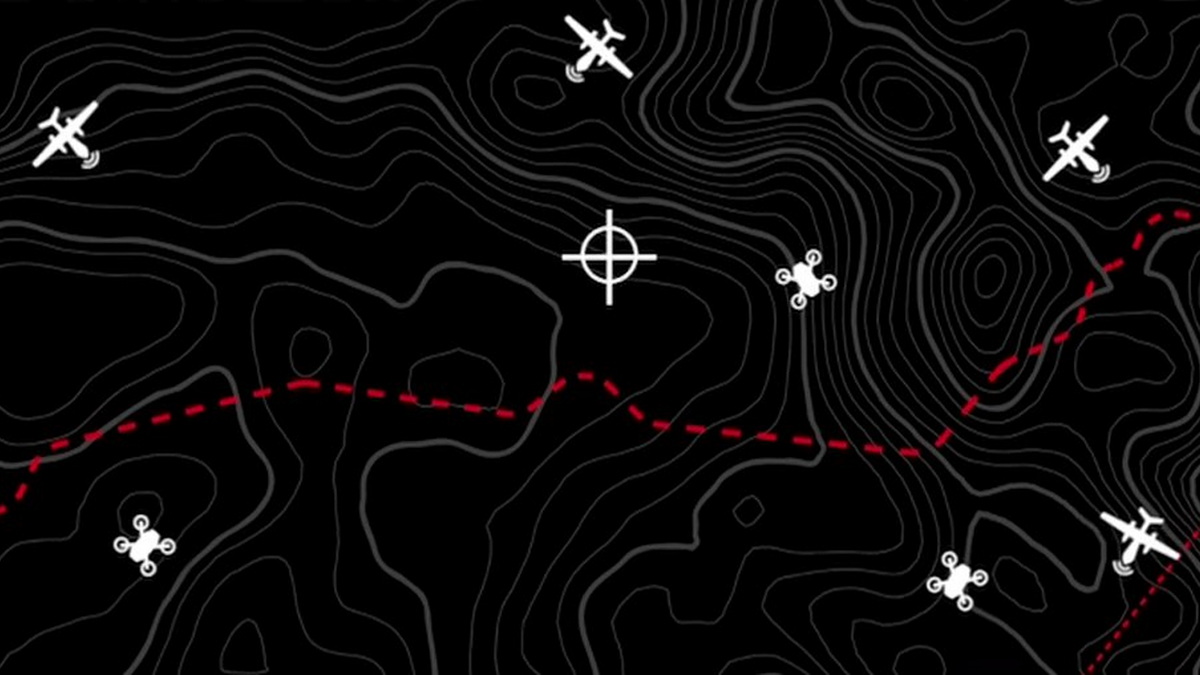
Flight routes, areas of responsibility, drone roles, and behavioral scenarios are defined in advance, taking into account the broader operational situation and risks associated with electronic warfare activity or potential loss of communications.
Read also: A-60 Aircraft: Soviet Dream of Laser Weapons in the Sky
During mission execution, Mission Control provides continuous, real-time command and control. The system displays all active drones within a given sector, allowing operators to monitor telemetry, communication link status, and mission progress. Commanders and crews work with an integrated operational view rather than isolated video feeds, treating each platform as part of a coordinated operation. This approach reduces information overload and enables faster responses to changes in the tactical situation, emerging threats, or the need to adjust actions in the air.
A separate layer of the system is dedicated to centralized data processing and accumulation. Mission Control aggregates video from optical and thermal sensors, coordinates of detected targets, information on strike results, and data on enemy activity. All of this information is automatically linked to specific coordinates and time stamps, stored in a unified archive, and made available for subsequent analysis. As a result, drone operations cease to be isolated, one-off events and instead become a source of structured knowledge that can be compared, consolidated, and used to improve the effectiveness of future missions.
When combined with the DELTA ecosystem, Mission Control supports a continuous “plan–execute–analyze” cycle, in which each drone mission is immediately integrated into the broader operational picture. This creates the conditions for a shift from reactive UAV employment to a more predictive and managed use of drones as a core instrument of modern warfare.
Read also: Everything About the P1-Sun – SkyFall’s Ukrainian Interceptor Drone
Mission Control and the Role of Artificial Intelligence
One of the key directions in the further development of Mission Control is the deeper integration of artificial intelligence algorithms, which gradually shift the system’s role from a tool for tracking and control to a decision-support mechanism. AI is used to automate the detection of enemy equipment and personnel, classify targets by type and threat level, analyze changes in terrain, and identify atypical activity, including camouflage measures or engineering work.
A separate focus area is risk assessment for crews and platforms. Based on accumulated data, the system can forecast high-risk zones, estimate the likelihood of electronic warfare interference or loss of communications, and suggest safer routes or alternative mission execution scenarios. In this configuration, Mission Control moves beyond functioning as a passive data repository and gradually becomes an analytical layer that supports commanders in working with large data sets and making decisions more quickly and accurately than would be possible through manual processes.
Read also: Weapons of Ukraine’s Victory: Sting UAV Interceptor
Scaling: From Individual Crews to Swarms
Mission Control was designed from the outset as a scalable system, capable of operating effectively both at the level of individual crews and within large-scale operations. At the tactical level, the platform simplifies flight coordination, data exchange between operators, and rapid alignment of actions in the air, reducing crew workload and the number of decisions that must be made manually.
As operations scale, Mission Control extends to the operational level, where it supports the simultaneous control of dozens of drones. The system enables synchronization across units, helps prevent airspace conflicts, facilitates efficient allocation of areas of responsibility, and maintains a consistent operational tempo.
At the strategic level, Mission Control provides the technological foundation for managing UAV swarms. Within this framework, operators do not interact with individual platforms but with groups of drones and predefined usage scenarios, setting rules, objectives, and interaction algorithms. This approach enables large-scale, controlled, and repeatable employment of unmanned systems, where effectiveness is driven not by the number of platforms, but by the quality of command-and-control systems and the speed of decision-making.
Resistance to Electronic Warfare and Loss of Communications
Mission Control was designed to operate in degraded environments, where communications are unstable and data channels are constantly affected by interference. Its distributed architecture, with support for backup channels, reduces reliance on a single control node and enhances overall system resilience.
Even in the event of partial or complete loss of connectivity, drones remain operational within the mission framework. Autonomous behavior scenarios allow them to complete tasks, adjust routes, or return safely without continuous external control. Once communications are restored, all collected data is automatically synchronized with the system, preserving the integrity of the operational picture. As a result, Mission Control maintains functionality even in complex electromagnetic environments where conventional command-and-control systems would quickly lose effectiveness.
Read also: All About Project Suncatcher: Google’s Space Experiment
Why This Changes the Character of Warfare
The launch of Mission Control represents a qualitative shift from fragmented and often ad hoc drone employment to a structured, managed form of drone warfare. Within this framework, a UAV is no longer treated as an independent combat asset but as a component of a broader digital system, where its value is defined not only by technical performance but by its role within an overall operation.
The role of the operator also evolves. Rather than acting primarily as a “pilot,” the operator increasingly functions as a process manager, working with data flows, predefined scenarios, and real-time decision-making. Data generated by drones ceases to be merely auxiliary information and acquires strategic significance, as it directly influences operational tempo, strike accuracy, and coordination between units.
The most consequential outcome of this transformation is a marked increase in decision-making speed. When combined with the DELTA combat ecosystem, Mission Control enables a fully network-centric model of warfare, in which information advantage is directly converted into operational effectiveness. This allows forces to act faster than an adversary, even in complex and rapidly changing environments.
Read also: All About Proteus: Self-Contained Helicopter with Potential Implications for Future of Aviation
Strategic Significance for Ukraine
For Ukraine, Mission Control is more than just another digital tool among military IT solutions. It represents the foundation for the long-term digital transformation of the Armed Forces, in which command, planning, and operational analysis gradually converge into a unified, data-centric environment. The system establishes a framework for capturing unique combat experience – not as reports or anecdotal accounts, but as structured data that can be analyzed, compared, and leveraged to improve the effectiveness of future operations.
Mission Control also lays the groundwork for future integration with allied digital systems, as it is built around shared standards, interoperability, and networked interaction. From a strategic perspective, this constitutes infrastructure for a next-generation form of warfare – one in which the decisive factor is not individual platforms, but the ability to rapidly connect sensors, effectors, and analytics into a single, coordinated system.
The Mission Control project, integrated into the DELTA combat ecosystem, illustrates a broader trend in contemporary warfare: the determining factor is no longer the quantity – or even the technical quality – of hardware, but software, data, and command-and-control logic. In this model, drones represent only the visible layer of a much deeper transformation.
Ukraine’s approach is therefore not limited to the large-scale deployment of UAVs. It focuses on building a unified digital “brain” capable of managing drone warfare as a coherent, scalable, and repeatable process. Within this framework, Mission Control moves beyond a supporting tool and becomes a strategic element of national defense, one that is likely to have a direct impact on the tempo, precision, and overall effectiveness of military operations in the coming years.
Read also: