


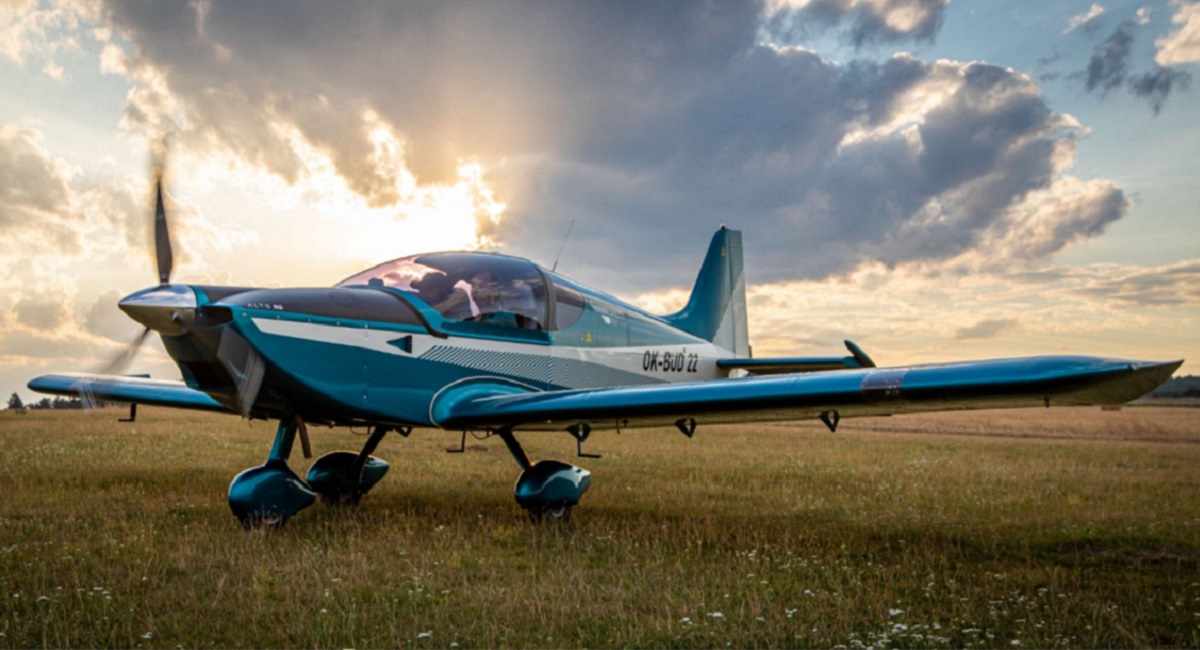
A few days ago, media outlets reported an interesting development: the Ukrainian Air Force has received ten new ALTO NG training aircraft manufactured by the Czech company Direct Fly. Five of these aircraft were delivered with direct support from the Government of the Czech Republic, while the remaining five were provided through contributions from Czech citizens via the well-known charitable foundation Dárek pro Putina. What exactly are these aircraft, and what role will they serve for Ukrainian aviators?
TABLE OF CONTENT:
Modern and ultralight
The ALTO NG is a relatively new, refined ultralight aircraft developed as a successor to the ALTO 912 TG, whose production was discontinued in 2022. The aircraft is built in a low-wing configuration and features very clean aerodynamic lines.
Despite having fixed landing gear (with wheel fairings), its aerodynamic efficiency contributes to solid flight performance, even with a relatively low-powered engine. The ALTO NG is powered by the widely used Rotax 912 ULS, delivering approximately 115 hp.
Contrary to the broader industry trend toward composite materials, the ALTO NG retains a traditional all-metal airframe made from lightweight aluminum alloys. This design choice reduces cost and simplifies maintenance and field repairability.

The ALTO NG is a two-seat aircraft, with seats arranged side-by-side rather than in tandem. This configuration is particularly important during the early stages of flight training: when the instructor sits next to the student, it is significantly easier to monitor their actions, provide immediate correction, and increase overall confidence. It is comparable to learning to drive a car – imagine if the instructor were sitting behind you instead of in the passenger seat; the experience would feel noticeably less intuitive and more stressful.
Another notable feature of the ALTO NG (common among many modern ultralight aircraft) is the whole-aircraft parachute recovery system. In the event of an engine failure or another critical malfunction, there is no need for the crew to bail out. Instead, the Galaxy GRS is activated, deploying a parachute mounted behind the cockpit. The aircraft, along with its occupants, then descends safely to the ground under controlled conditions.
The aircraft is equipped with modern digital avionics in the cockpit. It holds a Czech UL-2 certification, corresponding to the ultralight category for aircraft with a maximum takeoff weight not exceeding 600 kg. The ALTO NG is offered to potential customers both as a fully assembled aircraft and as a kit for self-assembly.
Read also:
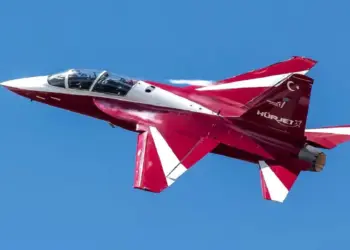
- “Free Bird” from Türkiye: Everything About the TAI Hürkuş Trainer and Light Attack Aircraft
- “Pilatus” of 21st Century: Everything About RS-21 Trainer-Combat Aircraft
What is the role of ALTO NG for the Ukrainian Air Force?
According to a press release from the Ministry of Defence of Ukraine, the ALTO NG aircraft will be used in several key areas:
- Basic and advanced pilot training: developing fundamental aircraft handling skills under a range of flight conditions.
- Training in takeoff and landing procedures in accordance with NATO standards.
- A transitional training stage: practicing more complex procedures required for eventual conversion to modern Western fighter aircraft.
The ALTO NG is expected to become the first aircraft type that cadets will operate during their flight training. Even the most advanced simulators cannot fully replace real flight experience, especially at the early stages of pilot education. At the same time, the use of simple, light piston-engine aircraft for foundational training is a well-established practice in many air forces worldwide.
After completing initial training on the ALTO NG (likely amounting to several dozen flight hours with and without an instructor), future Ukrainian pilots would transition to the jet-powered Aero L-39 Albatros. This Czech-designed aircraft has long served as a standard advanced trainer.
According to some media reports, these aircraft may eventually be replaced by the newer Aero L-39NG Skyfox. However, until that transition occurs, the ALTO NG will also serve as a bridge toward modern Western fighter aircraft training, as its cockpit systems are considered closer in philosophy and layout to contemporary combat aircraft than those of the older L-39C generation.
So, the practical question: can the ALTO NG shoot down “Shaheds”?Theoretically, given a maximum speed of around 260 km/h, the aircraft could match or slightly overtake a propeller-driven “Shahed” or “Geran” type drone. However, interception and destruction are an entirely different matter. The ALTO NG is not designed for any form of armament integration. It has no provision for underwing hardpoints, and due to the canopy and cockpit structure, even improvised firing solutions (as seen on aircraft like the Yak-52 in ad-hoc interceptions) are not feasible. There is also no capability to mount an electro-optical targeting system.
In purely theoretical terms, one could imagine equipping the ALTO NG with a pair of underwing pylons to carry interceptor drones – similar in concept to larger-scale adaptations seen on aircraft like the Antonov An-28. However, such a modification would inevitably increase drag and weight, reducing both speed and endurance. As a result, the trade-off would undermine the aircraft’s primary strengths and make such an adaptation operationally unjustified.
Therefore, the only realistic and intended role of the ALTO NG within the Ukrainian Air Force is pilot training, not air defense or combat operations.
| Aircraft length, m | 6.3 |
| Wingspan, m | 8.2 |
| Wing area, square meters | 10.6 |
| Aircraft height, m | 2.5 |
| Empty weight, kg | 320 |
| Maximum takeoff weight, kg | 600 |
| Engine power, hp | 115 |
| Fuel capacity, L | 92 |
| Top speed, km/h | 260 |
| Cruising speed, km/h | 180 |
| Permissible overload | +4/-2 |
| Maximum rate of climb, m/s | 5.1 |
Read also:



True dementia is failing to understand the importance of training aircraft in preparing future combat pilots
So, Ukrainians are winning by flying training planes? That’s senile dementia or senility.