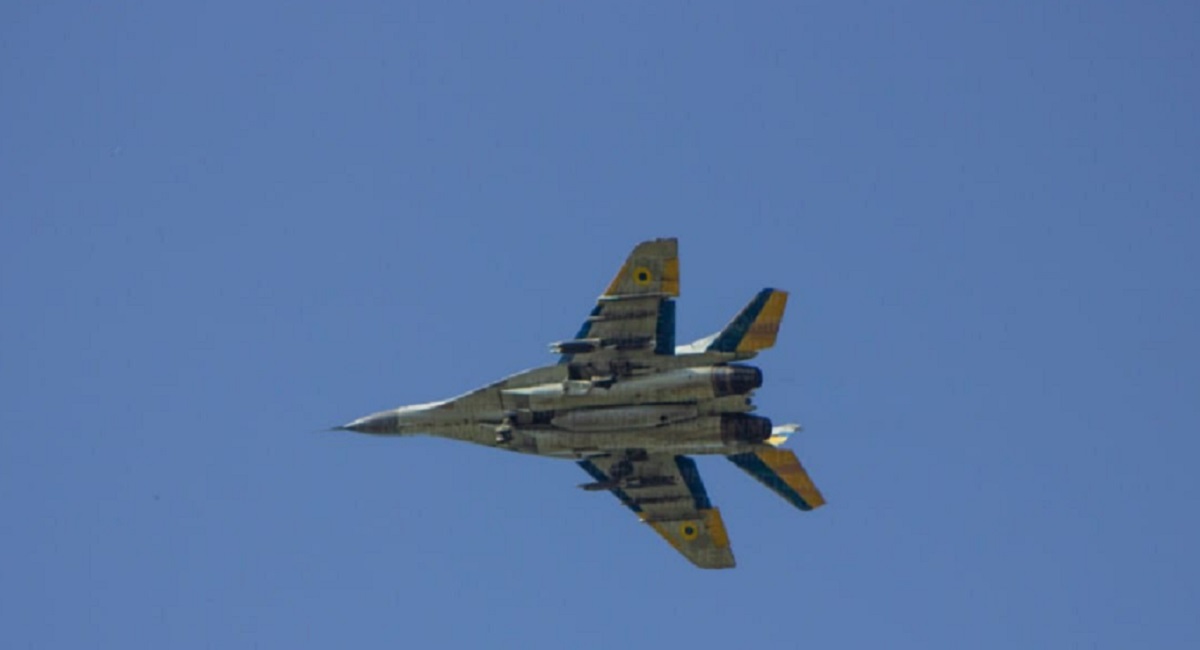
In May 2024, reports confirmed that Ukrainian aviation had used U.S.-made GBU-39/B guided bombs, also known as SDBs – Small Diameter Bombs. Since then, these weapons have been regularly employed by the Ukrainian Air Force, not only against targets in temporarily occupied areas of Ukraine but also against sites near the Russian border. This makes it worth taking a closer look at this type of munition.
Read also: Photo of Ukrainian MiG-29 with Guided Glide Bomb Appears Online
TABLE OF CONTENT:
Why small diameter
First, why is the “small diameter” highlighted as the key feature of the GBU-39/B? What makes it significant? Essentially, it reflects a shift in the approach to striking ground targets, driven by the advent of precision-guided munitions.

In the era of “iron” (unguided) bombs, mission planning focused on a simple question: how many aircraft are needed to hit a typical target? With the introduction of guided munitions, the problem flipped: how many targets can a single aircraft engage? Another consequence of using precision bombs or missiles was the ability to reduce the explosive payload – these weapons could strike the target accurately without detonating nearby. This naturally led to the idea of developing compact, high-precision bombs that a single aircraft could carry in quantities of 10 to 15.
Read also:
- Why Modern Aircraft Still Crash and How Each Tragedy Shapes Aviation Safety
- Weapons of Ukraine’s Victory: Modern Long-Range ERAM Missiles
History of creation
The development of the SDB began in 2001 through a competitive process involving two major defense contractors: Lockheed Martin and Boeing. Boeing was declared the winner in 2005, though the process was not without controversy. In 2002, a high-ranking official at the U.S. Air Force canceled the requirement for the weapon to engage moving targets, giving Boeing an advantage with a simpler – and cheaper – design.
By September 2006, the U.S. Air Force received the first production GBU-39/B bombs. The following month, they were certified for use on the F-15E Strike Eagle and were tested in combat that same month. Today, SDBs are integrated with nearly all U.S. tactical and strategic aircraft, including AC-130 gunships and fighters like the Tornado and Gripen. The MiG-29 can now be added to this list.
GBU-39 Specifications
The GBU-39/B bomb is classified as 250 pounds. In the context of bombs, this designation refers to the general size rather than the exact weight, which can be higher or lower than the nominal figure. In this case, the GBU-39/B actually weighs 129 kg, rather than the 113 kg indicated by its classification. Its warhead weighs 93 kg, of which 16 kg is explosive. Despite these relatively modest numbers, the bomb is capable of penetrating over a meter of reinforced concrete. GBU-39/B bombs are mounted on specialized four-lock racks, typically carried in pairs.
The GBU-39/B features fold-out diamond-shaped wings, allowing it to glide up to 110 km when released from high altitude. Its guidance system combines inertial and satellite navigation. The reliance on GPS – which can be jammed by Russian electronic warfare systems – was a major factor limiting the effectiveness of GLSDB rockets, a variant of MLRS/HIMARS munitions that use GBU-39/B bombs as warheads.
How does the SDB perform in its aerial variant? Likely, it doesn’t fully overcome this limitation. Ukrainian MiG-29s (and, as of March 2025, reportedly Su-27s) appear to release these bombs from relatively low altitudes to avoid exposure to long-range Russian air defenses. At these heights, the bombs’ range is probably limited to 20–30 km, relying only on inertial guidance, which is accurate enough over such short distances to minimize deviation. This, however, remains an informed assumption.
SDB variants
Simultaneously with the start of production of the GBU-39/B, Boeing received a contract to develop several modifications.
FLM (GBU-39А/В)
There is a low-collateral-damage variant called the SDB FLM (Focused Lethality Munition). Its casing is made from a composite material (carbon fiber) instead of steel, which reduces the number of hazardous fragments.
The bomb also features a directional warhead, allowing it to be used for close support in urban combat while reducing the risk to nearby friendly forces. This variant, designated GBU-39A/B, entered service with deliveries beginning in February 2008.
LSDB (GBU-39В/В)
The third SDB variant is the Laser SDB, or LSDB, also known as GBU-39B/B. As the name suggests, this bomb is equipped with a semi-active laser seeker. It requires laser designation of the target during the bomb’s terminal phase, but it enables engagement of moving targets.
These bombs have been in production since 2014, with the U.S. Special Operations Command as their first customer. There is also the SDB II, a completely different munition made by Raytheon with a more advanced guidance system. None of these variants are currently reported in use in Ukraine. Finally, regarding cost: in 2021, a standard GBU-39/B was priced at around $40,000 – roughly the cost of a mid-range crossover vehicle.
Read also: