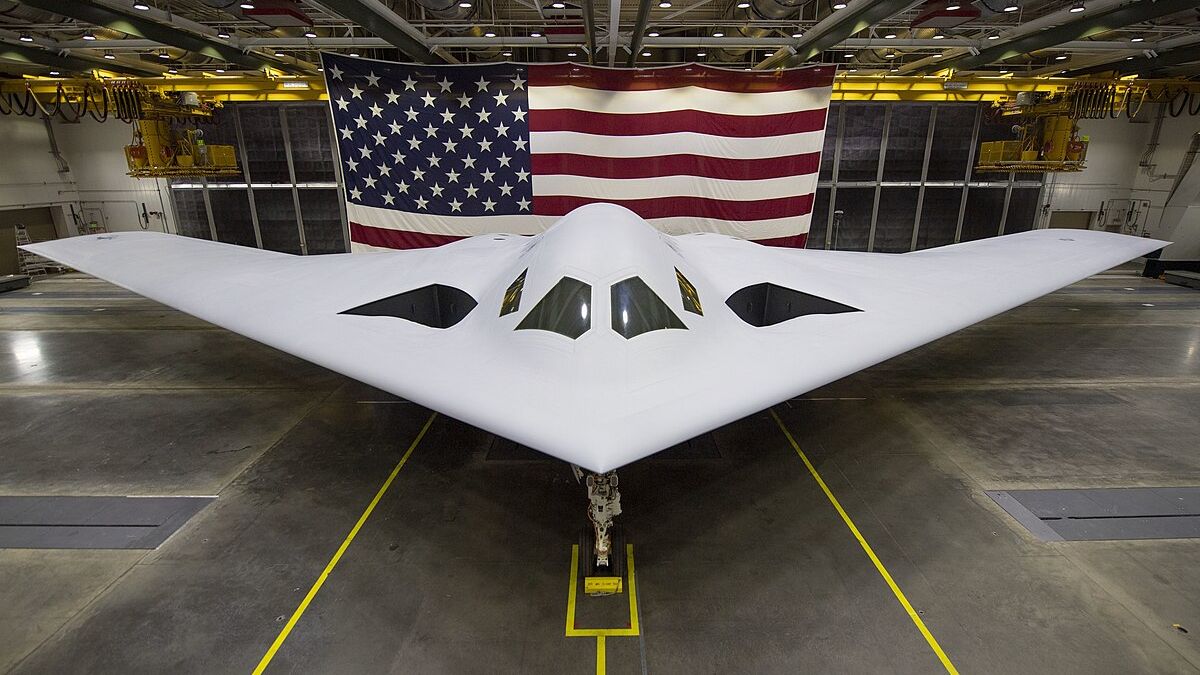
Northrop Grumman plans to finalize negotiations with the U.S. Air Force on an accelerated production agreement for B-21 strategic bombers by the end of March, CEO Kathy Warden said on January 27. She also confirmed that the Pentagon and Northrop have reached an agreement on a third batch of low-rate initial production B-21s, as the program gradually approaches the aircraft’s operational introduction.
As part of a large budget package approved by Congress in July of last year, $4.5 billion was allocated to “expand production capacity” for the B-21 program. Work on the details began even before the official approval of this funding.

During a conference call on the company’s financial results, Warden emphasized that Northrop continues to work closely with the U.S. Air Force to increase production rates. She noted that the primary goal is to reach a balanced agreement that enables accelerated delivery of the new platform for national defense. Warden also indicated that she expects an agreement to be finalized within the current fiscal quarter, which ends on March 31.
The anticipated contract is expected to be substantial. According to the Air Force’s 2026 fiscal year budget request, the full $4.5 billion allocated under the authorization bill is planned to be spent within a single fiscal year. Approximately $2.4 billion is earmarked for research and development, with the remaining $2.1 billion designated for the procurement of equipment and components.
Details of the forthcoming agreement remain limited and are expected to stay classified, as has been the case with previous B-21 program contracts. The Air Force has not disclosed the specific parameters of the planned production expansion. It also remains unclear whether the long-term strategy aims to increase the total number of aircraft beyond the baseline program of 100 units, or if the primary focus is on accelerating the achievement of that baseline.
Warden stated that Northrop plans to invest between $2 billion and $3 billion over several years to support accelerated production, though specific areas of investment were not disclosed. In April, the company reported spending $477 million on “production process optimization” aimed at increasing aircraft output.
Exact annual production figures for the B-21 remain classified. Previous sources have suggested a potential production rate of around seven aircraft per year. These estimates do not apply to the low-rate initial production phase, during which 21 aircraft are planned across five separate batches.
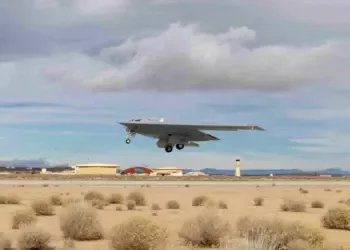
Warden confirmed that in the final quarter of 2025, Northrop received a contract for the third batch in this cycle, as well as an agreement for early procurement of the fifth batch. She also highlighted the first flight of the second B-21 test aircraft, describing it as an important indicator of program progress.
Despite this positive momentum, legislators recently adjusted B-21 program funding in the proposed 2026 fiscal year budget. Procurement funding was reduced by $620 million, while research and development funding increased by $409 million, resulting in a net decrease of $211 million. Committee representatives described the changes as “classified adjustments.”
A U.S. Air Force spokesperson told Air & Space Forces Magazine that the B-21 program itself remains on track. According to the spokesperson, the project is currently in the low-rate initial production phase, and no additional information is available at this time.
In parallel with preparations to scale B-21 production, Northrop does not plan to begin production of another key Air Force nuclear program – the Sentinel intercontinental ballistic missile – in the near term. Warden noted that the company still anticipates several more years of development for this system, with the transition to serial production expected only toward the end of the decade. She emphasized that production is not part of the current two- to three-year planning window.
The Sentinel program currently lacks a finalized schedule. The Air Force has had to undertake a major restructuring of the project due to significant budget overruns and schedule delays. This resulted in a formal program review under the so-called “Nunn-McCurdy breach” procedure.
In July 2024, the Pentagon approved the continuation of the Sentinel program but canceled the decision to enter the engineering and manufacturing development phase, requiring a full program restructuring. Officials estimate that without intervention, the program would have exceeded its planned budget by 81% and fallen behind schedule by approximately three years. Northrop leadership and the Air Force report that they are now actively working to mitigate these risks.
Warden noted that Northrop is actively involved in the Sentinel program review process. She stated that once the restructuring is complete, the Air Force will approve an updated schedule outlining new timelines for Milestone B, initial operational capability, and full operational capability. She also emphasized that the company, in coordination with the military, is working to shorten the timelines established during the previous program review two years ago.
Read also:
- Swedish Fighter Jets Detect Russian Aircraft Over the Baltic Sea
- France Has Transferred Long-Range Strike Drones Rodeur to Ukraine
Source: airandspaceforces