Among the weapons used by the French-supplied Mirage 2000-5F fighters are Magic 2 short-range air-to-air missiles. This system is not particularly well known in Ukraine, which makes a closer look worthwhile.

TABLE OF CONTENT:
History
The development of the highly effective, simple, and reliable AIM-9 Sidewinder short-range guided missile in the United States set a high benchmark for engineers working on similar systems elsewhere. One of the more successful attempts to reach that level came from the French company Matra.
Work on the missile, designated R.550 and later given the name Magic, began in 1967. The design phase lasted several years and culminated in its first test launch on January 11, 1972. Fired from a Gloster Meteor belonging to the French Air Force’s Flight Test Center (Centre d’essais en vol, CEV), the missile successfully hit an ST20 radio-controlled target.
In 1975, the system entered service with both the French Air Force and Navy aviation units, and large-scale production began the following year.
Design
The missile uses a “tandem canard” aerodynamic layout. Ahead of the control surfaces, and aligned with them, are four fixed aerodynamic surfaces that help stabilize airflow and improve the effectiveness of the control fins. This configuration allows the missile to sustain higher angles of attack compared to a conventional canard design.
The wing panels are mounted on bearings and can rotate freely around the missile’s body axis, which enhances roll control and overall maneuverability.
The Magic missile is built around two main sections – a forward compartment and a rear compartment. The forward section houses the infrared seeker, autopilot, control‑surface actuators, power supply, and both contact and proximity fuzes.
The infrared seeker uses lead sulfide as the radiation detector, providing high sensitivity. The detector is cooled with liquid nitrogen, but the cooling system and nitrogen tanks are located in the aircraft’s launch rail rather than inside the missile itself.
Target acquisition is supported by a high‑speed scanning mode implemented through a mechanism with a single moving component – a lightweight flat mirror with low inertia. This design improves reliability and contributes to the seeker’s strong resistance to interference.
Initial target designation can be provided by a variety of external sources, including radar or electro-optical targeting systems, as well as helmet-mounted sighting systems. Autonomous targeting using the missile’s own seeker while suspended on the aircraft is also possible.
The control surfaces are actuated electrically, and the missile’s electronics are powered by a silver‑zinc battery.
The rear compartment houses the warhead and the Romeo solid‑fuel rocket motor, which provides a total impulse of 2,650 kg·s and operates for approximately 1.9 seconds. The warhead is a 12.5 kg high‑explosive fragmentation design containing 6 kg of explosive. Its casing is pre‑fragmented to produce a controlled dispersion pattern. The missile is equipped with a proximity fuze with an effective radius of roughly 5 meters, meaning a direct hit is not required – passing close to the target is sufficient to trigger detonation.
Launch is possible across a wide range of carrier‑aircraft speeds, exceeding 1,300 km/h. The maximum allowable load factor at launch is 6 g.
Read also:
- Weapons of Ukrainian Victory: Multi-Purpose Helicopter UH-60 / S-70A Black Hawk
- Weapons of Ukraine’s victory: Zozulya Deep Strike Drone
Modernisation
Like other first‑generation infrared‑guided missiles, the original Magic had a notable limitation: it could only engage targets in the rear hemisphere, homing on the heat signature of an aircraft’s engine. In 1986, an improved version – the Magic 2 – was introduced. Its AD3601 seeker was replaced with the more sensitive AD3633, allowing pilots to employ the missile against head‑on targets, which significantly increased its effectiveness in air‑combat scenarios.
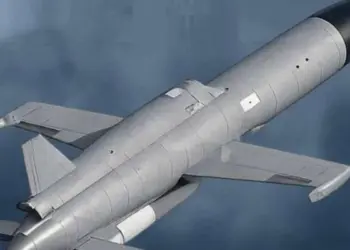
Externally, the Magic 2 is easy to distinguish by its opaque seeker dome (the R.550’s dome is transparent). The missile weighs 89 kg, measures 2,750 mm in length, and has a body diameter of 160 mm. The wingspan and fin span are 650 mm and 470 mm respectively. It offers a maximum launch range of about 8 km and reaches speeds of up to Mach 2.7.
Operation and combat use
Magic missiles saw extensive export use. First‑generation versions were typically delivered with Mirage III, Mirage 5, and Mirage F1 fighters, while the Magic 2 was supplied with the Mirage 2000. One of the largest buyers of the Magic 2 was the Republic of China (Taiwan), which purchased 480 missiles for its Mirage 2000‑5EI/DI fleet. Total production of this variant reached roughly 11,300 units. The missile was also integrated on aircraft built outside France – for example, India equipped its MiG‑21s and Sea Harrier FRS.51s with Magic missiles, while Romania used them on its upgraded MiG‑21 LanceR fighters.
The Magic’s first combat use occurred in January 1981, when the Ecuadorian Air Force employed it during a border conflict with Peru. Ecuadorian Mirage F1JAs intercepted Peruvian Su‑22s several times, but only once managed to launch an attack; in that case, the Magic missile missed its target.
A more successful engagement occurred on 6 November 1981, when South African Air Force pilot Johan Rankin shot down an Angolan MiG‑21F with a Magic missile. In 1982, Argentine Mirage IIIEAs used the missile during the Falklands conflict, though without notable results.
Magic missiles were widely used by the Iraqi Air Force during the Iran–Iraq War. However, during Iraq’s invasion of Kuwait on 2 August 1990, Iraqi forces suffered losses to the same weapon: six Kuwaiti Mirage F1CKs attacked a group of about 50 Iraqi helicopters, shooting down 13 of them – one with cannon fire and the remaining 12 with Magic 2 missiles.
In my view, the most notable combat use of the French missile occurred on 8 October 1996 over the Aegean Sea. On that day, a Turkish F‑16D inadvertently entered Greek airspace near the island of Chios and was subsequently shot down by a Greek Mirage 2000 using a Magic 2 missile. One Turkish crew member was killed, while the other ejected and was rescued by Greek forces. Notably, neither Greece nor Turkey officially acknowledged the incident at the time. It was only in 2012 that Turkey’s minister of defense confirmed the loss of the aircraft and admitted that it had violated Greek airspace. To this day, that F‑16 remains the only Fighting Falcon ever downed in an air‑to‑air engagement. France has since advertised the Mirage 2000 as “the only aircraft to shoot down an F‑16,” a claim it highlights with some pride.
There are currently no publicly available details on the operational results of Magic 2 missiles used by the Ukrainian Air Force – which is to be expected. Still, there is little doubt that these missiles have already added significantly to their combat record in Ukrainian airspace, particularly against Shahed‑type drones and cruise missiles.
Read also: