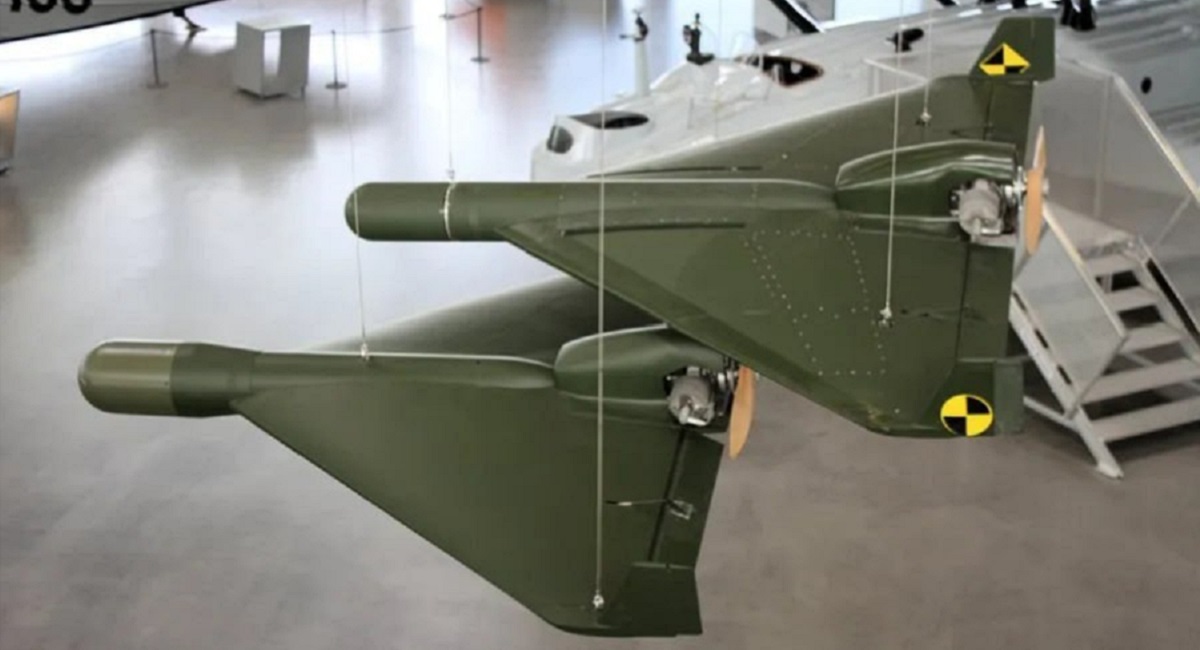
One of the defining features of contemporary conflicts – whether the Ukraine–Russia war or operations involving a U.S.–Israeli coalition against Iran – has been the large-scale use of loitering munitions, more commonly referred to as “kamikaze drones.” These unmanned aerial systems combine aspects of missile precision with the persistence and adaptability of drones, allowing them to remain over a target area and engage at a selected moment. Their significantly lower cost compared to cruise missiles, along with relative technological simplicity, enables production at scale.
Although loitering munitions are often perceived as a 21st-century development, the underlying concept emerged several decades earlier. In the 1980s, an ambitious but now largely overlooked project was initiated in West Germany. This project, known as Drohne Antiradar (DAR), or “anti-radar drone,” was developed by the German aerospace company Dornier. DAR represented an early attempt to create an autonomous anti-radiation loitering munition within the geopolitical context of the Cold War. Its development was not limited to a single system; rather, it outlined a conceptual approach that anticipated an entire class of weapons well before their widespread operational use.
TABLE OF CONTENT:
Concept and Development
The DAR project was not solely a German initiative; it was implemented as a joint program between West Germany and the United States, incorporating technological contributions from the American company Texas Instruments. This collaboration represented a notable instance of transatlantic technical exchange. The program aimed to develop a low-cost, expendable munition capable of autonomously homing on radar emissions, intended for the suppression or destruction of enemy air defense systems. In practical terms, this involved the creation of a specialized anti-radiation unmanned platform.
This role was of particular importance in suppression of enemy air defenses (SEAD) operations, which were designed to neutralize integrated air defense networks of potential adversaries during the Cold War. In addition to its primary strike function, DAR was also intended to fulfill secondary roles. It could be used to simulate larger aircraft, providing realistic targets for training and evaluation of air defense systems, and to act as a decoy, diverting attention and fire away from higher-value manned aircraft or other critical assets.
Read also:
- Mission Control: How Ukraine Is Building a Unified Digital Brain for Drone Warfare
- MQM-172 Arrowhead: Overview of a Versatile Loitering Munition Drone
DAR Design
The Drohne Antiradar was designed as a compact but functionally capable system that reflected early design principles of loitering munitions. Its configuration supported sustained flight and was optimized for engaging radar-emitting systems.

DAR was powered by a Fichtel & Sachs SF2-360 engine, a two-cylinder, two-stroke opposed configuration producing approximately 27.5 horsepower. For navigation, the system incorporated a Navstar GPS receiver, which represented advanced positioning capability for the 1980s. A key component of the onboard systems was a passive wideband seeker designed to home in on emissions from enemy radar systems. The payload consisted of a fragmentation warhead intended for target engagement.
The system had a launch weight of 142 kg, a maximum speed of up to 250 km/h, and an operational ceiling of approximately 3,000 meters. Endurance was reported at up to three hours.
Launch and Deployment
DAR was designed to be launched from mobile ground-based platforms mounted on truck chassis. Early prototypes used the Iveco 260AH platform, while production systems were planned for integration on the MAN 22.240DE chassis. Each MAN vehicle was intended to carry up to six DAR units.
Launch was to be conducted using a rocket-assisted takeoff (RATO) system from a rail launcher mounted on the vehicle. This approach closely resembles deployment methods used by modern loitering munitions, particularly systems such as the Shahed-136. The selection of mobile, multi-launch platforms indicates an early recognition – already in the 1980s – of the operational value of mobility, dispersion, and potentially coordinated or “swarm-like” employment of such systems.
The inclusion of a Navstar GPS receiver for navigation further underscores these early efforts toward autonomous guidance, anticipating operational concepts that would become standard for loitering munitions in later decades.
Program Cancellation
Despite its advanced design and reportedly successful testing, the Drohne Antiradar was never adopted by the Bundeswehr. The primary reason was a significant geopolitical shift following the end of the Cold War. The dissolution of the Soviet Union and the Warsaw Pact effectively removed the principal adversary for which DAR had been developed.
As threat perceptions changed, the strategic rationale for a specialized anti-radiation loitering munition of this type diminished substantially, and the program was deemed no longer necessary. It was formally discontinued in 1994. This case illustrates a common outcome for highly specialized military projects closely tied to specific geopolitical conditions. DAR serves as an example of a system that became obsolete not due to technical shortcomings, but as a result of changes in the broader political environment.
Given the program’s cancellation, DAR’s practical use was limited to development and testing phases. During these stages, it served as a platform for evaluating anti-radiation concepts and unmanned system performance. It was also employed to simulate larger aircraft and to act as a decoy during military exercises, contributing to more realistic training scenarios for air defense units. While these roles were non-operational, they indicate that the resources invested in DAR were not entirely without value.
Following the program’s termination, detailed documentation and physical artifacts associated with DAR largely faded from wider visibility. However, several units were preserved and are now held in museum collections.
Read also:
- Everything About Ukrainian Interceptor Drone JEDI Shahed Hunter
- All About the NEO Hunter Mission: How an Ion Beam System Could Protect Earth
Successors
Although the Drohne Antiradar itself receded into relative obscurity, its conceptual and technological foundations likely contributed to the broader evolution of anti-radiation drones and loitering munitions. The core idea – an expendable, autonomous aerial system capable of homing on radar emissions – was notable for its time. The principles it embodied were subsequently refined and implemented by other countries. This suggests that even discontinued projects can influence later developments through conceptual diffusion, whether by informing similar design approaches or, in some cases, through indirect technology transfer.
A key unresolved question concerns the extent of DAR’s direct or indirect influence on later, more widely known systems. The IAI Harpy, developed by Israel Aerospace Industries and often regarded as an early operational example in this category, emerged toward the end of the Cold War, roughly contemporaneous with DAR. Its successor, the IAI Harop, has been used in combat, including during the Second Nagorno-Karabakh War, where it was employed in operations against air defense systems.
The Iranian Shahed-136, which has seen extensive use in recent conflicts, exhibits notable conceptual similarities to DAR, including truck-based launch and a delta-wing configuration. Additionally, reports that the Shahed-136 engine may be derived from reverse engineering of the German Limbach L550E – while DAR used a German Fichtel & Sachs engine – have contributed to speculation about possible indirect technological lineage or shared design influences. The acquisition of Harpy systems by China, followed by the development of related domestic systems, further illustrates the global diffusion and adaptation of this class of technology, whose foundational concepts were already being explored in Germany several decades ago.
Read also: