In the near future, SpaceX’s orbital capsule Starfall may become a platform for deploying military cargo directly from space. The Starfall system is planned to be launched into low Earth orbit using SpaceX’s Falcon 9 launch vehicle.
The private aerospace company SpaceX is initiating test activities for its Starfall cargo capsule, an orbital platform under development. In its intended long-term configuration, the system could function either as an autonomous research laboratory in space or as a specialized storage unit for holding military equipment outside Earth’s atmosphere. This approach is positioned as enabling rapid delivery of required materials to virtually any location on the planet.

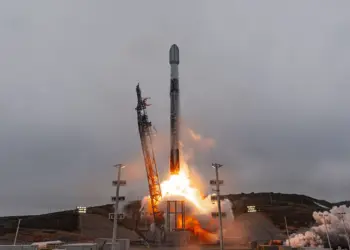
On Tuesday, June 23, at 13:43 Kyiv time, SpaceX is scheduled to launch a Falcon 9 rocket. The launch will take place from Space Launch Complex 40 (SLC-40), located at the U.S. Space Force Station at Cape Canaveral, Florida, USA. Given the company’s high launch cadence, such an event would typically not warrant dedicated coverage; however, this mission is notable because its payload is the Starfall capsule test prototype.
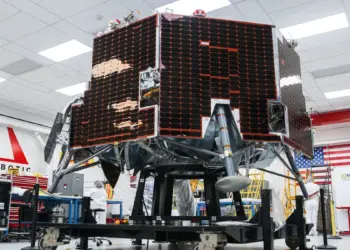
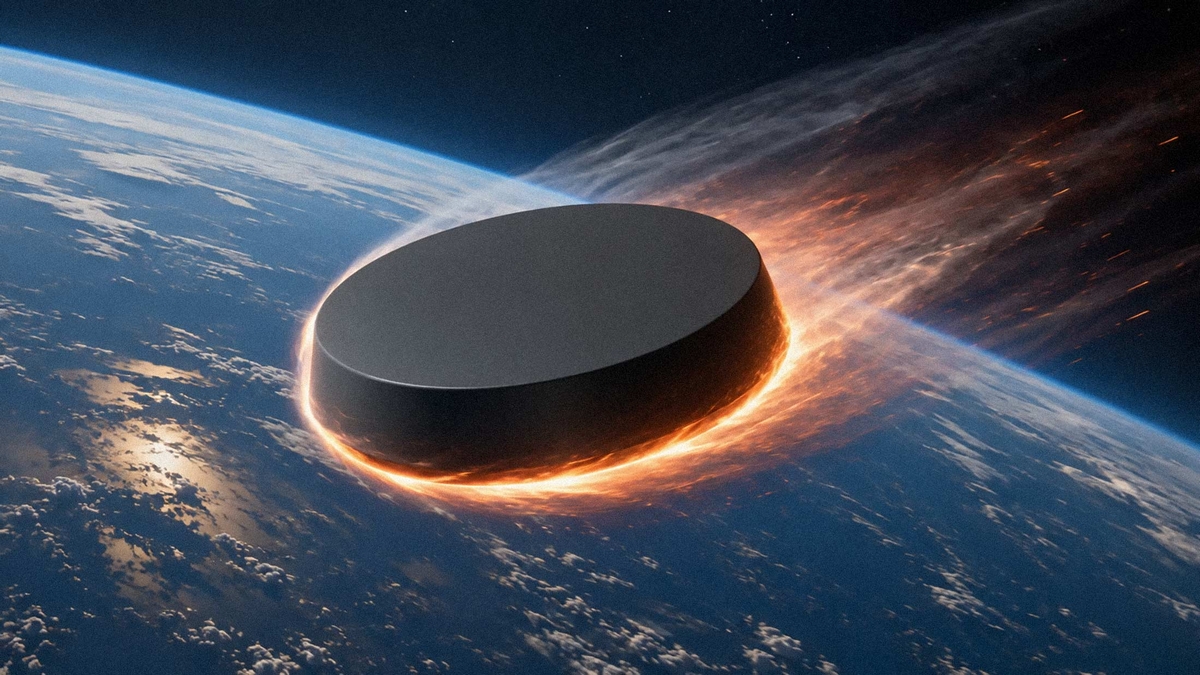
According to documentation published by the U.S. Federal Aviation Administration (FAA), the Starfall capsule is shaped like a large hockey puck. With a diameter of 3 meters and a thickness of 75 centimeters, the vehicle has a dry mass of 2.1 tonnes and is capable of carrying up to 1 tonne of payload. The upper section of the structure is made of aluminum and incorporates dedicated thermal protection elements, while the lower section is based on carbon fiber reinforced material further wrapped in a high-performance thermal shielding layer.
The capsule does not feature an onboard main propulsion system; however, attitude control is provided by nitrogen-fueled cold gas thrusters. The vehicle is also equipped with parachutes to ensure safe re-entry through the dense layers of the atmosphere. To maintain payload integrity, the internal compartment is pressurized using nitrogen or another inert gas.
Due to the lack of onboard thrust, Starfall remains attached in orbit to a dedicated structural frame, which provides the necessary impulse when deorbiting is required. Operationally, Starfall is designed to support two primary mission profiles, and schematic representations of the vehicle are included in FAA documentation.
The first intended use case is as an automated scientific laboratory for commercial clients, which is expected to become particularly relevant after the decommissioning of the International Space Station. Despite being significantly smaller and less versatile than a conventional space station, Starfall would allow users to conduct experiments in microgravity and vacuum conditions, as well as to manufacture high-precision products in orbit, including crystals and pharmaceutical compounds.
However, the second proposed mission profile appears to be of greater strategic interest. SpaceX representatives reportedly view Starfall as a potential system for long-term storage of assets in orbit, with the capability of rapid on-demand delivery to specific locations on Earth within very short timeframes. The concept is based on a distributed network of such capsules, together with dedicated carrier platforms placed in different orbital regimes, enabling deorbiting operations upon command.
Such a technology appears particularly attractive for delivering emergency aid to disaster-affected regions. It has also attracted significant interest from the U.S. military command and allied nations, which currently invest substantial resources in establishing and maintaining a global network of ground-based depots in preparation for potential crisis scenarios. Placing critical supplies in orbital storage would, in theory, reduce the need for a large number of terrestrial facilities, potentially improving their resilience against local threats and simplifying coordination challenges associated with operating storage infrastructure across multiple jurisdictions.
This concept is not entirely new. The U.S. Air Force has previously explored the use of launch vehicles for cargo delivery, while the aerospace defense company Inversion has proposed concepts for orbital cargo transport systems. However, SpaceX’s advanced launch capabilities, including the Starship system with a payload capacity of 100 tonnes, would in principle allow Starfall capsules to be deployed as secondary payloads during routine flight operations.
If the tests proceed without issues, the demonstration mission is expected to place the Starfall capsule on a suborbital trajectory toward a designated recovery zone located approximately 1,300 km off the western coast of North America. After splashdown, SpaceX personnel will attempt to recover and retrieve the vehicle, provided that such an operation is technically feasible.
Read also:
- SpaceX Dominance: Elon Musk’s Company Has Launched More Satellites into Orbit Than the Rest of the World Combined
- Tehran threatens Elon Musk: Ukraine could save SpaceX
Source: newatlas