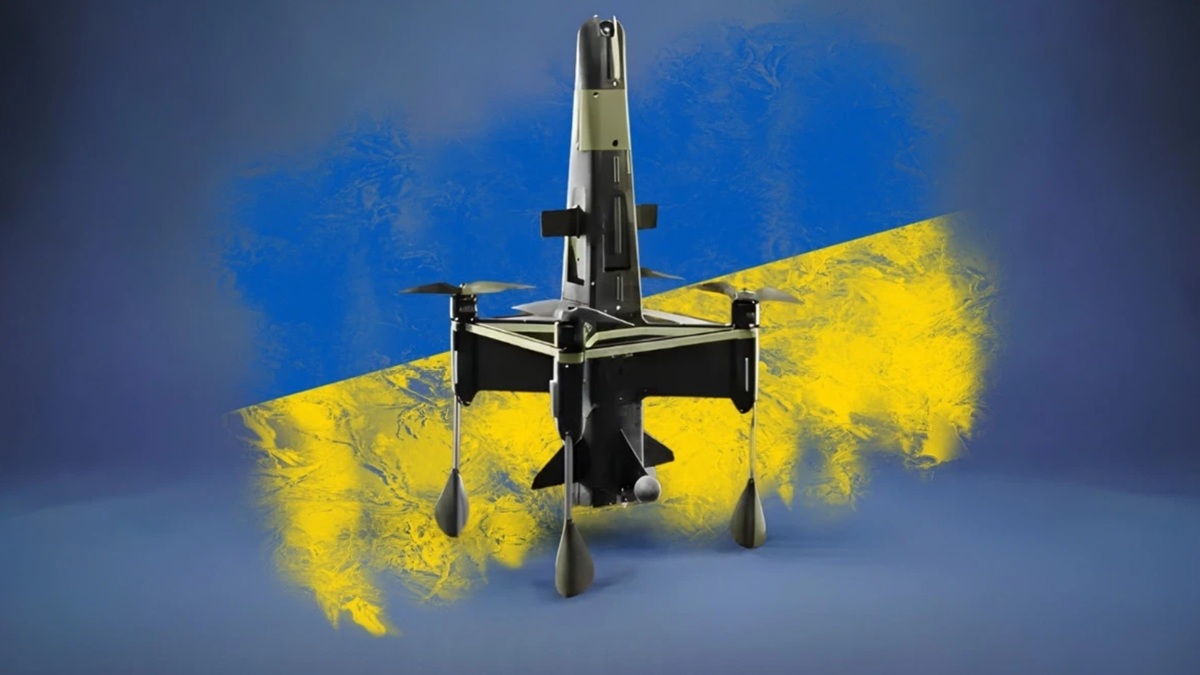
Today, I will cover the new Ukrainian interceptor drone, JEDI Shahed Hunter, designed to assist Ukrainian forces in neutralizing enemy UAVs.
Read also: Everything About the P1-Sun – SkyFall’s Ukrainian Interceptor Drone
TABLE OF CONTENT:
What is Known
On March 23, 2026, the Ukrainian Ministry of Defense officially codified and approved the JEDI Shahed Hunter unmanned aerial system for operational use in the Armed Forces of Ukraine.
In a context where Ukraine’s airspace is increasingly crowded with dozens or even hundreds of inexpensive enemy drones daily, traditional air defense systems become prohibitively costly. The JEDI Shahed Hunter introduces a new approach: a fast, autonomous, and relatively low-cost “hunter drone” that operates without continuous operator intervention. It represents a shift from reactive defense toward proactive, intelligent countermeasures.

This is not another reconnaissance or FPV strike drone, but a specialized autonomous interceptor specifically designed to target Russian kamikaze drones such as Shahed, Geran, and Gerbera, as well as reconnaissance UAVs like Zala and Supercam.
Today, we will take a closer look at its capabilities and features.
Concept: Autonomous Shahed Hunter
The JEDI Shahed Hunter is a quadcopter-style UAV with vertical takeoff and landing (VTOL) capabilities. It does not require runways or airstrips, as it can be deployed directly in a designated area and be operational within minutes. Its primary design goal is maximum autonomy. The drone receives targeting information directly from radar stations, automatically calculates an interception trajectory, locks onto targets using onboard sensors, and neutralizes them.
No manual control is required during the attack phase. The ground control station primarily coordinates flight, maintains stable communication, and ensures accuracy. The drone itself operates like a true “Jedi” – fast, precise, and largely independent of human intervention. This approach reduces operator workload and allows for effective countermeasures against mass drone attacks, even when dozens of targets are simultaneously in the air.
Read also: Mission Control: How Ukraine Is Building a Unified Digital Brain for Drone Warfare
Technical specifications: compact yet powerful
According to the Ukrainian Ministry of Defence, the key specifications of the JEDI Shahed Hunter are as follows:
- Type: vertical take-off quadcopter
- Weight: just over 4 kg
- Payload: up to 500 g of explosives (enough to reliably take out a Shahed or other kamikaze drone)
- Speed: over 350 km/h (significantly exceeds the Shahed-136’s cruising speed of around 120 km/h)
- Maximum flight altitude: up to 6,000 m
- Coverage radius: up to 40 km (a single system covers a significant area of the sky)
- Powerplant: four high-performance electric motors, lightweight yet robust frame, high-capacity battery
- Sensors: day camera + thermal imaging camera (24/7 operation in all weather conditions)
- Guidance: automatic target acquisition upon receiving data from the radar
The specifications are notable: speeds exceeding 350 km/h and a maximum operational ceiling of up to 6 km. However, the system’s functionality is arguably more important than the raw numbers. According to the Ukrainian Ministry of Defense, the JEDI receives radar data automatically, reducing the time required to enter the interception zone. The ground control station handles flight coordination, communication, and precise targeting, while the drone itself can autonomously detect, track, and localize targets. Additionally, it is equipped with both a daylight camera and a thermal imager, enabling operations at night – when Russian drone attacks are particularly frequent.
This combination of capabilities distinguishes the JEDI from a standard FPV drone with a larger motor, positioning it as an attempt to establish a full-fledged low- and medium-speed aerial defense system. Ukrainian sources indicate that the system is intended to protect airspace within a radius of up to 40 km.
However, this range should be interpreted cautiously, as actual effectiveness depends on the radar network, the number of available drones, operator training, and attack density. The announcement nevertheless signals significant ambition: the system is designed not for isolated interceptions but as a substantial component of local urban air defense. Thanks to its lightweight frame and powerful motors, the drone is highly maneuverable and fast. It does not simply “chase” slower Shahed drones; it rapidly closes distance, adjusts its course in real time, and performs precise interceptions.
Read also: Weapons of Ukraine’s Victory: High-precision APKWS II Missile
How the System Works: From Radar to Interception
The operational sequence is as follows:
- Radar detects an enemy drone and automatically relays the target coordinates to the JEDI Shahed Hunter.
- The interceptor takes off immediately (or is already airborne) and heads toward the target area.
- Onboard sensors – including cameras and likely additional systems – acquire the target.
- The drone autonomously adjusts its trajectory, closes in, and neutralizes the threat with a 500-gram payload.
- The ground station oversees the overall process and maintains communication.
This setup makes the JEDI particularly well-suited for protecting critical infrastructure, urban areas, and energy facilities during large-scale nighttime attacks, when Shahed drones fly low, slow, and in significant numbers.
Read also: All About the NEO Hunter Mission: How an Ion Beam System Could Protect Earth
Why Ukraine Needs This “Hunter” Now
Russia is increasingly saturating Ukrainian airspace with inexpensive kamikaze drones. On a single night (March 24–25, 2026), 147 UAVs of various types were launched. Even more striking are the figures from March 24: according to the Ukrainian Ministry of Defense, nearly 1,000 attack drones – including Shahed, Gerbera, and other models – were deployed in a 24-hour period, with air defenses neutralizing 541 of 556 drones in just one major wave. This scale highlights the need for faster and more cost-effective interception methods.
Most Ukrainian interceptor drones cost a few thousand dollars or less, whereas a PAC-3 missile for a Patriot system can cost around $4 million. Shahed-136 drones, developed in Iran and now mass-produced by Russia, are estimated at roughly $30,000–100,000 each. The math is clear: using high-cost missiles to destroy inexpensive, single-use UAVs is not financially sustainable, even if the defense is otherwise effective.
The JEDI Shahed Hunter fits into a new logic of air defense being developed in Ukraine under the pressure of modern warfare and mass drone attacks. It is not just another weapon; it represents a shift in the philosophy of air defense – from relying on a limited number of expensive systems to a multi-layered, densely deployed, and economically efficient ecosystem.
Cost is a primary factor. Traditional missile systems like Patriot or NASAMS remain essential for intercepting ballistic and cruise missiles, but employing them against low-cost drones such as Shahed is uneconomical. The JEDI Shahed Hunter addresses this gap, providing an affordable interception tool that reduces the need to expend costly missiles where a cheaper solution suffices.
Scalability is another key advantage. Unlike complex air defense systems, whose production is limited both technologically and financially, interceptor drones can be produced in large quantities. This enables widespread deployment across both front-line and rear areas, which is critical when the adversary relies on massed drone attacks.
The third key aspect is the drone’s autonomy. Ukraine’s modern airspace is congested with multiple types of targets: missiles, drones, decoys, and friendly air defense assets. Under such conditions, human operators can become a bottleneck. The JEDI Shahed Hunter is designed for high levels of automation – from detection to engagement – reducing operator workload and enabling faster responses to threats, especially during mass attacks.
Equally important is deployment flexibility. Its vertical takeoff capability allows the system to be deployed almost anywhere, without prepared positions and with minimal infrastructure. This enables rapid coverage of gaps in air defense, swift repositioning, and adaptation to changing enemy tactics.
At the same time, the JEDI Shahed Hunter is not intended as a replacement for larger air defense systems. Its role is distinct: it occupies an intermediate but critical layer of defense – between low-level systems (machine guns, mobile teams, MANPADS) and high-tech complexes like Patriot or NASAMS. This mid-tier has long been the weakest link, and current efforts focus on strengthening it.
The Ministry of Defense explicitly states that solutions like JEDI are part of a broader strategy: to create a system capable of near-100% real-time detection of aerial threats and interception of at least 95% of missiles and drones. Achieving this is practically impossible without mass-produced, cost-effective, and automated assets.
The JEDI Shahed Hunter is not the first project in this framework. Earlier initiatives include codified systems like P1-SUN, Baton from EDRONE, short-range anti-drone solutions, and other tactical-level systems. However, JEDI appears to be among the most ambitious, aiming to combine scale, autonomy, and effectiveness into a single platform.
Effectively, Ukraine is developing a new air defense architecture, where success depends not only on the quality of individual systems but also on their quantity, interoperability, and ability to function as a unified network. Within this architecture, the JEDI Shahed Hunter plays a defined role: providing rapid, efficient interception of mass-produced, low-cost threats without excessive expenditure.
Read also: Weapons of Ukraine’s Victory: TRIDON Mk2 Mobile Air Defence Systems from BAE Systems Bofors
Prospects and Challenges
Official approval for operational use is only the beginning. The most critical questions now concern production scale: how many units can Ukraine’s defense industry manufacture? How quickly will they reach frontline units? And how effectively will they integrate with the existing radar network?
History has repeatedly shown that even the best system on paper is effective only when deployed in sufficient numbers, operated by well-trained personnel, and supported by reliable logistics. The JEDI Shahed Hunter has strong potential to become a key component of a multi-layered air defense system, combining radar stations, autonomous interceptors, FPV “hunter” drones, and traditional missile systems.
Ukraine is not merely responding to the Russian drone threat – it is developing a new class of weaponry that could serve as a model for other nations facing similar challenges. The concept of “drones against drones” is no longer a future scenario but an active component of modern warfare.
The JEDI Shahed Hunter is more than a technical innovation. It symbolizes Ukraine’s transition to a new level of defense: intelligent, cost-effective, and technologically advanced. While Russia continues to launch thousands of Shahed drones, Ukrainian “Jedis” are already ready to meet them in the sky.
Read also: