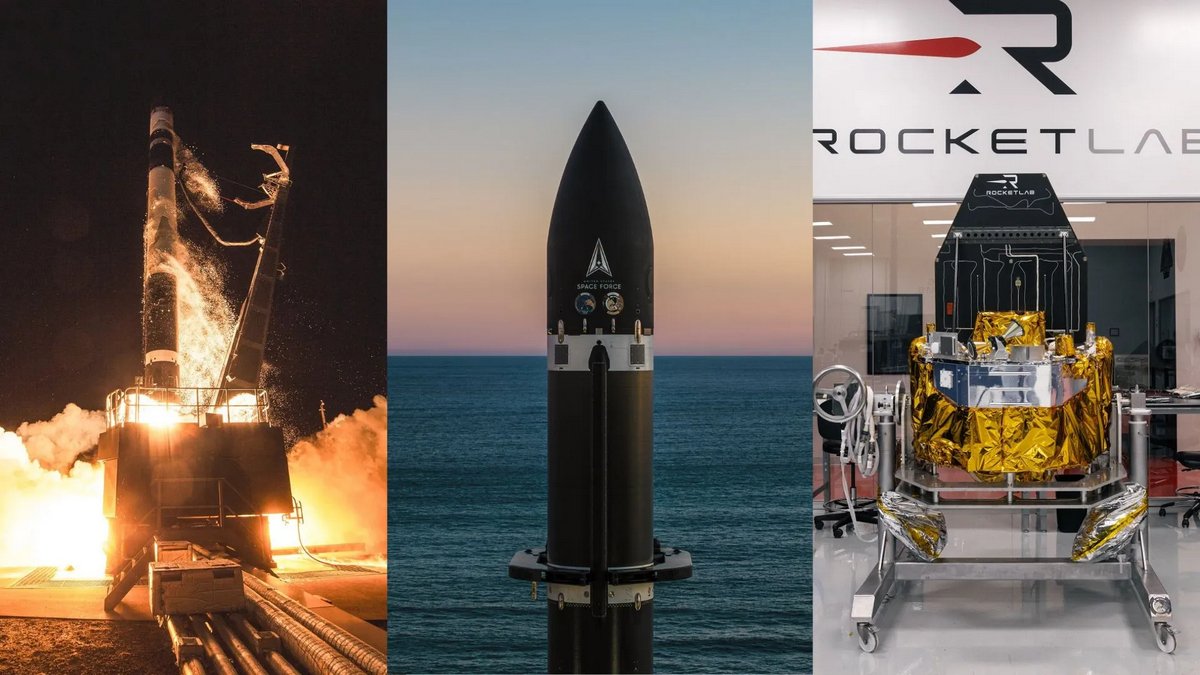
U.S.-based Rocket Lab launched an Electron rocket from its New Zealand site, rapidly delivering a military inspector satellite into Earth orbit less than 24 hours after receiving the corresponding request from the U.S. Department of Defense. The mission was conducted with minimal publicity and without drawing significant public attention.
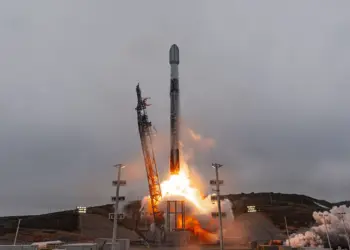
The launch took place on June 19, 2026, from the Onenui launch complex located on the Māhia Peninsula. As of now, Rocket Lab representatives have neither commented on nor officially confirmed the mission. However, several hours before liftoff, notices were issued regarding the temporary closure of certain maritime and airspace zones. The nature of these restrictions clearly indicated preparations for an Electron launch from New Zealand aimed at placing a payload into a Sun-synchronous orbit.

Official confirmation of the spacecraft’s successful deployment came only a day later from the U.S. Space Force. The military registered two new objects in orbit. The first was the VICTUS HAZE Puma satellite itself, which was placed into an orbit with a 97.4° inclination and an altitude ranging from 347 to 461 km. The second object was identified as the launch vehicle’s upper stage, which occupies a similar orbit with an altitude between 173 and 432 km.
In April 2024, the U.S. Space Force signed contracts with private companies True Anomaly and Rocket Lab to organize and conduct a series of military orbital maneuvers under the codename VICTUS HAZE. Under the terms of the agreement, True Anomaly was tasked with developing a satellite intended to simulate an adversarial spacecraft, representing capabilities associated with countries such as Russia or China. Rocket Lab, in turn, was assigned the development of a dedicated inspector spacecraft. The exercise is intended to demonstrate the United States’ ability to respond effectively to threats in space, including countering hostile satellites and protecting its own orbital assets from potential attacks. One of the key requirements set by the military was the ability to launch the inspector spacecraft within 24 hours of receiving the order.
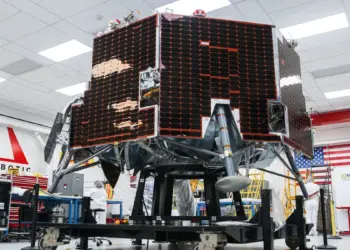
The VICTUS HAZE Puma spacecraft is based on Rocket Lab’s Photon platform. Its technical capabilities enable complex orbital maneuvers and close-proximity operations with other objects in space. The role of the opposing satellite in the exercise is performed by the Jackal 004 spacecraft, which reached orbit earlier in May 2026. It was launched aboard a SpaceX Falcon 9 rocket from Vandenberg Space Force Base in California as part of a rideshare mission that also carried South Korea’s CAS500-2 Earth observation satellite.
Industry analysts and independent observers noted that at the moment of Electron’s liftoff, the orbital plane of Jackal 004 – currently operating in a 97.4° orbit at an altitude of 498 × 509 km – passed directly over Rocket Lab’s Onenui launch site in New Zealand. The spacecraft’s manufacturer recently announced the successful completion of initial flight testing and confirmed its readiness to proceed to the next phase of the orbital exercise. According to calculations by noted space analyst Jonathan McDowell, the VICTUS HAZE Puma satellite approached Jackal 004 to within approximately 100 km on June 19.
The covert mission marked the 90th launch for the Electron family, including the specialized HASTE suborbital variant, since the rocket’s debut in May 2017. Over the course of its operational history, the vehicle has delivered 273 spacecraft to a variety of Earth orbits and interplanetary trajectories.
Read also:
- SpaceX to Send Revolutionary Starfall Cargo Capsule into Orbit
- SpaceX Dominance: Elon Musk’s Company Has Launched More Satellites into Orbit Than the Rest of the World Combined
Source: interestingengineering