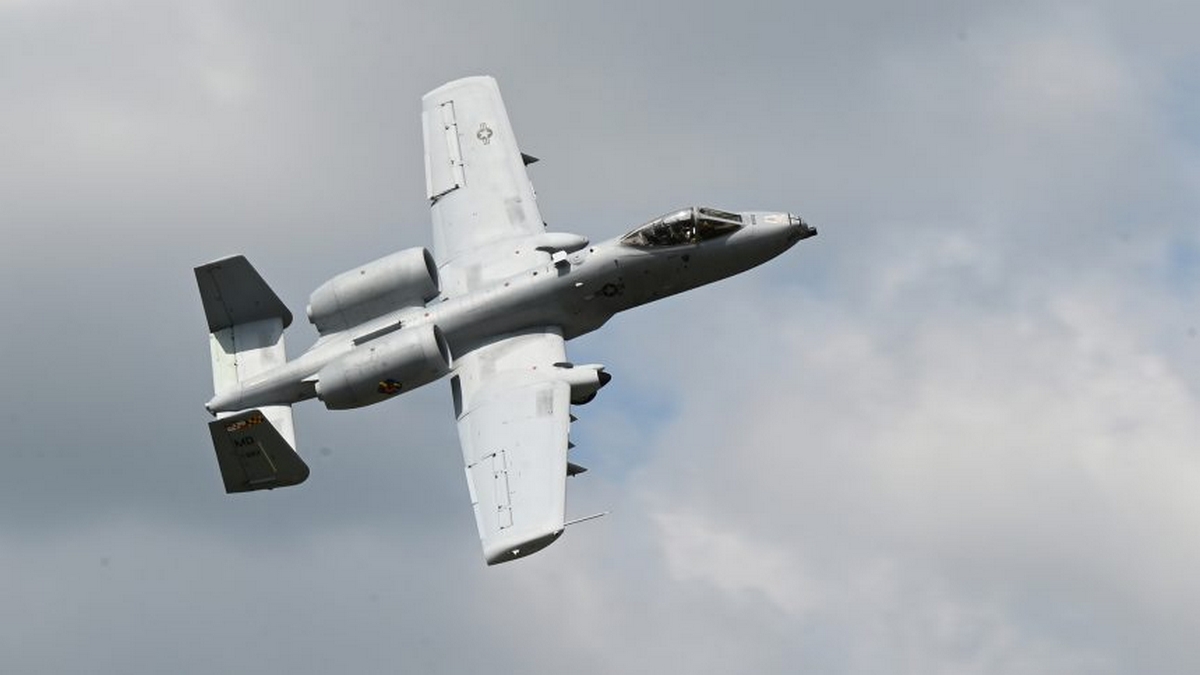
Near the Strait of Hormuz, almost simultaneously with the loss of an F-15E Strike Eagle over Iran, the U.S. Air Force also lost an A-10 Thunderbolt II. According to anonymous U.S. officials cited by The New York Times, the A-10 pilot was successfully rescued.
While search and rescue operations continue for at least one crew member of the F-15E that crashed under unclear circumstances over Iran on Friday, April 3, 2026, U.S. sources report that an A-10 Thunderbolt II – commonly known as the Warthog – was also lost near the Strait of Hormuz. The pilot of the single-seat A-10 is reported to have been recovered without injuries.

Given the location of the incident, the A-10 Thunderbolt II was likely involved in routine patrol missions aimed at countering Iran’s small-boat fleet and unmanned systems, which have effectively disrupted shipping through the Strait of Hormuz. Previous reporting has highlighted the aircraft’s effectiveness in such roles, particularly its ability to operate at standoff distances from potential air defense threats. Publicly released images of A-10 aircraft have also shown nose art and crew markings.
Details surrounding the loss of the A-10 remain limited, including whether it resulted from mechanical failure or hostile action.
The United States is currently deploying additional A-10 aircraft to the region via RAF Lakenheath. Notably, F-22 Raptor aircraft previously stationed there – likely in support of Middle East operations – have reportedly returned to the United States.
In addition to the reported losses of the F-15E Strike Eagle and A-10, there are unconfirmed reports and imagery suggesting a possible strike on a UH-60 Black Hawk / HH-60 Pave Hawk helicopter involved in combat search and rescue (CSAR) operations.
In other parts of the region, flight tracking data indicated that a F-16 Fighting Falcon operating over Saudi Arabia near the border with Iraq transmitted a general emergency code “7700” at approximately 15:00 UTC (18:00 Kyiv time). A KC-135 Stratotanker in the vicinity of Israel issued a similar signal around 18:40 UTC (21:40 Kyiv time). The causes of these emergency alerts remain unclear and may range from minor technical issues or low fuel levels to more serious malfunctions. Such signals are not uncommon even outside conflict zones, though they have drawn attention in the context of the day’s broader events.
The operational tempo of Operation Epic Fury appears to be placing significant strain on both crews and aircraft, as flight hours exceed typical training conditions. This naturally increases the likelihood of technical issues and emergency declarations.
Read also:
- American Attack Aircraft, Part 14: Career of Fairchild Republic A-10 Thunderbolt II
- American Attack Aircraft, Part 13: New Generation, the Precursors to the A-10A
Sourse: theaviationist