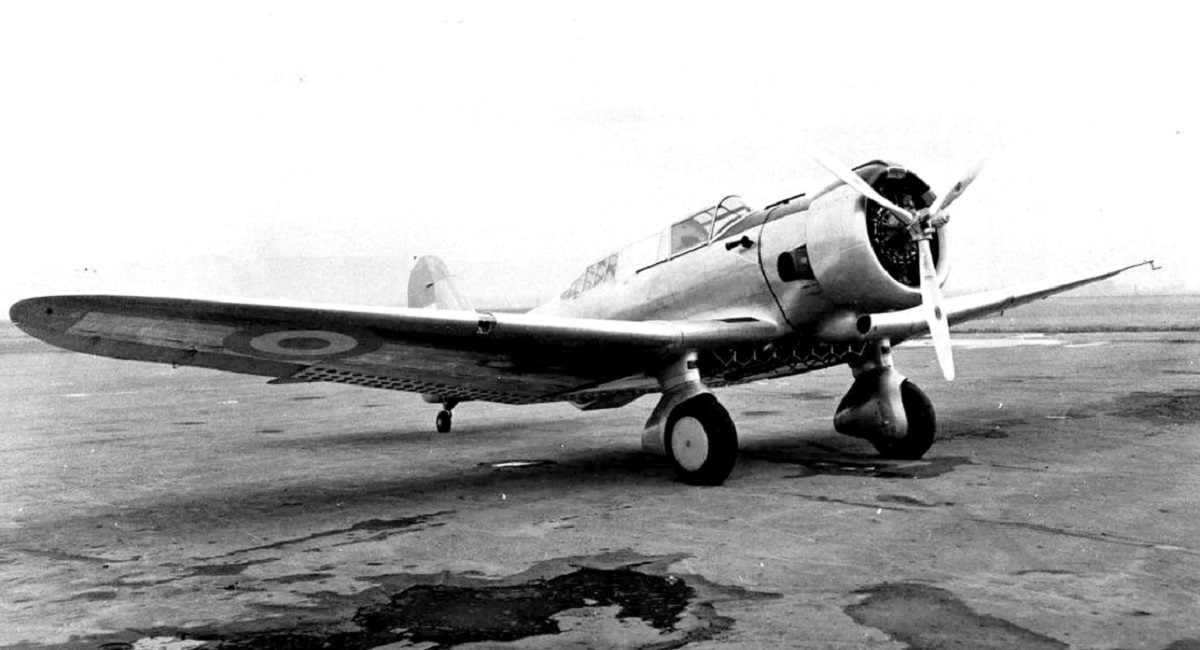
Building on the A-17 platform, the aircraft developers sought to enter international markets. Adopting a flexible approach to customer requirements, they produced a series of variants tailored to specific operators. By that time, Northrop had been acquired by its parent company and became a subsidiary of Douglas in El Segundo. Consequently, export versions of the attack aircraft were produced under the Douglas 8A designation. The design allowed for considerable adaptation to customer specifications, resulting in the development of multiple variants.
Read also:
- First American Attack Aircrafts: Development Path, Part 1
- First American Attack Aircrafts, Part 2: Alternative Projects of the Early 1920s
- American Attack Aircraft, Part 3: The First Production Variants
- First American Attack Aircraft, Part 4: On the Eve of the 1930s
- First American Attack Aircraft, Part 5: Production A-12 “Shrike”
- American Attack Aircraft, Part 6: Experiments of the 1930s
- American Attack Aircraft, Part 7: John Northrop’s “Gamma”
- American Attack Aircraft, Part 8: Contribution of Gerard Valtí
- American Attack Aircraft, Part 9: Northrop A-17
TABLE OF CONTENT:
Swedish debut
The first customer was Sweden, which purchased two aircraft – one complete and one as a kit of components – along with a license for local production. The Swedish variant, designated Douglas 8A-1, corresponded to the A-17 configuration, featuring fixed landing gear. However, it was fitted with a British engine instead of the original American powerplant.
The first unit (serial number 378), equipped with a 9-cylinder Bristol Pegasus XII engine rated at 875 hp and a three-blade propeller, underwent flight testing in the spring of 1938 and was delivered to the customer on April 22. In Sweden, it was assigned the number 7001 and designated B 5A, later reclassified as B 5D when converted for use as a target tug. The second unit (serial number 410) was shipped to Sweden in a disassembled state on August 8, 1938. Its components were used to assemble the first locally produced licensed aircraft, which received the Swedish number 7002.

Licensed production of the “Douglases” was carried out by ASJA in Linköping. The aircraft were fitted with 9‑cylinder Mercury XXIV engines rated at 980 hp, manufactured under Bristol licence by NOHAB and designated MyXXIV. Compared with the American original, they also differed in the shape of the cockpit canopy and the installation of Swedish 8 mm machine guns.
The Swedes modified the B 5 for dive‑bombing by fitting a specialised “fork” under‑fuselage rack that ejected the bomb clear of the propeller disc during release. Maximum bomb load was 700 kg: one 500 kg or two 250 kg bombs under the fuselage, and either four 50 kg or twelve 12 kg bombs on underwing racks.
In September 1938, the Swedish Air Force ordered 40 B 5B aircraft, and the following year the order was increased by 24 units. As noted earlier, the first aircraft had been assembled from American components. In 1940, ASJA produced the remaining 63 B 5B aircraft (numbers 7003–7065). In 1941, 39 B 5C aircraft (numbers 7066–7104) were built; these differed only slightly from the previous variant. Production of the B 5C was carried out by SAAB, which had succeeded ASJA.
The B 5B/C aircraft served in two wings: F4 in Östersund and F12 in Kalmar. By 1943–1944, they had been largely replaced in frontline roles by the new Swedish light bomber B 17, which was strongly influenced by the B 5 design. The B 5 was reassigned to secondary roles, including training and towing Lg 105 gliders. One aircraft was also used for testing floats intended for the S 17BS seaplane.
In Latin America
During the 1930s, Latin American countries were a traditional market for American aircraft. It is therefore unsurprising that the introduction of a new combat aircraft with relatively advanced performance attracted significant interest. The Douglas 8A-2 variant was produced for the Argentine Air Force. These aircraft featured fixed landing gear and differed from the American A-17 and Swedish B 5 in having a fuselage-mounted “trough” for the bombardier, which retracted partially into the fuselage in flight.
The aircraft was powered by a 9-cylinder Wright R-1820-G3 engine rated at 840 hp, coupled with a three-blade Hamilton Standard propeller. Armament consisted of Madsen machine guns, standard for the Argentine Army and Air Force at the time. The wings carried two 11.35 mm and two 7.65 mm guns, and an additional 7.65 mm gun was mounted in the dorsal defensive position.
The standard bomb load, as with the American A-17, consisted mainly of small‑calibre bombs: the aircraft could carry up to two dozen 13.6‑kg ordnance items. Provision was also made for heavier stores – six 55‑kg, four 110‑kg, two 270‑kg, or one 550‑kg bomb. Thus, while the Swedish variant functioned as a typical light bomber, the Argentine version was configured for use as an attack aircraft.
Argentina ordered 30 aircraft, delivered between February and May 1938. The machines carried serial numbers 348–377 and were assigned Argentine codes A‑401 to A‑430. The Douglases equipped the 3rd Assault Aviation Regiment, based at El Palomar (later relocated to El Plumerillo), and several airframes were allocated to the flight squadron of the military aviation school. In 1949 the Douglases were replaced by locally produced twin‑engined IAe.24 Calquín attack aircraft. Seventeen airframes that remained in service were reclassified for reconnaissance use (the letter “A” in their codes was replaced with “O”) and transferred to the 1st Observation Group. The last Douglases were retired in early 1954.
Another Latin American customer, Peru, selected a more advanced configuration with retractable landing gear. The Douglas 8A‑3P variant was based on the A‑17A but fitted with a different powerplant (Wright R‑1820‑G103 rated at 1,000 hp) and the same under‑fuselage “trough” for the bombardier as on the Argentine machines. Defensive armament and bomb‑load arrangements corresponded to the base type. The aircraft carried five 7.62 mm machine guns – four mounted in the wings and one in a dorsal movable position. Normal bomb load was either twenty 13.6‑kg bombs in the bomb bay (272 kg total) or four 45.4‑kg bombs on external racks (≈182 kg total).
Peru ordered ten Douglas 8A‑3P aircraft (serial numbers 412–421), with the first unit undergoing flight testing on 21 November 1938. Three aircraft were ferried to the customer by air, covering the 7,709 km distance from El Segundo to Lima in 24 hours 45 minutes of flight time. This corresponded to an average speed of 311.5 km/h, which was a notable achievement for the period. The remaining seven aircraft were transported by sea.
The Douglas 8A‑3P aircraft were assigned to the 31st Strategic Reconnaissance and Attack Squadron (XXXI Escuadrón de Información Estratégica y Ataque). In July 1941, the unit participated in the Peruvian–Ecuadorian conflict. The last aircraft of this type remained in service until the early 1950s.
An unexpected customer – the Netherlands
Due to a shortage of modern fighters, Douglases were assigned to the 3rd Squadron of the Army Cooperation Fighter Group, based at Ipenburg. As of 10 May 1940, the unit operated 12 aircraft. One was destroyed on the ground during the opening minutes of the German attack. The remaining eleven aircraft took off and engaged German twin-engine Bf 110 fighters. The outcome was disastrous: seven Douglases were shot down in combat, and the remaining four were destroyed on the ground shortly after landing. The crews recorded only a single confirmed kill – a Ju 52/3m transport aircraft.
The Iraqi episode
Between April and June 1940, Iraq received 15 Douglas 8A‑4 aircraft (serial numbers 613–627). In terms of armament and powerplant, these aircraft were similar to the Peruvian machines, differing only in minor equipment details. Delivery took several months, with the full batch arriving by sea at Basra only on 15 September 1940. Additionally, the weapons were shipped separately, and the vessel carrying them was detained by the British in Singapore.
The Douglases were assigned to the 7th Fighter‑Bomber Squadron of the Iraqi Air Force, based at Rashid Air Base near Baghdad. However, they remained largely non-operational and were destroyed on the ground in May 1941 during the suppression of Rashid Ali’s uprising.
Read also:
- Everything About the Bell AH-1Z Viper and UH-1Y Venom Helicopters: History, Specifications, and Prospects in Ukraine
- General Atomics Unveils Render of MQ-20 Avenger Drone Equipped with Laser Weapon
The pinnacle of development
The culmination of the A‑17 series was the Douglas 8A‑5. In early 1940 Norway ordered 36 aircraft (serial numbers 715–750). They were fitted with Wright GR‑1820‑G205 engines rated at 1,200 hp. Offensive armament comprised four standard 7.62 mm machine guns mounted in the wings, supplemented by a pair of 12.7 mm guns in under‑wing housings. Defensive armament was strengthened by replacing the gunner’s single 7.62 mm weapon with a twin‑barrel mount. Maximum bomb load was 1,800 lb (816 kg).
The Douglas 8A‑5 aircraft were delivered to the customer between October 1940 and January 1941. By that time, Norway was already under Nazi occupation, so the aircraft were transferred to the Norwegian government-in-exile. The Douglases arrived at the Island Airport in Toronto, Canada, where a training center, known as “Little Norway,” was operating. However, in 1942 the maintenance of this center was deemed impractical, and training for Norwegian squadron personnel was subsequently distributed among Canadian and British flight and technical schools.
The 31 remaining Douglases were returned to the U.S. government. They were incorporated into the U.S. Army Air Forces under the designation A‑33, carrying serial numbers 42‑13584 to 42‑13601 and 42‑109007 to 42‑109019. The aircraft were used for training and target‑towing duties. In June 1943, thirteen of them were transferred to Peru under the Lend-Lease program. Initially, they joined the 31st Squadron, which also operated Douglas 8A‑3R aircraft, and were later reassigned to the 23rd Squadron. In the Peruvian Air Force, the A‑33 remained in service until 1958.
The end of the interwar period
The development of American attack aircraft in the interwar period culminated with the Douglas 8A. This aircraft illustrates a shift in operational focus, from the traditional attack role toward that of a light bomber. During World War II, U.S. Army Air Forces attack aircraft typically fulfilled similar functions, as seen with the twin‑engine Douglas A‑20 and the single‑engine dive bomber North American A‑36, the predecessor of the well‑known Mustang.
Read also: