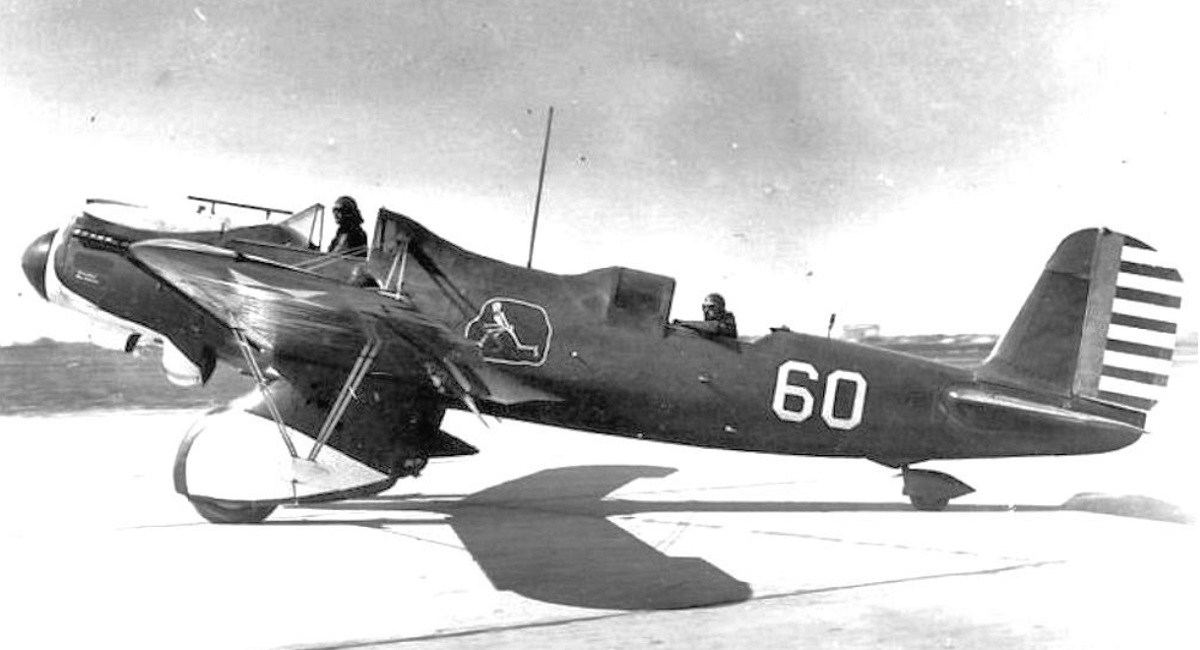
In the early 1930s, the U.S. finally introduced its first production attack aircraft: the Curtiss A-3 biplane. The plane proved generally reliable, easy to fly, and straightforward to maintain. However, aviation technology was advancing rapidly. A generational shift was underway – replacing bulky biplanes with more streamlined monoplanes. At the same time, the aircraft engine industry was producing increasingly powerful powerplants, setting the stage for the development of a new generation of American attack aircraft.
Read also:
- First American Attack Aircrafts: Development Path, Part 1
- First American Attack Aircrafts, Part 2: Alternative Projects of the Early 1920s
- American Attack Aircraft, Part 3: The First Production Variants
TABLE OF CONTENT:
Competition
In a competition organized by the U.S. Army Air Corps, two companies submitted original designs – not conversions of existing aircraft for other roles. The requirements were clear: the aircraft had to be an all-metal monoplane, powered by a 12-cylinder, liquid-cooled Curtiss V-1570 Conqueror engine. Armor protection was not included, and the main armament was to consist of rifle-caliber machine guns and small high-explosive fragmentation bombs.
Model 17
The first proposal came from Atlantic-Fokker, the American branch of the well-known Dutch company. In May 1930, Atlantic-Fokker was acquired by General Motors and renamed General Aircraft. Their design, the Model 17, featured a low-mounted cantilever wing with a relatively thick airfoil, characteristic of Fokker designs of the period. The landing gear was fixed, but the main struts were enclosed in large fairings. The two-man crew sat in tandem in separate cockpits. Power came from a 600 hp V-1570-27 engine driving a fixed-pitch, two-blade Hamilton Standard metal propeller. The armament was similar to the A-3B: four 7.62 mm wing-mounted machine guns and one in a turret. Bomb load, however, was increased to 400 pounds (182 kg).

Model 59
The Curtiss design, the Model 59, initially appeared more conservative – its designers did not dare make the low-mounted wing fully cantilevered, instead reinforcing it with struts and wires. However, in terms of wing mechanization, the Curtiss project was more advanced: it featured full-span flaps and automatic slotted leading-edge devices, a first for an American military aircraft. The landing gear, like Fokker’s, was fixed and enclosed in fairings. The engine and armament were similar to the competitor’s, but the forward-firing machine guns were mounted in pairs on the landing gear fairings rather than in the wings. Unlike the Fokker, which carried bombs only on external racks, the Curtiss designers included internal compartments for small-caliber bombs.
Ordered prototypes
The Air Force ordered one prototype attack aircraft from each company:
- The General Aircraft product was designated HA-7 and given the military number 30-226
- The Curtiss product was designated XA-8 and given the military number 30-387.
Flight testing of the XA-7 began in January 1931, putting it nearly six months ahead of its competitor. In April, the XA-7 was delivered to the military for evaluation at Wright Field, Ohio, likely without armament installed at that stage. However, the aircraft’s flight and handling characteristics did not meet the Army’s expectations, and in the summer of 1931, the prototype was returned to the factory for modifications. The nose section was extensively redesigned, the bulky landing gear fairings were replaced with more streamlined teardrop-shaped covers, and the cockpit canopies were reshaped. Unfortunately, these improvements were not enough – the Curtiss design ultimately won the competition.
Curtiss A-8
The XA-8 prototype began flight testing in June 1931 and was almost immediately delivered to the military at Wright Field, as the company sought to make up for lost time against its competitor. By September, it was declared the winner of the competition, though testing continued. The following three months were spent refining the automatic leading-edge devices, which, at high angles of attack and speeds of 90–95 mph (145–152 km/h), improved the aircraft’s low-speed handling. After completing these trials, another two months were devoted to adjustments to the rear cockpit. Only then did the military place an order for 13 pre-production aircraft at $32,298 each, assigning serial numbers 32-344 through 32-356.
The first five aircraft were designated YA-8, while the remaining eight were labeled Y1A-8. This distinction reflected that the two batches of pre-production aircraft were funded through separate budget lines. Beyond this administrative difference, sources diverge on the technical distinctions. Some claim that the YA-8s used V-1570C engines (V-1570-27, the same as the prototype), while the Y1A-8s had V-1570F engines (V-1570-31), which offered the same power but featured an improved cooling system and other refinements. Other sources argue that both subvariants were equipped with the same V-1570-31 engines. Supporting this latter view is the fact that both YA-8 and Y1A-8 carried the same company designation: Model 59A.
The pre-production aircraft were ready by June 1932. Eleven of them (excluding the first and last units) were delivered to the 3rd Attack Group for operational use. Alongside the A-3B, and later the A-12, they remained in service until 1934. In military service, both the YA-8 and Y1A-8 were designated simply as A-8. It’s also worth noting that Curtiss gave the A-8 and its subsequent attack aircraft the unofficial name “Shrike,” after the bird, but this designation was never formally approved by the Air Corps command.
The last Y1A-8 unit (32-356) was equipped with a geared GIV-1570 engine (V-1570-57). This powerplant delivered 675 hp – 75 hp more than the V-1570-31 – but weighed 225 kg heavier. Flight tests of the modified aircraft, designated Y1A-8A, began at the end of 1932 and continued until February of the following year. The flight performance of the Y1A-8A was nearly identical to the Y1A-8, except for a slightly lower top speed. The military initially planned to order 46 serial A-8B attack aircraft powered by the V-1570-57 engines, but ultimately chose a version with a radial engine. The sole Y1A-8A was delivered in September 1933 to the 37th Attack Squadron, where it served under the designation A-8A.
Naval experimental XS2C-1
The first YA-8 unit (32-344) remained with the manufacturer and in September 1932 was re-equipped with a 9-cylinder air-cooled radial engine, the Pratt & Whitney R-1690-9 (R-1690D) Hornet, rated at 625 hp. The aircraft, designated YA-10 in military service and known as “Model 59B” by the manufacturer, successfully completed testing. Although its flight performance slightly decreased compared to the YA-8 (maximum speed dropped from 294 to 281 km/h), air-cooled engines were chosen for the production attack aircraft due to their greater durability and survivability.
Successful YA-10 tests drew the attention of the U.S. Navy, which ordered one modified unit. The aircraft, designated XS2C-1 by the Navy and “Model 69” by the manufacturer, began testing in December 1932. It was powered by a 14-cylinder Wright R-1510-28 engine producing 625 hp. The aircraft had no armament and lacked carrier-based equipment – XS2C-1 was intended purely as an experimental machine, and it was operated in this capacity for several years.
The Curtiss A-8 did not become a mass-produced aircraft – its production was limited to the pre-series batch. However, the later A-12 attack aircraft, developed from it, was built in fairly large numbers and even found buyers abroad. More on that will follow in the next part.
Read also: