Ukraine continues to face a critical shortage of air defense systems capable of effectively intercepting Russian missiles. Against this backdrop, Project Freyja is already being described as one of the most ambitious defense initiatives not only in Ukraine but across Europe.
Over the four years of full-scale war, Ukraine’s defense industry has evolved from improvised workshops to the serial production of long-range strike drones capable of flying thousands of kilometers to engage oil refineries and defense-industrial facilities deep inside Russia. Now, one of the sector’s most successful companies, Fire Point, is taking a step that until recently would have seemed unexpected: a developer of offensive weapon systems is moving into the field of missile defense.
The project, named Freyja, is not an isolated initiative but a direct response to one of Ukraine’s most pressing capability gaps: the shortage of Patriot interceptor missiles needed to defend against Russian ballistic missile attacks.
According to experts, the core technologies required to develop such a ballistic missile defense system already exist. However, the project’s success is expected to depend less on technical feasibility than on overcoming the political, financial, and organizational challenges involved.
Let’s sort it all out.
Read also: Weapons of Ukraine’s Victory: The Heavy Cruise Missile “Flamingo”
TABLE OF CONTENT:
The Company Behind Ukraine’s Long-Range Strike Capability
Fire Point was established following the full-scale invasion and has, within just a few years, grown into one of Ukraine’s leading developers of long-range strike systems. Its portfolio includes the FP-1 strike drone, the heavier FP-2 platform for medium-range strike missions, and the FP-5 Flamingo cruise missile. According to Fire Point co-founder and chief designer Denys Shtilerman, the company’s drones account for approximately 60% of Ukraine’s deep-strike operations against targets inside Russia. While this figure originates from the manufacturer and has not been independently verified, it nevertheless illustrates the scale of the company’s role in Ukraine’s long-range strike strategy.

The FP-1 was designed as a low-cost platform that is relatively simple to manufacture while offering long-range strike capability. Its initial claimed range was approximately 1,600 km, with later upgraded variants reportedly exceeding 2,700 km and approaching 3,000 km.
This experience has enabled the company to build expertise in propulsion systems, composite airframe structures, navigation technologies, distributed manufacturing, and rapid testing cycles. That accumulated know-how appears to have laid the foundation for a more ambitious undertaking: developing a system designed not to strike targets, but to intercept them.
Read also: Weapons of Ukraine’s Victory: FP-1 – A Drone Capable of Reaching Moscow
The Fundamental Difference Between Strike and Interception
The transition from developing strike drones to building a missile defense system represents far more than an expansion of a company’s product portfolio – it is a fundamental shift in engineering requirements. A strike drone follows a pre-programmed flight path over the course of several hours and does not require an immediate response to a maneuvering target. By contrast, a ballistic missile interceptor must detect, track, and engage an extremely high-speed target within minutes – or, in some cases, seconds – while operating not as a standalone platform but as part of an integrated network of radars and command-and-control systems. This places the project in an entirely different category of technical complexity, which helps explain why most countries possessing comparable capabilities have spent decades developing them.
Freyja’s Architecture: A Ukrainian Interceptor Paired with a German Radar
On June 16, 2026, at the Eurosatory defense exhibition, Fire Point and the German company Hensoldt signed a memorandum of understanding on integrating their respective technologies into a comprehensive missile defense system. Under the agreement, Fire Point is responsible for developing the FP-7.X interceptor missile, while Hensoldt contributes its radar expertise, including the TRML-4D mobile radar system.
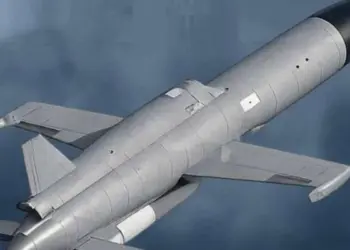
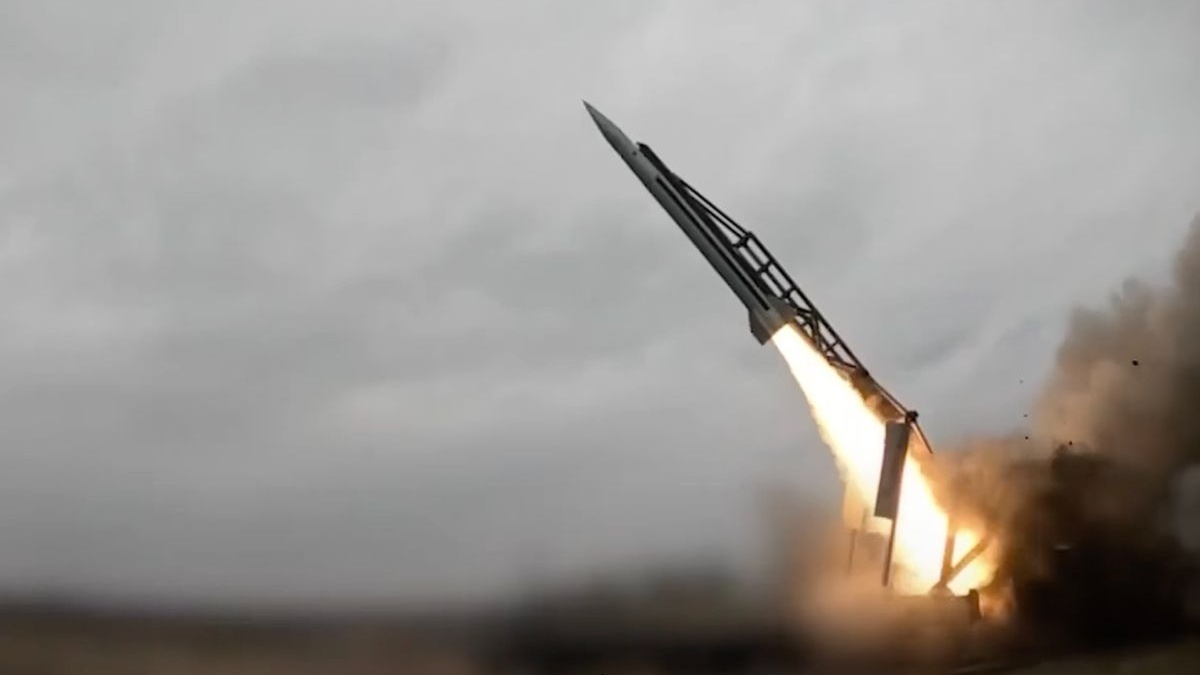
The FP-7.X is derived from the FP-7 ballistic missile and shares the same core architecture as the strike variant, differing primarily in its guidance system. In early June 2026, the company announced the first controlled maneuvering flight of the FP-7.X, a test that demonstrated the missile’s ability to launch, maneuver, and respond to guidance commands. However, this represents a fundamentally different level of validation from demonstrating the capability to successfully intercept a ballistic target.
A complete interception sequence requires the radar to detect an incoming missile, the system to calculate its trajectory, the command center to assign an interceptor and authorize the launch, and the FP-7.X to adjust its flight path before autonomously acquiring the target during the terminal phase. Fire Point claims the interceptor is capable of speeds in the range of 1,500–2,000 m/s and engagements at altitudes of approximately 24 km. However, these performance figures have yet to be validated through instrumented testing against representative targets. The company has also not disclosed detailed information about the interceptor’s terminal kill mechanism – whether it relies on a fragmentation warhead, hit-to-kill impact, or a combination of both. As a result, its likely effectiveness against maneuvering ballistic missiles such as the Iskander-M cannot yet be reliably assessed.
The radar component appears to be at a more mature stage of development. The TRML-4D is already deployed as part of operational air defense systems, including in Ukraine, making it a proven rather than an experimental element of the Freyja architecture. According to the manufacturer, the radar can simultaneously track more than 1,500 targets, detect a fighter aircraft at distances exceeding 120 km, and identify a supersonic missile at ranges of more than 60 km. It has an instrumented range of up to 250 km and a maximum detection altitude of 30 km.
However, these specifications do not by themselves guarantee effective ballistic missile defense coverage. Actual detection and tracking performance depends on factors such as the target’s radar cross-section, altitude, flight profile, and surrounding terrain. Tracking a diving ballistic target, in particular, requires exceptionally high radar accuracy.
Read also: Everything About Ukrainian Interceptor Drone JEDI Shahed Hunter
Missing Components
The interceptor and radar represent only two elements of a complete air and missile defense battery. Freyja also requires a secure data link, a command-and-control center, fire-control software, and, most critically, a terminal seeker. Fire Point is reportedly in discussions with European partners regarding the supply of an infrared seeker capable of distinguishing a missile against atmospheric background clutter, debris, and potential decoys, as well as an active radio-frequency seeker that would improve the system’s resistance to electronic countermeasures.
In addition, the interceptor must be capable of receiving in-flight trajectory updates, requiring a secure communications link between the radar, the command center, and the missile itself. Such a network must remain resilient to both electronic jamming and cyberattacks.
Among the potential partners, the company has identified Thales for radar technologies, Leonardo for tracking systems, and Kongsberg for command-and-control solutions. However, the final industrial consortium has yet to be established. Fire Point is pursuing an open-architecture approach that would allow the integration of radar systems, seekers, and software packages from multiple European suppliers, reducing dependence on any single vendor.
While this architecture offers significant flexibility, it also presents a substantial engineering challenge. Each component must be capable of exchanging data using a common interface, system clocks must remain precisely synchronized, and the software must reliably reconcile potentially conflicting tracking information. Developing this largely invisible integration layer could ultimately prove more time-consuming than designing the interceptor itself.
Read also: Everything About the P1-Sun – SkyFall’s Ukrainian Interceptor Drone
Patriot Shortages as a Driver of a New Strategy
The emergence of Freyja is a direct response to a structural challenge facing Western missile defense. Ukraine currently relies primarily on the Patriot system and PAC-3 MSE interceptors to counter Russian ballistic missile attacks, while demand for these missiles from the United States, Ukraine, NATO members, and countries in the Middle East continues to outpace production capacity. In 2025, Lockheed Martin delivered 620 PAC-3 MSE interceptors. Although the company plans to increase annual production to approximately 2,000 missiles, achieving that output is expected to take several years and is unlikely to resolve the supply shortfall in the near term.
The European alternative, the SAMP/T system and its new Franco-Italian SAMP/T NG variant, is theoretically capable of countering ballistic and cruise missiles, drones, and certain hypersonic threats. However, the limited number of available batteries and Aster interceptors falls well short of meeting the combined requirements of Ukraine and European nations. In this context, Fire Point is attempting to address what is fundamentally an industrial rather than an engineering challenge: ensuring that interceptor production can be scaled to support a prolonged war of attrition.
Read also: Weapons of Ukraine’s Victory: Tempest Air Defense System with AGM-114L Longbow Hellfire Missiles
Projected Cost and Its Limitations
Fire Point estimates the cost of a single FP-7.X interceptor at approximately $700,000, with the stated objective of keeping the overall cost per interception below $1 million. By comparison, the unit cost of a PAC-3 MSE interceptor is generally estimated at between $3.8 million and more than $5 million, depending on the fiscal year and contract terms.
However, Fire Point’s estimate should be viewed as a production target rather than a cost validated through serial manufacturing. Moreover, it does not necessarily account for the broader expenses associated with a complete air and missile defense system, including the radar, launchers, command-and-control infrastructure, support vehicles, personnel training, and logistics.
In addition, a battery may need to launch two interceptors against a single incoming threat to achieve the desired probability of kill, significantly affecting the overall cost equation. Ultimately, the key metric will not be the listed price of an individual interceptor, but the cost per successful interception – a figure that depends as much on interception success rates, system reliability, and maintenance requirements as it does on the projected unit production cost.
Read also: Weapons of Ukraine’s Victory: The “Shvidun” Interceptor Drone
Unclear Funding Structure
Fire Point has secured government contracts worth more than $1 billion for 2026. However, these contracts are understood to relate primarily to the company’s drones and offensive missile systems. No detailed breakdown of funding allocated specifically to the Freyja program has been made public, leaving the development budget, the number of planned batteries, and the distribution of costs between Fire Point, Hensoldt, and partner governments undisclosed. The memorandum of understanding signed with Hensoldt is an industrial cooperation agreement rather than a financing arrangement and does not indicate that the German company is funding the program.
Additional uncertainty stems from the company’s corporate background. A proposal by the UAE-based investment group EDGE to acquire a 30% stake in Fire Point for $760 million – a transaction that would have valued the company at approximately $2.5 billion – was rejected by Ukraine’s antitrust authority. Fire Point later disclosed a separate investment proposal from an unnamed investment bank valuing the company at $5.8 billion, although this figure should be regarded as an indicative valuation rather than evidence of a completed transaction.
The company is also the subject of an investigation by Ukraine’s anti-corruption authorities. Fire Point denies the allegations, which have not resulted in formal charges at the time of writing. This lack of transparency is relevant not only in the domestic Ukrainian context. European customers considering Freyja as a potential procurement program are likely to require clear assurances regarding corporate governance, ownership structure, intellectual property rights, and long-term supply-chain continuity.
Potential for the European Market
If Freyja successfully completes its full testing and qualification program, it could evolve from a capability designed for Ukraine’s defense into a competitive offering in the European missile defense market. Its competitive advantage would likely stem not necessarily from superior performance, but from greater availability for countries unable to procure American or Franco-Italian systems within the required timeframe.
Potential customers could include Central and Eastern European countries strengthening their defenses against Russian missile threats, Gulf states seeking to replenish interceptor inventories, and armed forces looking to diversify their supplier base while reducing dependence on U.S. export-controlled systems.
Under this model, Fire Point would act as the system integrator, supplying the interceptor while assembling a solution built around components provided by multiple European partners. In turn, companies such as Hensoldt, Kongsberg, Thales, and Leonardo could gain access to new markets without having to develop a complete missile defense system independently.
At the same time, Europe’s established defense contractors – which have spent decades investing in certification, qualification, and system validation – are unlikely to welcome a newcomer seeking rapid access to government procurement programs without undergoing comparable evaluation processes. Ukraine’s principal advantage in this environment lies in the speed of its development cycle. Tests can be conducted within days, engineers receive direct operational feedback from the battlefield, and systems are modified in response to real-world threats. While this approach does not replace conventional qualification procedures, it significantly shortens the development cycle and may ultimately encourage Western defense manufacturers to streamline their own, considerably slower development processes.
Read also: Weapons of Ukraine’s Victory: The Hornet UAV, Also Known as “Martian-2”
Three Milestones That Will Determine the Program’s Real Impact
Freyja is not yet an operational system and will not alter Ukraine’s air defense capabilities in the coming months simply because its prototype has completed a single controlled flight. Fire Point aims to produce the first interceptor missiles by the end of 2026, while the first successful interception of a ballistic missile has previously been cited as a target for late 2027. These timelines are not mutually inconsistent, as test interceptors can be manufactured well before the system has completed full verification and qualification.
The system’s operational value will ultimately depend on three successive milestones. First, it must demonstrate the ability to successfully intercept a target under controlled test conditions. Next, it will need to prove its effectiveness against maneuvering targets and in contested electronic warfare environments. Finally, the system must demonstrate that it can operate as part of a complete battery during complex engagements involving multiple incoming missiles and simultaneous targets.
If successful, Freyja is unlikely to replace the Patriot system. Instead, it could serve as a complementary capability, allowing U.S.-supplied interceptors to be reserved for the most demanding threats, while the FP-7.X provides coverage in other sectors or functions as a second layer of missile defense.
At the same time, the scale of the protection it could provide should not be overstated. A single battery can defend only a limited area, and Freyja’s launchers, radars, and command-and-control elements would remain vulnerable to kinetic strikes and electronic attack, just like those of any other air defense system.
Read also: The Ukrainian “Tryzub” Laser System: From Testing Grounds to the Front Line
An Industrial Gamble, Not a Finished Solution
Fire Point’s transition from strike drones to missile defense reflects a broader transformation within Ukraine’s defense industry – from a supplier of relatively low-cost offensive systems to a potential developer of advanced defensive capabilities. The project addresses a genuine operational need: Russian ballistic missiles remain among the most challenging threats to intercept, Western interceptor inventories are limited, and existing solutions are both costly and time-consuming to produce.
However, as of mid-2026, Freyja remains an industrial venture rather than an operational missile defense system. The radar already exists and has been proven in operational service, while the interceptor has completed its first controlled flight. Yet key elements of the overall architecture – including the terminal seeker, secure data link, fire-control system, production infrastructure, and, importantly, a transparent funding model – have yet to be fully defined.
Fire Point will present a credible alternative to systems such as Patriot or SAMP/T NG only after it demonstrates the successful interception of a representative target under transparent and repeatable test conditions. Until then, Freyja should be regarded as a plausible but still unverified concept.
The significance of the program extends beyond its technical specifications. Ukraine is demonstrating an ambition not only to receive advanced weapons from its partners, but also to develop defense systems that those same partners may eventually choose to procure. Should Freyja prove successful, Ukraine could evolve from being primarily a testing ground for Western missile defense technologies into a supplier of such capabilities.
Read also: