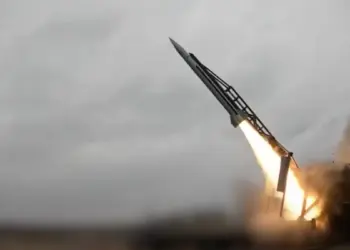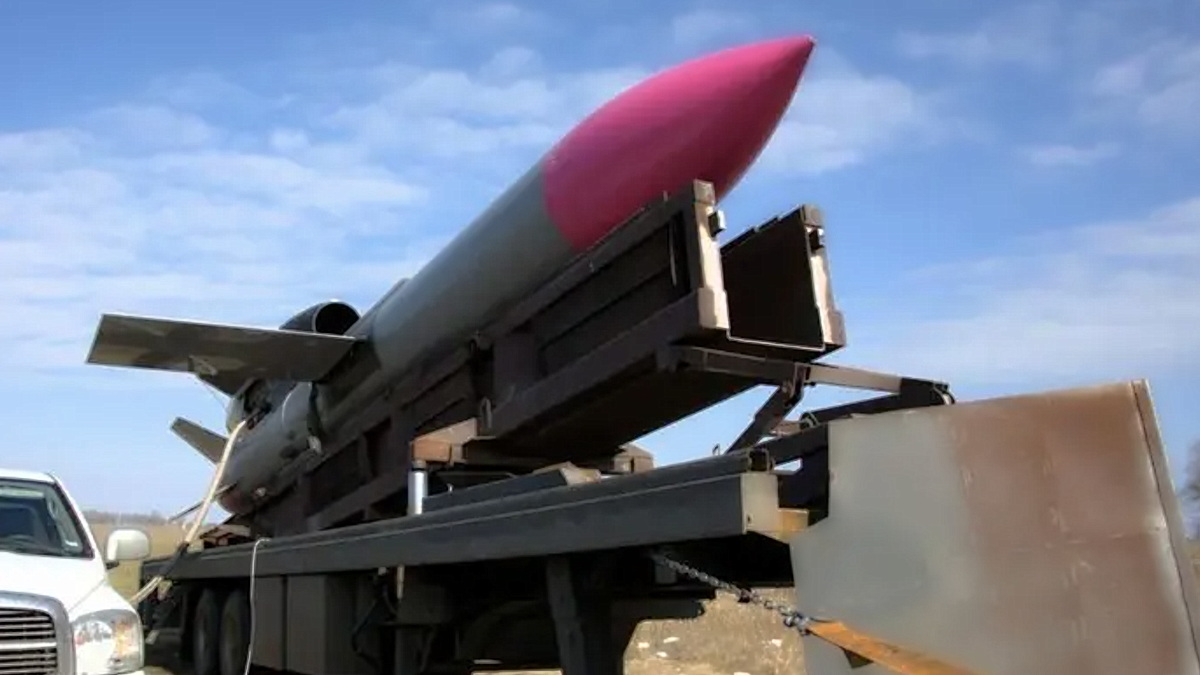
Recently, the Ukrainian defense startup Fire Point unveiled its heavy cruise missile called Flamingo. Let’s take a closer look at what this weapon is and what it has to offer.
TABLE OF CONTENT:
Reasons for the appearance
The “Flamingo” is Ukraine’s newest long-range cruise missile, designed to strike strategic targets deep inside Russian territory. Its debut comes at a critical moment: Russia is intensifying missile and drone attacks on Ukrainian cities as well as key energy and industrial infrastructure. At the same time, Ukraine faces political and technological restrictions on the use of Western long-range weapons, which makes the development of advanced domestic systems an urgent necessity.

The President of Ukraine announced the successful completion of “Flamingo” tests, stressing its strategic importance as the country’s most advanced missile system to date. He emphasized that Ukraine must move from limited production to large-scale serial manufacturing by the end of 2025.
The deployment of “Flamingo” opens a new dimension in Ukraine’s military capabilities – the ability to systematically and independently deliver precision strikes on critical enemy targets that were previously out of reach. This not only strengthens the nation’s defense but also highlights Ukraine’s gradual progress toward achieving strategic autonomy in high-precision weaponry.
In this article, we focus on the significance of the Flamingo cruise missile. We’ll start with its known technical parameters and tactical profile to outline expected combat capabilities. We’ll then examine how the system could influence the current war in Ukraine and shape a postwar European deterrence architecture.
Read also: Weapons of Ukraine’s Victory: Modern Long-Range ERAM Missiles
Design features
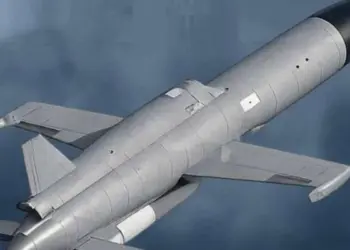
The Flamingo is a heavy-class cruise missile. According to the manufacturer, it has a wingspan of about six meters, a launch weight of roughly 6,000 kg, and a payload capacity of up to 1,150 kg. This balance of parameters makes it the first domestically developed “heavy” missile system capable of going beyond purely tactical tasks and fulfilling strategic functions.
For comparison, earlier Ukrainian projects – from mini cruise missiles to long-range drones – were significantly lighter and had more limited payloads, restricting their use mainly to precision strikes on less-protected targets. The Flamingo, by contrast, enables the deployment of more powerful warheads and provides greater flexibility in the choice of munitions, placing it on par with leading examples of modern heavy missile weaponry.
The Flamingo’s architecture stands out with a design uncommon for modern cruise missiles. Its core is a long cylindrical fuselage with a main engine mounted in a nacelle above the body, a straight mid-mounted wing, and X-shaped tail fins. This configuration inevitably recalls the German Fi-103 (V-1) cruise missile of World War II. However, a more logical source of inspiration for the designers appears to be the Soviet Tu-141 Strizh reconnaissance UAV, although that system used a more conventional layout with the engine integrated inside the fuselage.
This connection is far from accidental: in 2022–2023, several obsolete Strizh UAVs stored in Ukrainian military depots were repurposed into improvised cruise missiles by replacing their recovery parachutes with warheads. In this sense, the Flamingo can be seen as the next stage in this evolutionary path – moving from modified Soviet-era platforms to a fully fledged, modern heavy cruise missile.
The fuselage follows a monocoque design, with the fiberglass outer shell serving as the primary load-bearing structure. Based on the published images, the airframe is reinforced with transverse elements in key sections – around the nose, where the warhead is located, and at the rear, where the engine is mounted.
The X-shaped tail assembly deserves particular attention. For an aircraft of this class (with a wingspan of about 6 meters and a takeoff weight exceeding 6 tons), such a solution is unusual and likely not the most optimal from an aerodynamic standpoint. Typically, this configuration is used in tactical missiles where enhanced maneuverability is a priority, whereas strategic cruise missiles are generally designed for stability during long-range flight. Most likely, the choice of an X-shaped layout was dictated by structural constraints: with the engine mounted on top of the fuselage and a booster below, employing a conventional tail with separate vertical and horizontal planes would have been far more complicated.
Another notable feature is the design of the control surfaces. They are implemented as fully movable surfaces, which, again, is more typical of tactical missiles than heavy strategic systems. This choice was likely driven by production practicality: fully movable fins are simpler to manufacture and install, even in field conditions, compared to conventional stabilizers with separate control edges.
Taken together, these design decisions indicate the engineers’ effort to strike a balance between aerodynamic efficiency, manufacturing simplicity, and the technical constraints imposed by the missile’s overall layout.
Read also: Weapons of Ukraine’s Victory: AASM/HAMMER Precision-Guided Bombs
Power plant and airframe
The “Flamingo” is equipped with a turbofan engine, likely based on the AI-25. This is a Ukrainian aircraft engine originally developed for advanced trainer and light combat aircraft. Using an adapted serial powerplant provides several advantages at once: cost efficiency, relative ease of maintenance, and scalability of production. Ukraine possesses both the industrial capacity to resume AI-25 production and stocks of existing engines, making the program less dependent on external suppliers.
The missile’s size indicates that its design was not focused on stealth technologies. Its radar signature is likely much higher than that of modern Western systems such as the JASSM or Storm Shadow, where reducing detectability was a priority. In the case of the “Flamingo,” survivability relies on different approaches.
Key factors for penetrating air defenses include:
- Ultra-low flight using terrain masking to avoid detection
- Inertial-satellite navigation with terrain-correction, complicating tracking and interception
- Mass launches combined with other strike assets (drones, shorter-range missiles) to overload air defense systems
- Use of decoys that mimic the missile’s signature to mislead defenses
Thus, the “Flamingo” architecture prioritizes tactical saturation and operational flexibility rather than stealth. This approach aligns with the realities of conducting warfare against a dense – but far from flawless – Russian air defense network.
Read also: History and Achievements of SpaceX: Elon Musk’s Great Space Passion
Flight range
The most striking feature of the “Flamingo” missile is its estimated range of around 3,000 km. This places nearly the entire European part of Russia within reach – from industrial regions and energy facilities to military command centers, oil refineries, and transport hubs far beyond the immediate frontline.
In practice, such a range gives Ukrainian planners exceptional operational flexibility. They can select flight paths that exploit gaps in enemy radar coverage, avoid heavily defended air defense zones, and synchronize missile arrivals to strike multiple targets simultaneously. This capability enables complex, multi-layered operations that can overwhelm Russia’s defense systems.
For Ukraine, this range is not only a technical advantage but also a symbol of strategic autonomy. While Western missiles like the Storm Shadow or SCALP are limited by export restrictions to roughly 250 km, and the Taurus to about 500 km, the “Flamingo” dramatically expands the target spectrum. This is no longer about tactical strikes near the frontline – it enables campaigns against Russia’s national infrastructure, hitting systems that directly support its military efforts.
In this sense, the “Flamingo” is not merely another missile in Ukraine’s arsenal; it is a tool for shaping a new warfare strategy – one that gradually shifts the balance from tactical defense toward strategic deterrence.
Read also: Thrust Reversal: How and When an Aircraft Uses Engine Braking
Flamingo payload
Another defining characteristic of the “Flamingo” is its payload capacity – 1,150 kg. This is more than double that of Western cruise missiles such as the Storm Shadow, SCALP, or Taurus, whose warheads typically weigh between 450–480 kg. By mass, the “Flamingo” warhead approaches the category of heavy strategic aviation bombs, like the Mk-84 or the penetrator BLU-109, traditionally deployed only by strategic aircraft.
Such a payload fundamentally expands the range of potential targets. While lighter missiles are optimal for pinpoint strikes on localized facilities, ammunition depots, communication hubs, or logistics centers, the heavy warhead of the “Flamingo” enables devastating strikes against fortified structures, large industrial complexes, oil refineries, transport hubs, and even major bridges – critical nodes for Russian military logistics.
An additional factor is the missile’s kinetic energy and high terminal velocity, which enhance its penetration capability. This means the “Flamingo” can breach protective casings or reinforced concrete before detonation, transforming it into a weapon not merely for disabling, but for completely destroying critical infrastructure targets.
Taken together, these characteristics make the “Flamingo” a weapon of strategic impact, capable of undermining the resilience of Russia’s military-industrial and energy systems to a degree previously unattainable by Ukraine’s arsenal.
Read also: “The Drone Drops a Grenade” – or How the Pentagon Was Embarrassed
Guidance system and accuracy of strike
The “Flamingo” employs a combination of satellite navigation and an inertial navigation system, a standard approach for modern long-range cruise missiles. Notably, the system includes electronic countermeasure (ECM) resistance features, as Russia’s electronic warfare capabilities regularly disrupt Ukrainian drones and missile platforms. Its reported accuracy – approximately 14 m CEP (circular error probable) – is more than sufficient for effectively striking fixed infrastructure targets such as fuel depots, power plants, military-industrial facilities, and transport hubs.
However, compared to Western counterparts, the “Flamingo” currently lacks advanced terminal guidance systems – such as infrared seekers or terrain-following radars. This limits its ability to engage mobile targets, like mobile air defense systems or wheeled command posts. In scenarios requiring pinpoint accuracy, such as striking a fortified building or a small communications node, “Flamingo” is less precise than high-end missiles like the Storm Shadow or JASSM.
Nonetheless, the missile’s concept makes extreme precision less critical. Its massive warhead delivers such destructive power that even a deviation of several meters does not reduce the effectiveness against large stationary targets. In this sense, “Flamingo” belongs to a class of weapons designed not merely to disable, but to physically obliterate targets, ensuring the long-term neutralization of critical infrastructure nodes.
Read also: Swift Beat’s Shahed Interceptor Drone: What We Know
Known technical characteristics of Flamingo
Based on data from open sources and official reports from the Ukrainian side, the main characteristics of the Flamingo missile are as follows:
- Type: ground-based subsonic cruise missile
- Range: approximately 3,000 km
- Warhead weight: approximately 1,150 kg (high-explosive or penetrating)
- Length: approximately 12-14 m
- Wingspan: approximately 6 m
- Launch weight: approximately 6 t
- Engine: probably AI-25 turbofan
- Cruising speed: 850-950 km/h
- Accuracy (mean circular error): approximately 14 m
- Guidance: satellite navigation (GNSS) with inertial backup, resistant to interference
- Launch platform: stationary or mobile ground launchers
- Production rate: currently 1 missile per day, planned to reach 7 per day by the end of 2025.
These parameters classify the “Flamingo” as a heavy, long-range, ground-launched cruise missile. In terms of tactical role, it is comparable to Russian “Kalibr” missiles and even American “Tomahawks.” At the same time, preliminary assessments indicate that the Ukrainian development has a significant advantage in payload capacity, which expands the range of possible warheads and increases effectiveness against fortified and heavily protected targets.
Read also: The Mi-26: Rise and Decline of the World’s Largest Production Cargo Helicopter
Will Flamingo be able to withstand Russian air defences?
Russia maintains one of the most extensive integrated air defense networks in the world, built on a multi-layered deployment of S-300, S-400, Pantsir systems, and others. These systems are designed to intercept aircraft and cruise missiles at medium and long ranges, creating the impression of a “dense dome” over key regions. For the large, non-stealthy “Flamingo,” this practically guarantees detection and a certain level of interception.
However, Ukraine’s strategy is likely focused on overcoming air defenses not with individual launches but through coordinated strikes. “Flamingo” can be deployed alongside swarms of kamikaze drones, decoys, and cheaper missiles to create saturation effects. In this scenario, Russian radars and crews are forced to track and engage far more targets than their systems are typically designed to handle.
Multi-axis attack tactics further complicate the task for air defenses. Strikes launched simultaneously from different directions force the PVO (air defense) to disperse its resources, reducing overall effectiveness. Even if some “Flamingo” missiles are intercepted, a sufficient number are likely to penetrate, inflicting significant damage on key rear-area targets.
In the long term, repeated massed strikes could deplete the arsenals of Russia’s S-300 and S-400 systems, a significant portion of which is already being expended to counter drones and smaller missiles. This will likely force Russia not only to rethink its air defense strategy but also to redistribute resources between protecting rear regions and frontline operations, creating new operational windows of opportunity for Ukraine.
Read also: Everything About the BLAZE Interceptor Drone from Latvian Company Origin Robotics
Production capacity
Ultimately, production capacity may become the decisive factor in determining the real impact of “Flamingo” on the war. According to Fire Point representatives, current output is roughly one missile per day, but plans call for scaling up to seven missiles daily by October. If these ambitious targets are met, Ukraine could field over 200 missiles per month, or around 2,500 units annually – enough to constitute a strategic missile arsenal. Even if these projections prove overly optimistic, a steady output of 30–50 missiles per month would still provide the Ukrainian Armed Forces with a significant and continuously refreshed long-range capability.
The key advantage of this approach lies in domestic production. Ukraine will no longer be dependent on foreign approvals or political restrictions when striking targets within Russian territory. For comparison, the United States has imposed limits on the use of ATACMS beyond occupied areas, and Germany still refuses to supply its Taurus missiles. Producing the “Flamingo” indigenously gives Ukraine a strategic weapon that can be deployed autonomously, based solely on military necessity rather than political compromises.
Thus, the scale of production directly translates into strategic independence. The faster Ukraine can ramp up “Flamingo” output, the more the balance in the war will shift – from limited use of individual long-range systems to systematic, large-scale campaigns against Russia’s critical infrastructure.
Read also: All About the Turkish UAV Bayraktar Kizilelma: Development History and Prospects
Comparison with other rockets
To fully appreciate the significance of the “Flamingo,” it is useful to view it in the context of other cruise missiles. The table below highlights its key advantages and unique features.
The table clearly shows that the “Flamingo” significantly outperforms its competitors in range and warhead power, even if it lags behind in deployment speed and technological sophistication. At the same time, its relative design simplicity is a unique advantage – enabling large-scale serial production. If Ukraine can sustain the monthly production of dozens of “Flamingos,” the missile will transition from a single innovation to a systemic factor capable of influencing the strategic balance of power.
Read also: Is Space Becoming the New Battlefield?
What strategic consequences will the production of Flamingo have?
The deployment of the “Flamingo” carries both immediate and long-term implications. In the short term, the system gives Ukraine the ability to strike directly at Russia’s war economy, targeting oil refineries, industrial facilities, and transportation hubs deep inside the aggressor’s territory. Such attacks not only inflict significant economic losses but also severely disrupt Moscow’s logistical chains, which are critical for sustaining operations at the front.
In the long term, the “Flamingo” could serve as a full-fledged tool of strategic deterrence for Ukraine. If an arsenal of several thousand missiles is established, Ukraine would gain the capability to strike key economic and industrial centers in Russia within 24–48 hours. This creates a new security reality: any future aggression would automatically trigger large-scale retaliatory strikes deep into enemy territory.
For Ukraine, which lacks nuclear weapons, such a conventional deterrence strategy may become the most effective guarantee of national security. The “Flamingo” effectively fills a critical gap between tactical defense and strategic capabilities, giving Ukraine a leverage that Russia cannot ignore.
Read also: