In addition to its trainer and light attack aircraft, which are operated on all continents except Antarctica, the Swiss company Pilatus Aircraft is also known for several other products, including the single-engine utility aircraft Pilatus PC-6 and Pilatus PC-12. The former merits separate consideration due to its distinctive characteristics and operational history. The latter is a business turboprop designed for corporate and private use. Configured to carry 6–9 passengers, the PC-12 has become the company’s most widely produced aircraft: since 1991, more than 2,000 units have been built, and production continues.
The commercial success of the PC-12 prompted Pilatus to pursue a further step: the development of a business jet. This decision involved a number of challenges. First, the company had no prior experience producing jet-powered or twin-engine aircraft, having previously focused exclusively on single-engine turboprops. Second, the selected market segment was already well established, requiring competition with experienced manufacturers such as Cessna, with its Cessna CitationJet series, and Embraer, particularly with the Embraer Phenom 300.
TABLE OF CONTENT:
Development History
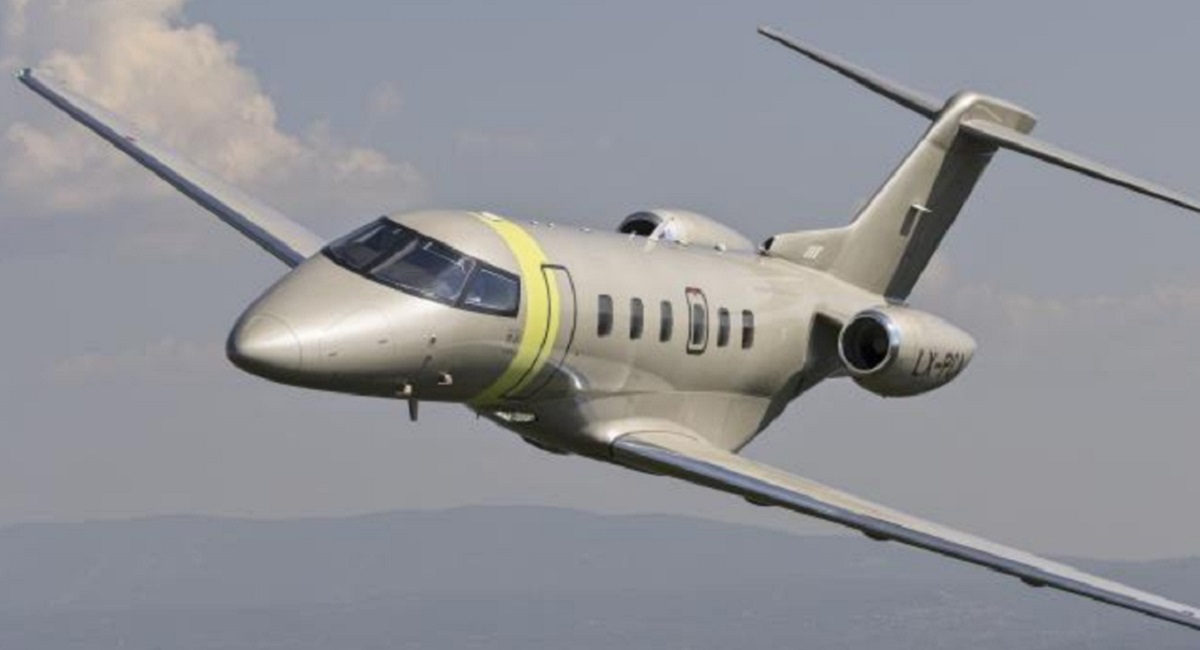
The new business jet was designated the Pilatus PC-24, a name intended to suggest an increase in performance relative to the Pilatus PC-12. In practice, key parameters improved substantially, though not by a factor of two: cruise speed increased from 528 to 810 km/h, and range from 3,400 to 3,900 km. These performance targets were defined based on extensive market research among prospective customers. Respondents consistently indicated a preference for higher speed and range compared to the PC-12, while retaining its core advantages – structural robustness and the ability to operate from unpaved runways. These requirements were incorporated into the design: the PC-24 remains the only business jet in its class certified for operations from grass and gravel airstrips.
The first public reference to the PC-24 project appeared in the company’s 2010 report (published in May 2011), although development had begun earlier, in 2007, and was funded internally.
On May 21, 2013, a mock-up of the PC-24 was presented to prospective customers at the European Business Aviation Convention & Exhibition (EBACE) in Geneva. During the presentation, Pilatus Chairman Oscar Schwenk emphasized the aircraft’s distinct positioning, stating that it does not fit neatly into existing business jet categories. He described the PC-24 as combining the operational flexibility of a turboprop, the cabin size of a medium light jet, and the performance characteristics of a light jet.

At the time of its presentation in Geneva, the Pilatus PC-24 had not yet flown, although order acquisition was already underway. On August 1, 2014 – Switzerland’s national day – the first prototype was formally rolled out. Its maiden flight took place on May 11, 2015. In total, three prototypes were built: the first was used for flight performance evaluation, the second for avionics and autopilot integration, and the third conformed to the production standard.
The first production PC-24 was delivered to a customer on April 1, 2018. Notably, early operators included not only traditional business aviation users but also aeromedical services. The Australian Royal Flying Doctor Service, which already operated 35 Pilatus PC-12 aircraft, ordered five PC-24s and received the first in November 2018. In medical configurations, the PC-24 is equipped not only with the necessary emergency care systems but also with a dedicated electric lift for loading stretchers with patients.
By 2025, Pilatus Aircraft had produced 50 PC-24 aircraft, reaching its planned annual production rate (for comparison, in the same year the company manufactured 82 PC-12s, 14 Pilatus PC-21, and 1 Pilatus PC-7 MKX). Currently, approximately 300 PC-24 aircraft are in operation worldwide.
Read also:
- American Successor to “Pilatus”: Overview of Beechcraft T-6 Texan II
- “Pilatus” of 21st Century: Everything About RS-21 Trainer-Combat Aircraft
Design
The Pilatus PC-24 is a low-wing aircraft with a T-tail configuration and a retractable tricycle landing gear. It is powered by two Williams FJ44-4A engines, each producing 1,545 kg of thrust, mounted in nacelles on either side of the rear fuselage. The avionics suite is based on the Honeywell Primus Epic 2 platform.
To enable operations from short and unprepared runways, the PC-24 is equipped with landing gear featuring long-stroke shock absorbers and dual low-pressure tires on the main gear. Its takeoff and landing performance is further supported by an advanced wing design incorporating double-slotted flaps. An additional design feature is the use of replaceable flap surface покрытия: when deployed, the flaps help shield the engines from debris lifted from the runway by absorbing impacts from small քար particles.
The aircraft is certified for single-pilot operation, although the cockpit is configured for two crew members. Depending on cabin layout, the PC-24 can accommodate up to ten passengers.
Read also:
- Cessna 408 SkyCourier: From Commercial Cargo Aircraft to Military Use
- All About Proteus: Self-Contained Helicopter with Potential Implications for Future of Aviation
Military Use
What roles do business jets serve in military operations? The most obvious is the transport of high-ranking personnel, both military and civilian. In addition, they are used for transporting aircrew and urgent small cargo between airbases, aeromedical evacuation, and as training platforms for pilots of multi-engine transport aircraft and navigators. Although the Pilatus PC-24 was originally developed as a civilian aircraft, it is gradually establishing a presence in the military market.
The first military operator of the Pilatus PC-24 was the Swiss Air Force, which received a single aircraft in 2019 in a standard business jet configuration. However, in the autumn of 2022, this aircraft was sold to a civilian operator.
The first foreign military customer for the Pilatus PC-24 was the Qatar Emiri Air Force, which ordered two aircraft in November 2020. Delivered around the turn of 2021–2022, the PC-24s in Qatar are used in a training role – for the preparation of pilots transitioning to heavy transport aircraft such as the Boeing C-17A Globemaster III and aerial refueling platforms like the Airbus KC-30A.
The next military customer was the aviation branch of the French Navy. In October 2025, it was announced that the Swiss aircraft had been selected over the Embraer Phenom 300 in a competition to replace the Dassault Falcon 10MER. These modified business jets have served with Escadrille 57S at Landivisiau Air Base for over five decades, since 1975. The initial order covers three PC-24 aircraft, which will be owned by a private company and leased to the French Navy.
On December 17, 2025, images appeared showing the first PC-24 for the French Navy in the final stages of assembly, indicating that the procurement contract had likely been concluded well before its public announcement. Delivery of two aircraft is scheduled for 2026, with the third planned for 2027.
French naval aviation plans to use the Pilatus PC-24 for instrument flight training of pilots operating the Dassault Rafale M, as well as for the transport of senior naval personnel.
To date, procurement of the Pilatus PC-24 for military use has remained limited in scale. However, a potential shift appears to have emerged in March of this year, when Indonesia ordered twelve PC-24 aircraft (alongside 24 Pilatus PC-21), with plans to employ them in training and light transport roles.
On April 7, it was also reported that Spain’s Ministry of Defence selected the PC-24 as a replacement platform. While the exact procurement volume has not been disclosed, it could reach up to twenty aircraft. In the Spanish Air and Space Force, the Swiss jets are expected to replace U.S.-built aircraft such as the Cessna 560 Citation V and Beechcraft King Air C90, while naval aviation is set to retire the Cessna 550 Citation.
Overall, these developments suggest that the Swiss business jet is gradually strengthening its position in the military aviation market.
Read also: