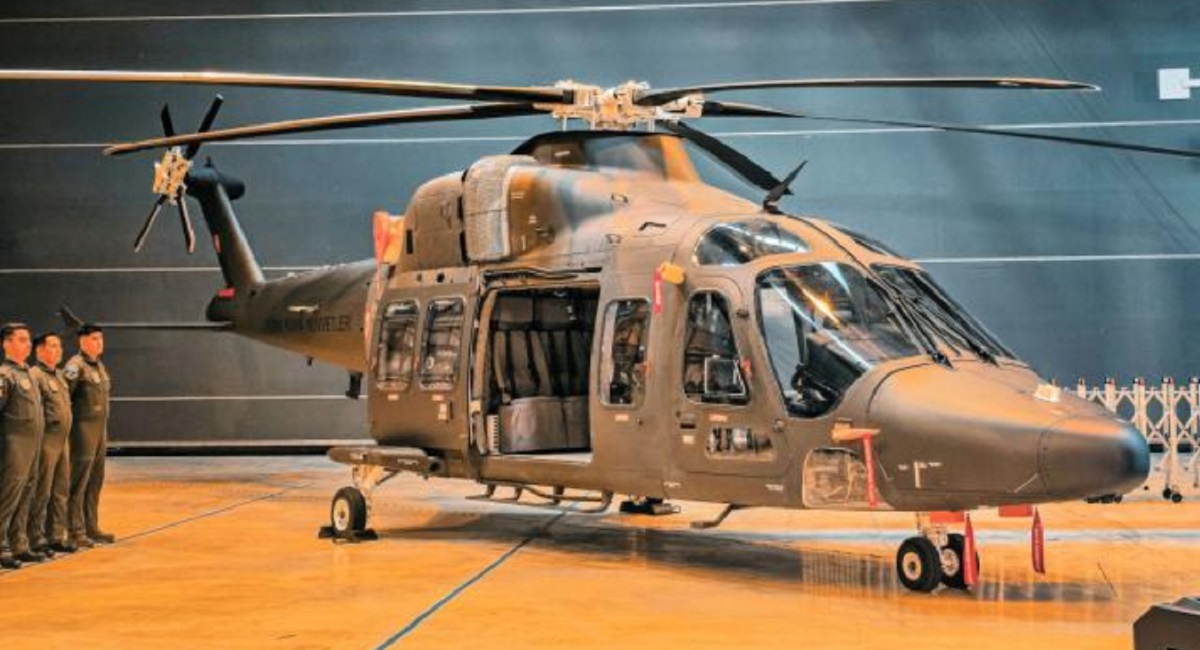
On April 30, 2026, Turkish Aerospace Industries (also known as TUSAŞ / TAI) announced the delivery of the first T625 Gökbey to the Army Aviation Command of the Turkish Land Forces. The development of this aircraft represents another example of the rapid progress of Turkey’s aerospace industry.
TABLE OF CONTENT:
Experience and standardization
The origins of the T625 Gökbey program can be traced back to the T129 ATAK project – a localized and significantly upgraded version of the Italian Agusta A129 Mangusta. After several years of development, Turkish Aerospace Industries began serial production of the T129 in 2014. Today, these helicopters are not only in service with Turkey’s land forces and gendarmerie but have also been exported to countries such as the Philippines, Nigeria, Somalia, and Bangladesh.
In August 2017, work began on the T629 helicopter, which was positioned as a further evolution of the T129. While the T129 has a maximum takeoff weight of around 5 tons, the T629 is roughly one ton heavier, allowing for expanded onboard systems and increased payload capacity. A mock-up was presented in June 2020, and in February 2021 the developer showcased a conceptual electric unmanned variant of the helicopter.
However, no significant updates on the T629 program have been published since then. It appears that the company prioritized a different heavy attack helicopter project – the T929 ATAK-2, which belongs to the 10-ton class. Importantly, the T629 was intended to share key components – such as engines and transmission systems – with the T625 Gökbey, which ultimately succeeded in reaching serial production.
History and design
Turkish Aerospace Industries began preliminary design studies for a multi-role helicopter in 2010. Full-scale development of the T625 Gökbey started in 2013, when Turkey’s Presidency of Defence Industries signed a contract with TAI to develop a 6-ton-class utility helicopter for land operations. A number of subcontractors were involved in the program. In particular, Turkish company Alp Aviation was responsible for manufacturing the landing gear, gearbox, and dynamic components, while Spanish company CESA was selected as the supplier of hydraulic systems.

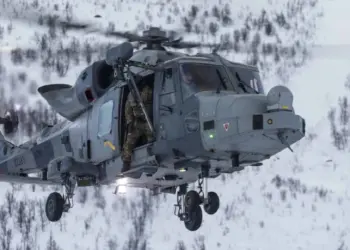
T625 Gökbey is built using a conventional single-main-rotor configuration. It is designed to carry up to 14 personnel, including a two-person crew.
In the initial phase, the helicopter is powered by two LHTEC CTS800 engines. This American-made powerplant is well known in Turkey, as it is also used in the T129 ATAK. In parallel, TUSAŞ Engine Industries developed a domestically produced next-generation engine, the TEI TS1400. The first TS1400 unit was completed in December 2020, and these engines are expected to be installed in serial-production T625 Gökbey aircraft starting from 2027.
T625 Gökbey is equipped with state-of-the-art avionics of Turkish origin. It features a four-axis, dual-redundant automatic flight control system, as well as a “glass cockpit” developed by ASELSAN. The cockpit includes two large integrated mission displays (8×20 inches) and two Touch Command Control Units (8×10 inches) for data input.
Read also:
- All About Proteus: Self-Contained Helicopter with Potential Implications for Future of Aviation
- ‘Tigers’ from Australia: Could the Australia’s fiasco Become an Opportunity for Ukraine
Service and prospects
The first of four prototypes of the T625 Gökbey made its maiden flight on September 6, 2018. From that point, more than six years passed before the first serial aircraft was delivered to an operator. On October 29, 2024, the gendarmerie received the first of five ordered helicopters. By the beginning of this year, all units ordered by the gendarmerie had already been delivered. In addition, the Ministry of Health recently received the first air ambulance configuration.
Currently, total orders for the T625 Gökbey stand at a modest 33 aircraft. The largest operator is the land forces, with 15 units. The gendarmerie ordered five, the air force four, and the coast guard, General Directorate of Security, and Ministry of Health received three each. However, Turkey’s overall requirements are significantly higher, and in the long term, total demand for the T625 Gökbey could exceed 100 units.
In the Turkish Army Aviation, the T625 Gökbey is intended to replace aging platforms such as the UH-1H Iroquois and their Italian “clones,” the AB205.
The first army-operated aircraft was delivered to the 2nd Company of the 1st Battalion of the 3rd Army Aviation Regiment, based in İzmir-Gaziemir. A second unit is expected to arrive this year. However, the military appears to be proceeding cautiously with procurement, likely awaiting the introduction of helicopters powered by fully indigenous engines.
As for the prospects of the T625 Gökbey, the Turkish Army Aviation alone operates around 120 aging utility helicopters that will require replacement in the coming years. Not all of them will necessarily be replaced by the Gökbey, however.
Turkey has been producing a heavier, 10-ton-class helicopter since 2021 – the T70, a localized version of the Sikorsky S-70. Yet deliveries remain slow: out of 109 planned units, only about a dozen have been delivered so far. In this context, the lighter and more economical T625 Gökbey has strong potential to become the primary multi-role helicopter of the Turkish armed forces.
On export markets, however, the T625 will face strong competition from an already well-established rival in its class – the Italian AW139. A potential advantage for the Turkish platform could be full localization (in the TS1400 engine configuration), which would make exports independent of U.S. political constraints. This is particularly relevant given that past U.S. restrictions prevented Turkey from fulfilling a lucrative contract for the T129 ATAK with Pakistan due to engine export limitations.
Read also: