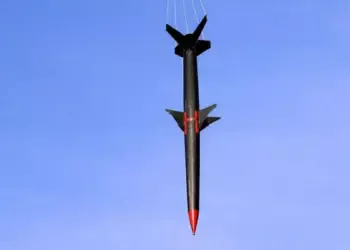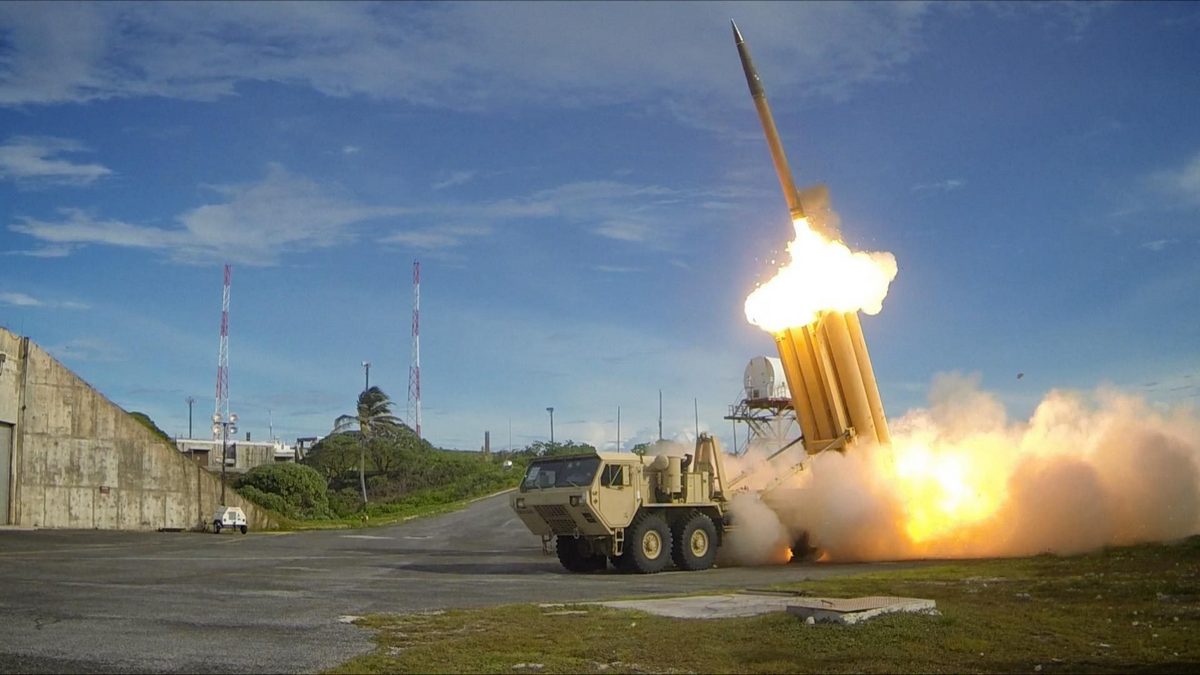
The U.S. government has signed a seven-year agreement with Lockheed Martin worth up to $35 billion to significantly expand production of Terminal High Altitude Area Defense (THAAD) missile interceptors. Under the contract, interceptor output is expected to increase fourfold, while delivery schedules will be accelerated to meet growing demand from both the United States and its allies.
The agreement represents a key element of the Department of Defense’s strategy to accelerate defense procurement and strengthen the U.S. defense industrial base. According to Lockheed Martin, the contract transforms the framework agreement signed in January into a long-term production plan aimed at substantially increasing manufacturing capacity while improving the resilience and stability of the defense supply chain.

According to the defense contractor, this agreement is one of the first major multi-year contracts awarded under the Department of Defense’s updated acquisition strategy. The company believes this approach provides manufacturers with greater visibility into future demand, allowing them to invest more confidently in new production capacity, equipment, and skilled personnel.
The THAAD framework agreement signed earlier this year laid the foundation for the current contract. Lockheed Martin emphasized that the long-term certainty provided by this agreement is a critical prerequisite for expanding production capacity and accelerating deliveries of missile defense systems. The company views the contract as an important step toward strengthening the U.S. defense industrial base and ensuring the availability of critical missile defense capabilities for both the United States and its allies.
The new agreement builds on a series of recent investments by Lockheed Martin aimed at expanding its manufacturing footprint across the United States. The company has already begun construction of a new Missile Production Center in Troy, Alabama. This project is part of a broader initiative under which Lockheed Martin plans to invest more than $9 billion by 2030 to meet growing demand for missile systems and munitions. According to the company, these investments are already delivering tangible results, with more than 20 new or modernized facilities opened across the country.
Among the recently commissioned facilities are a next-generation interceptor production plant in Courtland, Alabama, and an Accelerated Missile Production Center in Camden, Arkansas. Lockheed Martin believes these sites will help increase production capacity while improving the efficiency of manufacturing critical defense systems.
THAAD occupies a unique position within the U.S. missile defense architecture. According to Lockheed Martin, it is the only U.S. missile defense system capable of intercepting targets both inside and outside the Earth’s atmosphere. Designed to destroy ballistic missiles during the terminal phase of flight, the system has already been deployed in regions facing elevated missile threats, including during Operation Epic Fury. The system’s effective interception range is approximately 150–200 km.
Against the backdrop of growing threats posed by modern missile systems, the United States and its allies are increasingly investing in layered missile defense networks. These architectures combine multiple interceptor systems to provide more effective protection against a broad range of missile threats.
The THAAD agreement follows another major missile defense contract awarded earlier this year. In April, the U.S. government awarded Lockheed Martin a $4.7 billion contract to accelerate production of PAC-3 Missile Segment Enhancement (MSE) interceptors. Since January, framework agreements have also been established for the PAC-3 MSE, THAAD interceptor, and Precision Strike Missile programs. According to Lockheed Martin, these long-term agreements are helping expand manufacturing capacity while strengthening the defense supply chain as a whole. In parallel, the company continues to recruit specialists in manufacturing, engineering, and skilled trades, while working closely with suppliers to further increase production output.
Read also:
- $700 million confidential agreement: White House supports Turkey’s main aviation program
- Hunting submarines: Boeing upgrades P-8A Poseidon patrol aircraft for the U.S. Navy
Source: interestingengineering