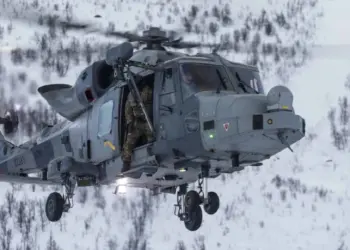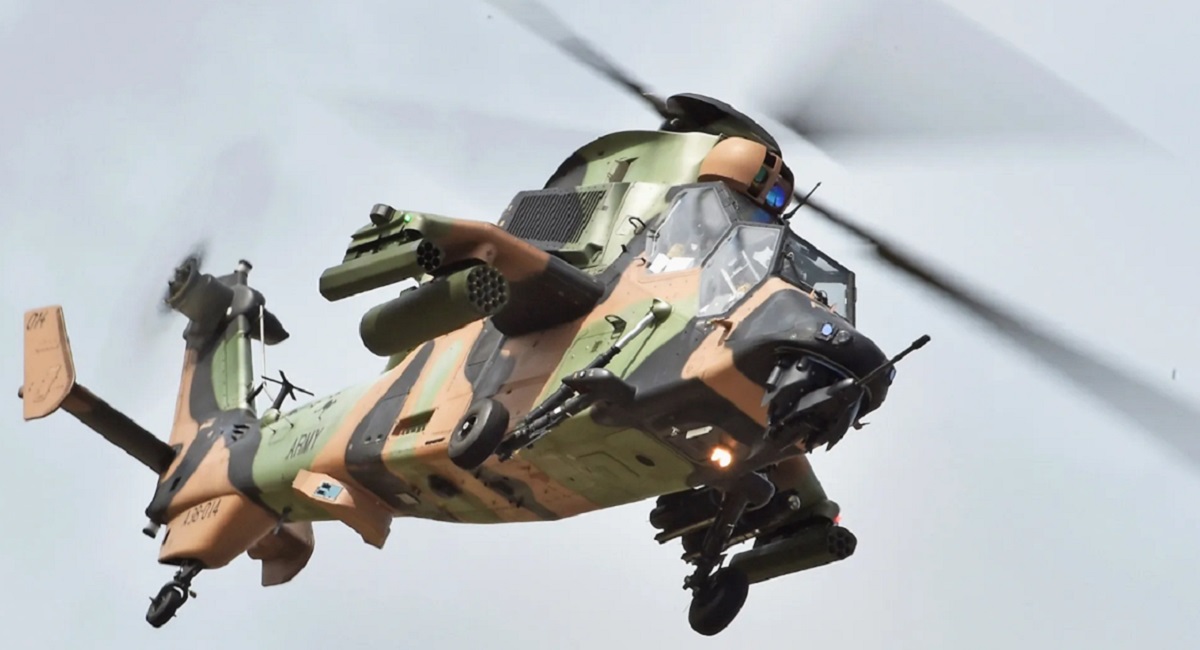
Australian media have reported a potential transfer of Eurocopter Tiger attack helicopters to Ukraine. What kind of aircraft are these, and how could they impact Ukraine’s aviation capabilities?
TABLE OF CONTENT:
Project History
The development history of this European attack helicopter illustrates the challenges of joint military projects involving multiple countries with significantly different requirements. Additionally, the helicopter’s creation coincided with the end of the Cold War, which led to reduced defense budgets, smaller procurement volumes, and delays in delivery schedules. The following provides a chronological overview.
The Tiger emerged from an effort to develop a modern attack helicopter for the armed forces of Germany and France. Both countries had broadly similar requirements for operations in the European theater, where the primary mission was expected to be the destruction of Soviet armored formations using long-range anti-tank guided missiles.
At the same time, France was actively involved in a number of low-intensity conflicts, primarily in its former African colonies. Such operations required a helicopter with less specialized but more flexible armament, including an automatic cannon and unguided rockets. As a result, there was a rationale for creating a family of largely standardized aircraft sharing the same powerplant, main and tail rotors, and fuselage, while differing in targeting systems and weapons fit. This concept became the foundation of the Franco-German attack helicopter program.
In 1984, the German company Messerschmitt-Bölkow-Blohm (MBB) and the French firm Aérospatiale formed the Eurocopter consortium to develop new helicopter designs. Work on the attack helicopter was assigned to a dedicated subsidiary, Eurocopter Tiger, established on 18 September 1985. The overall concept of the helicopter, which received the name Tiger, was finalized in 1987.
The program envisaged three main variants, differing primarily in their armament configurations:
- UHU (Unterstützungshubschrauber) – an anti-tank variant for the Bundeswehr;
- HAC (Hélicoptère Anti-Char) – an anti-tank variant for the French Army;
- HAP (Hélicoptère d’Appui Protection) – a support and escort helicopter for the French Army.

The Tiger is built according to a conventional attack helicopter layout: a single main rotor, a two‑seat cockpit with a tandem crew arrangement, and a twin‑engine turboshaft powerplant. Kevlar and carbon fiber are widely used in the fuselage structure, while the main rotor blades are made from composite materials. These design choices reduced overall weight and also lowered the helicopter’s radar signature. Its onboard systems allow for combat operations both during the day and at night.
The HAP variant was originally planned to enter service in 1991, the UHU in late 1992, and the HAC in 1995. In practice, these timelines were not met. Contributing factors included prolonged coordination among the program’s participants and the end of the Cold War, which led to reduced defense budgets and a reassessment of several performance requirements. After the dissolution of the Warsaw Pact and the collapse of the Soviet Union, the Bundeswehr no longer required a narrowly specialized anti‑tank helicopter. Instead, there was a growing demand for a more versatile platform capable of participating in peacekeeping missions and low‑intensity conflicts. The French HAC variant also evolved: in 2001, it was redefined from a purely anti‑tank helicopter into the multirole HAD (Hélicoptère d’Appui Destruction).
The first Tiger prototype conducted its maiden flight on 27 April 1991, while the first production HAP variant was completed in December 2000. This represented a delay of around ten years from the original schedule. Furthermore, the initial production aircraft were primarily used to continue testing, with deliveries to the French and German armies occurring only in spring 2005. Procurement numbers were significantly lower than those anticipated in the 1980s. Shifting focus from Europe, the next topic concerns Australia…
Read also:
- Weapons of Ukrainian Victory: Multi-Purpose Helicopter UH-60 / S-70A Black Hawk
- Everything About the Bell AH-1Z Viper and UH-1Y Venom Helicopters: History, Specifications, and Prospects in Ukraine
Helicopter for Australia
In the 1990s, the Australian Army faced the need to modernize its helicopter fleet. The primary goal was to replace the OH-58A Kiowa reconnaissance helicopters and the UH-1H Bushranger gunships (an adaptation of the Huey dating back to the Vietnam War). The plan called for a single type capable of performing both reconnaissance and armed support missions – an ARH (Armed Reconnaissance Helicopter).
Six manufacturers submitted proposals for the 1998 competition. Italy’s Agusta offered the A129, while the U.S. industry presented three options: the Bell AH-1Z Viper, Boeing AH-64D Apache, and Sikorsky S-70A Battlehawk (an armed variant of the UH-60 Black Hawk). South Africa’s Denel proposed the Rooivalk, and Eurocopter submitted the Tiger.
By 1999, the Tiger, along with the Agusta and Boeing models, had made the shortlist. On 21 December 2001, the Tiger was selected as the winner. The contract, valued at over 2 billion Australian dollars, called for the delivery of 22 helicopters.
The Tiger ARH is based on the French Tiger HAP, but it differs through the use of upgraded MTR390 engines and a laser designator integrated into the Strix sighting system. This addition enables guidance of Hellfire II anti‑tank guided missiles, which are not carried by the baseline Tiger HAP. The French 68 mm SNEB unguided rockets were also replaced with 70 mm rockets produced by the Belgian company FZ.
Under the contract terms, 18 of the 22 helicopters were assembled at the Australian Aerospace facility in Brisbane, a Eurocopter subsidiary. Initial progress appeared satisfactory: the first two Tiger ARH helicopters arrived in Australia on 15 December 2004. Subsequently, however, significant issues emerged. While the aircraft were able to fly, integration of weapons and onboard systems proved problematic. On 1 July 2007, delays in achieving operational readiness led Australia to suspend all payments related to the program.
By 2008, the main technical issues had been addressed and payments were resumed. Nevertheless, in October 2010 it was reported that the helicopters would not reach full combat readiness for another two years. The final Tiger ARH was delivered to the Australian Army only in December 2011.
The helicopters were assigned to the 161st and 162nd Squadrons of the 1st Aviation Regiment, based in Darwin in northern Australia. Despite earlier assurances, the Tiger ARH did not achieve full operational readiness until 18 April 2016, and even then with nine caveats relating to the performance of the electronic warfare suite, the identification friend-or-foe system, communications equipment, and other systems.
A government audit conducted that same year produced highly critical results. The report identified 76 deficiencies in the Tiger program, 60 of which were classified as critical. Of the 16 operational helicopters available at the time (with the remainder assigned to the training center), the average number of mission-capable aircraft per day in 2015 was just 3.5. These issues were largely attributed to maintenance difficulties and delays in spare parts delivery.
Ultimately, the 2016 Defence White Paper stated that the Tiger would be retired early and replaced by other helicopters in the mid-2020s. In 2021, Australia selected the AH-64E, a new variant of the Apache – the same model that had lost the 2001 competition. As of November 2025, the 1st Aviation Regiment had received four AH-64Es out of the 29 ordered, with 12 expected by 2026. This will allow the problematic Tiger ARH helicopters to be retired.
Are Australian Tiger ARH Helicopters Needed in Ukraine?
Initial reports about a possible transfer of Tiger ARH helicopters to Ukraine appeared as early as June 2024, and the topic has resurfaced recently. The question arises: would it make sense for Ukraine to acquire these aircraft? Assuming, for the sake of discussion, that the potential transfer is genuine, the following section summarizes the main advantages and disadvantages.
Advantages:
- A modern, all‑weather observation and targeting system.
-
An armament suite suitable for countering Shahed‑type drones, including a 30 mm onboard cannon and 70 mm rockets fitted with laser guidance kits comparable to APKWS. Such munitions were tested on the Tiger ARH as early as 2014.
Disadvantages:
-
Low reliability. In principle, there is a straightforward – if rather crude – way to mitigate this issue: cannibalization. In practical terms, out of a transferred fleet of roughly two dozen helicopters, only part of it would remain operational, while the rest would be used as a source of spare parts. This approach is not viable in the long term, but it could be acceptable as a temporary wartime solution.
-
Potential delays in receiving Bell AH‑1Z helicopters. While not inevitable, there is a risk that accepting the Tiger ARH could complicate or slow down the process of acquiring the AH‑1Z, a program that appears to have finally begun to move forward.
In summary, the Australian helicopters could be worth accepting if they can be delivered quickly and if doing so does not affect the acquisition of the Bell AH‑1Z. In that case, Ukraine’s army aviation would gain a number of relatively capable platforms for counter‑drone tasks.
The use of the Tiger ARH against ground targets is not considered here, as such employment would carry a high level of risk under current conditions on the Russian‑Ukrainian front.
Key specifications of the Tiger ARH helicopter
Read also: