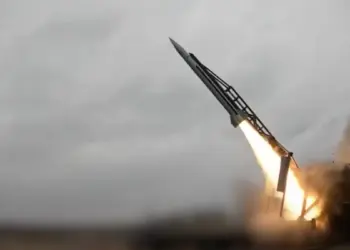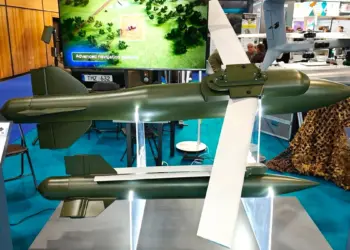
On 28 May 2026, plans were announced for the Ukrainian Air Force to receive Swedish Saab JAS 39 Gripen aircraft. Without going into the broader details already covered in public reports, one specific aspect is worth highlighting – the air-to-air missile package that Ukraine is expected to receive alongside the Gripens.
In addition to well-known short-range IRIS-T and medium-range AIM-120 AMRAAM systems, the package is expected to include the long-range MBDA Meteor.
Weapons of this class have not previously been part of the Ukrainian Air Force inventory, and globally they remain relatively rare. It is sufficient to note that after the retirement of the U.S. Navy’s F-14 aircraft equipped with the AIM-54 Phoenix missile, the Meteor remained the only widely fielded long-range air-to-air missile in Western inventories (with the United States only recently beginning to introduce the comparable AIM-260). The question, then, is what exactly this missile is – and what advantages it could bring to Ukraine’s air forces.

TABLE OF CONTENT:
A Brief History
Although the MBDA Meteor first entered operational service in 2016 on the Saab JAS 39 Gripen, it was not originally designed specifically for that platform. The missile’s history dates back more than three decades.
In February 1994, the UK Ministry of Defence issued a requirement for a new beyond-visual-range air-to-air missile (BVRAAM) to replace the Skyflash and equip the future EF2000 fighter. Four competing proposals were submitted. Two were evolutions of existing systems – France’s Matra offering a development of MICA and the U.S. company Hughes proposing an advanced version of AMRAAM. The other two were entirely new designs: the German-led consortium Daimler-Benz Aerospace and Bayern-Chemie with the A3M project, and the British-led group consisting of British Aerospace (BAe), GEC-Marconi, Italy’s Alenia Difesa, and Saab Dynamics, proposing the SR225XR concept. The latter evolved from an earlier SR225X design but introduced a key change – replacing a solid-fuel rocket motor with a ramjet propulsion system.
The selection process was influenced less by purely technical considerations and more by industrial and political factors, as European defense integration accelerated during that period. In practice, the competition narrowed to a contest between a U.S. and a European consortium. The European team, initially led by BAe, first proposed a tailless configuration similar to SR225XR. However, German partners successfully advocated for the A3M concept, which introduced wings to improve flight stability. This aerodynamic configuration became the foundation of the European design, ultimately named Meteor, which went on to win the competition.
Initial optimistic expectations assumed that the first serial missiles would roll off production lines in 2005. However, due to bureaucratic procedures and budgetary constraints, the full-scale development contract for the MBDA Meteor was signed only in 2003 instead of the initially planned 1997. The main contractor became the transnational consortium MBDA (Matra BAE Dynamics Aérospatiale), with subcontractors from Germany, Sweden, and Spain. Spain was the first country (in 2009) to place an order for the new missiles for its Eurofighter Typhoon fleet. However, as noted earlier, the first operational integration of Meteor took place on Swedish Saab JAS 39 Gripen aircraft. Today, in addition to Eurofighter and Gripen platforms, the missile is also part of the armament of French Dassault Rafale jets, with future integration planned for the KF-21. Furthermore, work is ongoing to integrate Meteor into the weapons suite of fifth-generation F-35A/B aircraft for the United Kingdom, Italy, and Greece. Overall, the missile is already in service with nearly fifteen countries, with several more having placed orders.
Read also:
- Middle Strike: How Ukraine Is Building a New Class of Medium-Range Strike Systems
- Return of Cold War Legend: The U.S. B-1B Bomber to Be Armed with Hypersonic Missiles
Design
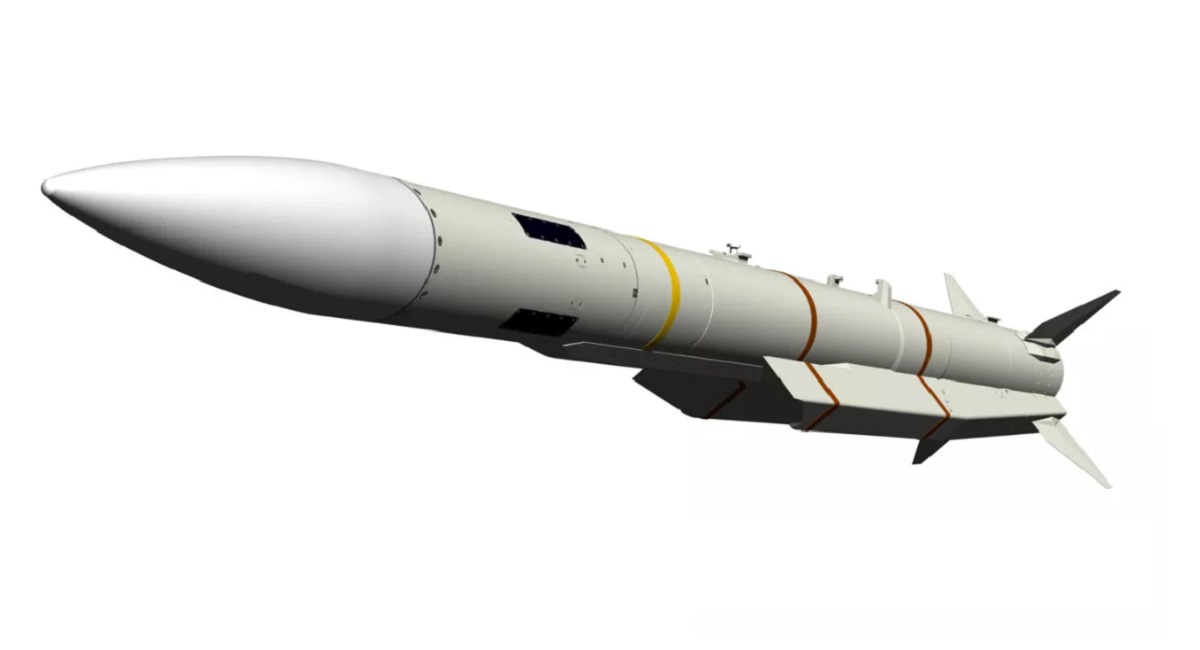
The MBDA Meteor is built according to a conventional aerodynamic configuration and features a pronounced dihedral angle of approximately 45° on its wings. A cruciform tail assembly is used for flight control and stabilization.
The propulsion system is a combined integrated setup consisting of a throttleable ramjet sustainer and a launch booster housed within a single airframe. The booster uses a low-smoke solid propellant charge and accelerates the missile after release from the carrier aircraft to the speed required for ramjet ignition (approximately Mach 1.8). The ramjet’s gas generator is based on a boron-rich fuel composition. The mass flow rate and composition of the generated gas can be adjusted within a relatively wide range depending on flight conditions and operating режим. The combustion chamber and gas generator are manufactured from heat-resistant steel. The air intakes, located on the external surface of the missile body, are made of titanium.
The use of a ramjet propulsion system enables an increase in the missile’s average flight speed along its trajectory and extends its engagement range. According to publicly available marketing materials, the maximum range reaches approximately 150 km, although the actual operational range has not been officially disclosed and is generally assessed to exceed 200 km.
The maximum speed is reported to reach up to Mach 4.5. Despite its performance, the MBDA Meteor remains relatively compact: it has a mass of around 190 kg, a length of 3,650 mm, a diameter of 180 mm, a wing span of 400 mm, and a tail span of 630 mm. The warhead is a 25 kg high-explosive fragmentation type, equipped with both radar proximity and contact fuzes. The proximity fuze uses four antennas located in the nose section. When a target is detected, it triggers detonation at an optimal distance to maximize damage.
For guidance, the MBDA Meteor uses a combined control system: an inertial and command-guided phase during the initial segment of flight, followed by terminal active homing in the final phase. The missile is equipped with a two-way data link, allowing it to receive in-flight updates not only from the launch aircraft but also from other airborne assets, including airborne early warning and control (AEW&C) platforms. These mid-course updates refine target positioning, correct initial aiming errors, and compensate for drift in the inertial navigation system, which accumulates over time. In return, the missile can transmit real-time telemetry data back to the launch platform.
Meteor uses an active radar homing seeker developed on the basis of technologies used in the Aster missile family and MICA missile systems. To meet all-aspect engagement requirements and ensure performance against low-altitude targets, the seeker includes both high and medium pulse repetition frequency modes. Through advanced signal processing algorithms, Meteor is capable of tracking and engaging targets within formations and in environments with heavy electronic countermeasures and jamming.
According to the Integrated Logistics Support concept, the missile is delivered in a dedicated container equipped with built-in diagnostic systems and does not require specialized test equipment during storage. If a malfunction is detected, the missile is returned to the manufacturer while still in its container.
Read also:
- Weapons of Ukraine’s Victory: High-precision APKWS II Missile
- Weapons of Ukraine’s Victory: Paveway IV Guided Bombs
What Meteor Would Give Ukraine
The introduction of the MBDA Meteor would finally provide the Ukrainian Air Force with the “long arm” it has lacked. All air-to-air missiles currently in Ukrainian service – including Western AIM-120 AMRAAM and IRIS-T systems – are significantly inferior in launch range compared to Russia’s R-37M missile.
The use of Meteor would help level the playing field in fighter engagements and would also force Russian aircraft to move their standoff bombing positions further away from Ukrainian airspace. Meteor also has a key advantage over Russian long-range air-to-air missiles: its ramjet propulsion system maintains significant thrust throughout the entire flight envelope, including the terminal phase, making the missile more energy-efficient and more maneuverable at long range. As a result, evading Meteor through defensive maneuvers becomes considerably more difficult than evading the R-37M. An additional qualitative improvement comes from Meteor’s integration into a networked combat system that includes not only fighter aircraft but also airborne early warning and control (AEW&C) platforms – with two such aircraft already delivered to Ukraine by Sweden. This networked architecture significantly increases the overall effectiveness of Ukrainian fighter operations.
Read also: