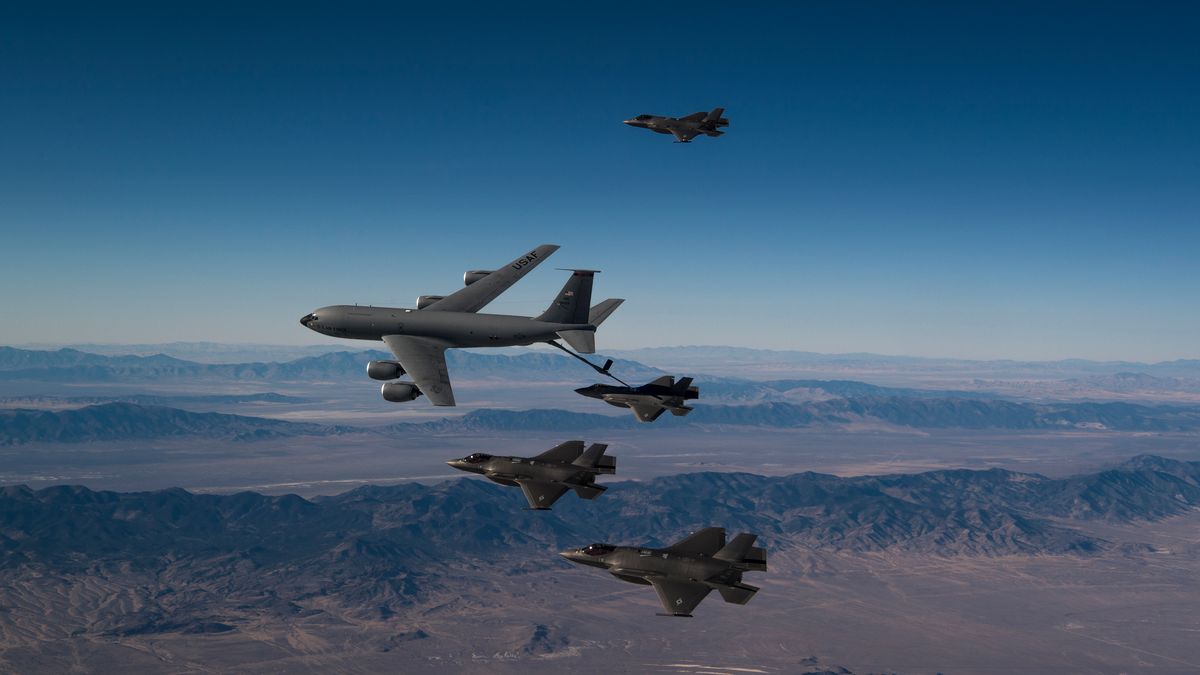
Japanese company EdgeCortix has demonstrated its edge AI computing platform during a U.S. Air Force exercise. The results confirmed its ability to perform AI processing directly in flight, highlighting the technology’s potential for future defense and space missions.
According to the company, its SAKURA-II platform was integrated into a mission system and evaluated during large-scale military exercises as part of a project supported by the Defense Innovation Unit (DIU). EdgeCortix also received official documentation from the DIU confirming that all project objectives had been successfully achieved.

The primary objective of the demonstration was to validate the platform’s ability to perform edge AI computing, where data is processed locally with minimal power consumption and without relying on cloud-based services. Such capabilities are increasingly being considered for deployment on military aircraft, unmanned aerial systems, autonomous platforms, and future space missions.
In addition to the flight demonstrations, the project included independent AI performance evaluations, radiation-hardness testing for space environments, and integration into a prototype gateway designed to enhance multi-domain battlefield communications between joint and coalition forces.
The SAKURA-II platform also underwent independent AI performance testing supported by the Software Engineering Institute (CMU SEI) at Carnegie Mellon University. The test program included heavy-ion radiation testing conducted by NASA to assess the platform’s resilience in orbital and lunar mission environments. According to EdgeCortix, no critical failures were observed during the tests. Only minor transient effects were detected, indicating that the platform is suitable for operation in both low Earth orbit and the cislunar environment.
During the flight trials, the system was evaluated for its ability to perform AI inference under real-world operating conditions while maintaining low power consumption.
“The U.S. Air Force and EdgeCortix jointly integrated SAKURA-II into the relevant mission system and evaluated it during a large-force exercise, demonstrating effective in-flight AI inference in tactically relevant applications across operationally significant scenarios,” said Spencer Lidle, Director of Operational Testing for the KC-135 aircraft.
According to EdgeCortix, the successful completion of the trials has increased the platform’s technology readiness level for deployment on aviation systems. The DIU Success Memorandum also paves the way for potential transition to production and broader adoption across U.S. defense programs.
Edge AI processors perform machine learning tasks directly on the device, without transmitting data to remote servers. This approach reduces latency, improves system resilience in the event of communication disruptions, and lowers power consumption, making it particularly promising for defense, aerospace applications, and autonomous systems operating in challenging environments.
“This milestone event confirms the readiness of the EdgeCortix SAKURA-II platform to operate in demanding aerospace and defense conditions,” said founder and CEO Sachin Sinha Dasgupta. “Successful execution of performance tests, radiation exposure evaluations, aircraft onboard integration, and in-flight operational demonstrations highlights the role of energy-efficient edge AI platforms in enabling reliable autonomy and sustained AI operations in next-generation defense and space systems.”
The headquarters of EdgeCortix is located in Tokyo. The company’s solutions are focused on defense and aerospace industries, robotics, telecommunications, industrial automation, and other sectors where real-time AI processing directly on devices is required.
Read also:
- Secrets of the Defense Alliance: Ukraine Negotiates with Paris on Domestic Production of SCALP Cruise Missiles
- Radarless F-35s Become Reality: U.S. Officially Accepts the First Batch
Source: interestingengineering