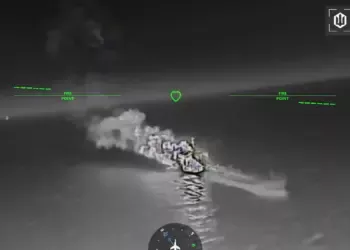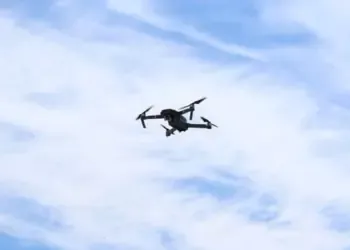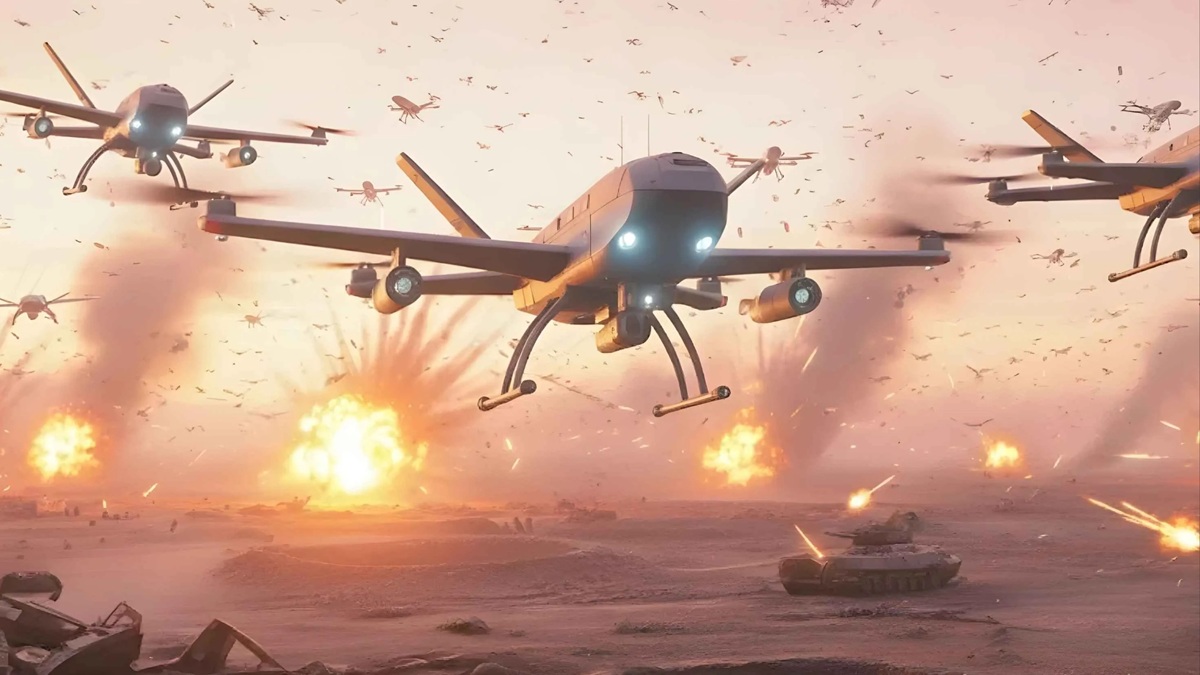
Ukraine is entering a new phase of technological warfare by deploying AI-powered autonomous drone swarms, significantly altering the modern battlefield.
What was until recently confined to military laboratories in leading countries is now being used in combat. According to The Wall Street Journal, Ukrainian forces have been operating drone swarms for several months that can communicate autonomously, coordinate actions, and make tactical decisions. In a standard configuration, each swarm consists of three drones: one reconnaissance unit and two strike units.
The key developer behind this technology is Swarmer, which created software for decentralized drone interaction. The system manages data exchange, task allocation, and attack synchronization, and its architecture is designed for resilience: if one drone is lost, the others take over its functions.
This effectively represents a new class of weapon – “collective intelligence” – that integrates reconnaissance, analysis, and strike capabilities into a single autonomous loop. It poses a significant challenge for adversaries, as traditional counter-drone methods are designed for individual targets rather than swarms that can adapt in real time.

TABLE OF CONTENT:
Fewer people – more results
Swarm technologies are shifting the balance between human resources and combat effectiveness. Whereas previously up to nine operators were needed to control three drones, Swarmer’s algorithms reduce that requirement to just three. This is critical given Russia’s numerical advantage: automation lowers operator workload, simplifies logistics, and increases system resilience.
A key benefit is the autonomous coordination of drones without reliance on external channels. This minimizes vulnerability to electronic warfare and allows the swarm to adapt in real time, even if individual units are lost.
Over the past year, more than a hundred operations have been conducted, mostly using “three-drone” configurations, though the viability of larger swarms – up to 25 drones – has also been confirmed. In parallel, Swarmer has tested control of over 100 drones, moving closer to the concept of full-scale “mass swarms.”
Effectively, Ukraine is the first country in the world to integrate elements of collective artificial intelligence into military practice, creating an asymmetric response to adversaries and setting a new standard for global defense innovation.
A new standard or a dangerous precedent?
Ukraine has become the first country to systematically integrate AI-powered drone swarms into combat operations, turning an experimental concept into a practical tool of war. At the same time, similar developments are underway in the U.S., China, Russia, France, and South Korea, ranging from American micro-drone swarms to Israeli operations in Gaza.
The widespread use of autonomous systems raises ethical and legal questions. A central issue is whether algorithms should be allowed to make target engagement decisions without human involvement. In Ukraine, final authorization still rests with the operator, but the rapid pace of technological development has already drawn concern from the UN and highlighted the need for international regulation.
The tactical advantage is clear: autonomous swarms operate faster, more cohesively, and are less vulnerable to countermeasures. However, increasing their autonomy also raises the risk of losing control over decision-making processes. This makes Ukraine’s experience not only a breakthrough in military practice but also a reference point for global debates on the limits of AI use in warfare.
Read also: