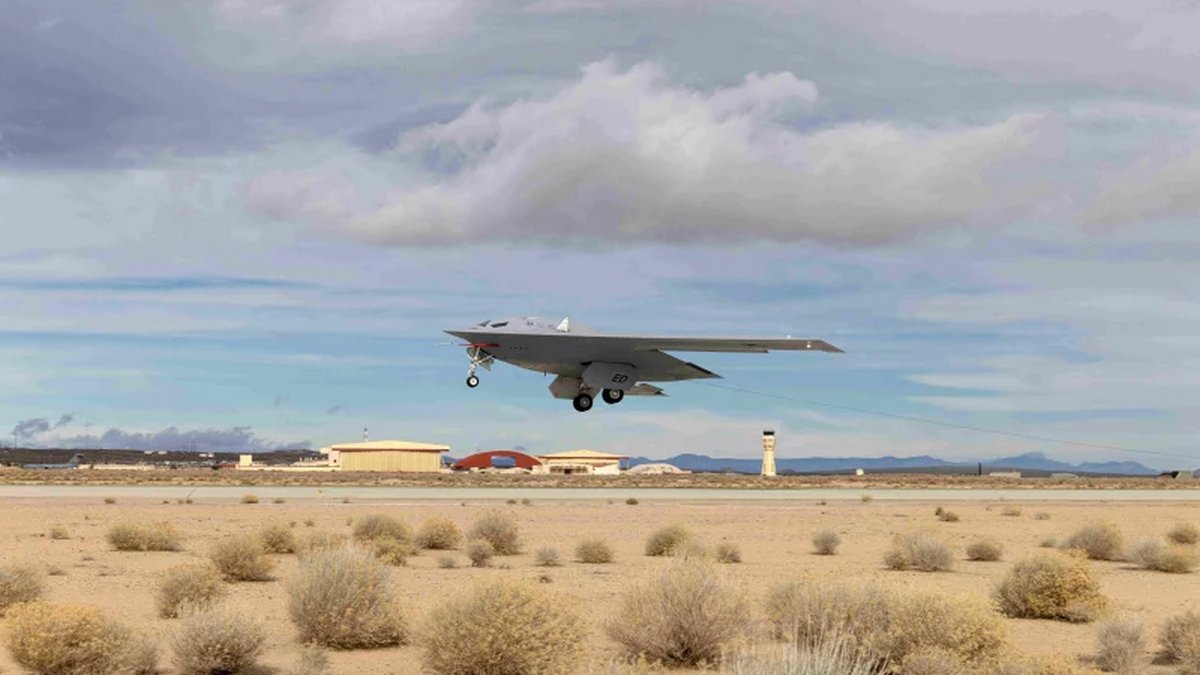
A further illustration of the drive to accelerate defense programs is the U.S. Air Force’s decision to involve an active operational pilot in joint flights with a test pilot during the early stages of the B-21 Raider nuclear bomber’s flight-test program.
Military aircraft testing traditionally follows a well-defined sequence that precedes operational deployment. Historically, this process has taken months or even years to complete. The initial phase consists of developmental testing, during which flight-test specialists verify the airframe’s structural integrity, aerodynamic characteristics, performance parameters, and the functionality of onboard systems. Only after these evaluations are completed do operational tests begin, with line pilots assessing the aircraft’s combat effectiveness, operational suitability, and survivability in realistic threat environments.

However, the prospect of spending months or years on this process is precisely what concerns Pentagon planners. As the B-21 represents one of the three pillars of the United States’ nuclear deterrent triad, the current geopolitical environment has created strong pressure to compress the development and testing timeline as much as possible.
The latest series of flights was conducted by a mixed crew consisting of an operational test pilot from Detachment 5 of the Air Force Operational Test and Evaluation Center (AFOTEC) and a developmental test specialist from the U.S. Air Force Test Pilot School, both of whom occupied the aircraft during the mission. This accelerated approach forms part of a broader modernization effort that includes not only the B-21, but also the Sentinel intercontinental ballistic missile and the next-generation F-47 combat aircraft.
Under the new directive, Air Force leadership is required to prioritize the allocation of resources and aggressively eliminate bureaucratic and administrative obstacles in order to meet established program deadlines. By integrating developmental and operational testing at an earlier stage, feedback from operational pilots can be relayed to the prime contractor, Northrop Grumman, virtually in real time. This allows identified shortcomings to be addressed before they evolve into issues requiring costly redesigns or major retrofit efforts.
The U.S. Air Force is expected to acquire at least 200 B-21 Raider bombers. These aircraft will initially supplement and subsequently – by around 2040 – completely replace the B-1B Lancer and B-2 Spirit fleets. Later, approaching the 2050s, they are also expected to assume the role currently performed by the B-52J Stratofortress. The first Raider is scheduled to enter operational service in 2028.
“The integration of operational and developmental testing within the B-21 program reflects the acquisition philosophy now being implemented across the armed forces,” said General Dale White, who oversees the portfolio of major defense acquisition programs for critical weapon systems within the Department of Defense.
According to White, this approach embodies a more practical and responsive mindset, combining modern manufacturing and testing tools with a clear recognition of the urgency of current requirements. That sense of urgency is driving a reassessment of legacy processes and encouraging a transition toward a more agile and adaptive defense acquisition system.
Read also:
- Arms Race 2026: U.S. Allocates $6 Billion to Accelerate the B-21 Raider Program
- Could This Be a Secret RQ-180? An Unknown “Flying Wing” Spotted in Greek Skies
Source: newatlas