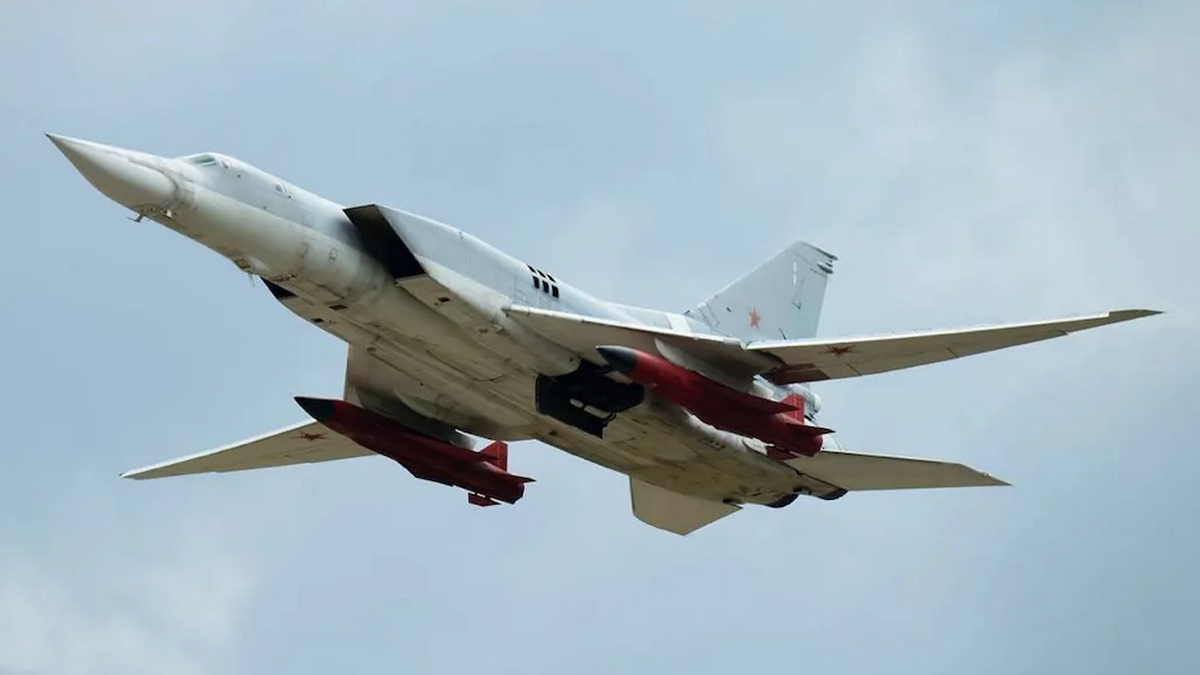
On Monday, June 15, 2026, a strategic Tupolev Tu-22M3 bomber-missile carrier crashed in Russia’s Irkutsk region. Initial reports of the incident emerged through Russian Telegram channels, including Mash, ASTRA, and Ostorozhno Novosti. The crash was later officially acknowledged by the Russian Ministry of Defence. According to the ministry, the aircraft was conducting a scheduled training flight without combat payload and crashed while approaching for landing.

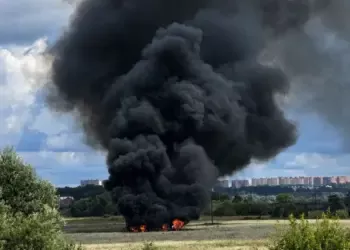
The aircraft went down near the city of Svirsk. Local residents shared videos and photographs online that appear to show the aircraft’s rapid descent, followed by a large plume of dark smoke rising from the crash site. Analysts from the OSINT project CyberBoroshno examined the available footage and geolocated the crash site to the banks of the Angara River near the settlement of Steklyanka. However, some reports place the crash closer to the village of Kamenka.
Before impact, all four crew members reportedly managed to eject from the aircraft, a claim supported by footage showing parachutes descending near the crash area. According to preliminary reports, local civilians located the crew members and assisted in their evacuation to a medical facility. One crew member reportedly sustained fatal injuries during landing, while the remaining airmen suffered injuries of varying severity.
While official investigations have not yet reached final conclusions regarding the cause of the crash, defence analysts note that this is the fourth known loss of a Tupolev Tu-22M3 attributed to internal technical failures since the start of Russia’s full-scale invasion of Ukraine. Production of the Soviet-era bomber ceased in 1993, and the fleet is increasingly affected by age-related wear and intensive operational use, including its involvement in air strikes against Ukraine.
Notably, the aircraft may have been operating from the Belaya Air Base, located approximately 30 km from the crash site. This strategic air base was targeted by Ukrainian drones in June 2025 as part of Operation Spiderweb. The latest incident is also the third crash involving a Tu-22M3 in the Irkutsk region in recent years. Similar accidents were reported on August 15, 2024, and April 2, 2025, highlighting ongoing concerns about the operational condition of the aging bomber fleet.
The long-range supersonic Tupolev Tu-22M3 was developed during the Soviet era. Since the beginning of Russia’s full-scale invasion of Ukraine, these aircraft have been regularly used to launch long-range strikes against targets across the country, including civilian infrastructure and other strategic facilities. For such missions, the bombers typically employ Kh-22 and Kh-32 supersonic cruise missiles, allowing attacks to be carried out from deep within Russian territory. One notable example occurred in January 2023, when a missile launched from a Tu-22M3 struck a residential apartment building in Dnipro, resulting in the deaths of 46 civilians.
Overall, according to estimates by OSINT researchers, Russia has lost 12 aircraft of this class since 2022. Of these, nine were destroyed, while three others sustained damage as a result of combat operations, sabotage activities, or internal technical failures. A particularly notable incident occurred on April 19, 2024, when Ukrainian forces reportedly destroyed a Tupolev Tu-22M3 in flight during a combat mission. The operation, carried out jointly by the Main Directorate of Intelligence of Ukraine and the Ukrainian Air Force, struck the target at an estimated distance of 300 km from the border using a modified S-200 air defence system. After being hit, the burning aircraft reportedly remained airborne for a short period before crashing in Stavropol Krai.
Read also:
- Interview with Bell Textron: Investing in the future in Ukraine
- Middle Strike: How Ukraine Is Building a New Class of Medium-Range Strike Systems
Source: Telegram