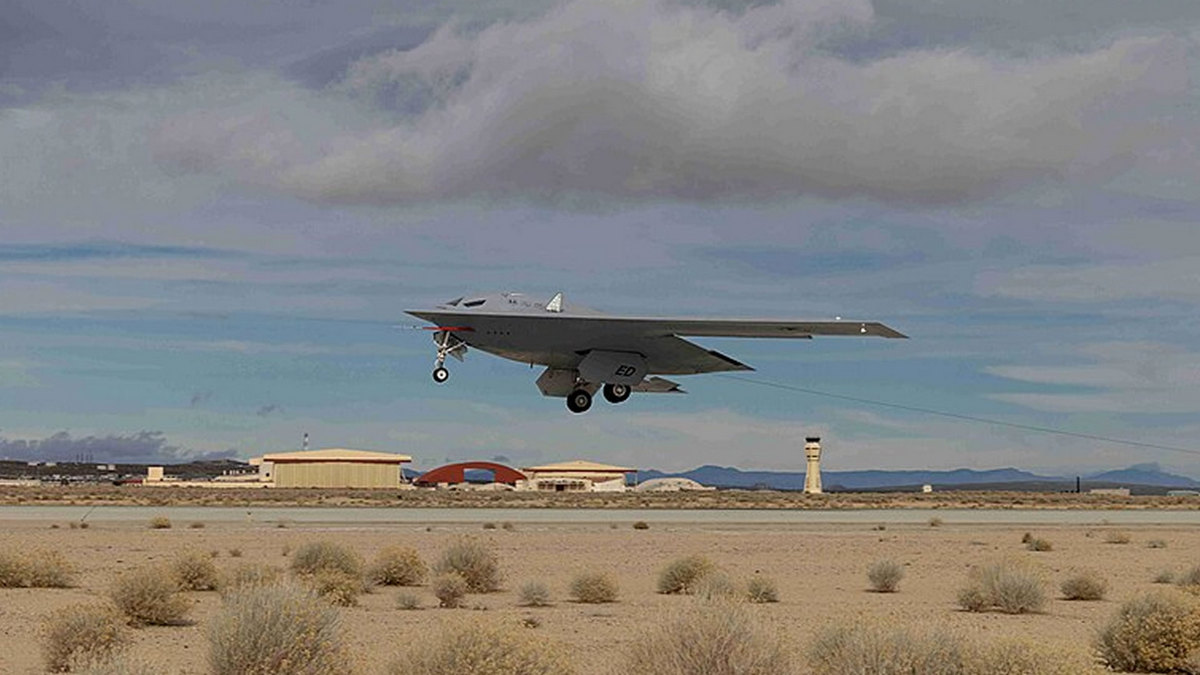
The United States is intensifying work on the B-21 program to sustain its long-range strike capabilities in an environment where heavily contested airspace is becoming a defining feature of modern warfare.
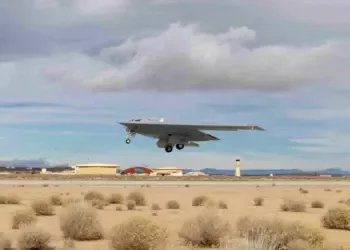
The B-21 Raider program has received an additional $6.1 billion in funding to accelerate its development timeline. This decision is widely seen as a response to China’s progress in developing a comparable platform – the stealth bomber H-20. Military leadership aims to bring the aircraft into operational service as soon as feasible.

The additional funding was announced as part of the U.S. Department of Defense budget request for fiscal year 2027, released on April 21, 2026. Developed by Northrop Grumman, the B-21 Raider is designed for low-observable penetration into defended airspace and the delivery of strikes against high-value targets with a reduced risk of detection. The aircraft is a central element of the U.S. Air Force’s Long Range Strike Bomber (LRS-B) program, intended to replace aging platforms such as the B-1B Lancer and B-2 Spirit.
At the same time, the B-21 is expected to complement rather than fully replace the B-52J Stratofortress fleet, which continues to undergo modernization. Meanwhile, China’s H-20 bomber – about which limited information is publicly available – is expected to perform similar missions, although it has not yet entered service. Both platforms are positioned to play a significant role in future conflicts, where operational effectiveness increasingly depends on the ability to penetrate dense radar coverage, long-range surface-to-air missile systems, electronic warfare environments, and anti-access/area denial (A2/AD) strategies.
These conditions are particularly dangerous for conventional aircraft, helicopters, and even some legacy stealth platforms under certain scenarios. In practice, recent U.S. operations in regions such as Iran have relied heavily on cruise missiles, fifth-generation fighters, and other long-range strike assets that enable engagements without entering heavily defended airspace. While this approach is effective, it generally requires launching strikes from outside the adversary’s airspace. However, such methods have inherent limitations: cruise missiles are expensive, and once in flight they offer limited flexibility to adjust targets or mission parameters.
A more effective solution is the use of specialized bombers capable of penetrating air defense systems, remaining in the target area for extended periods, and delivering strikes at the required moment. The B-21 Raider was designed for this role. The same applies to China’s H-20. If development is successfully completed, China would gain a credible long-range strike capability. This would enable it to threaten U.S. military bases across the Pacific, carrier strike groups, and potentially, under certain conditions, the continental United States.
However, there are additional nuances to this capability. According to available reports, the B-21 is not simply a low-observable platform for delivering long-range munitions. It is expected to integrate advanced technologies that extend its role into intelligence, surveillance, and reconnaissance (ISR). This effectively positions the aircraft as a key node within a networked combat system capable of coordinating drones, satellites, and missile assets. In this context, the B-21 is better understood not just as a traditional bomber, but as a mobile stealth-enabled command-and-control and strike coordination platform.
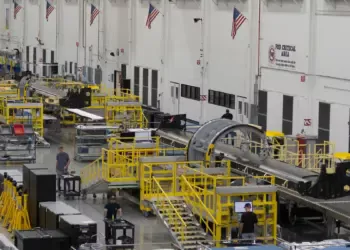
On the other hand, accelerating deployment into production may represent a questionable trade-off in terms of cost efficiency. The Pentagon appears to be considering an approach in which testing and serial production proceed in parallel. This strategy could allow the United States to field a larger number of B-21 aircraft more quickly. However, any design or structural issues that are not identified early in the process could lead to significant complications later. If one considers the experience of the F-35 Lightning II program, such an approach carries the risk of substantially increasing overall lifecycle costs in the long term.
Read also:
- B-21 Raider Stealth Bomber Spotted Refueling Mid-Air for First Time
- U.S. Unveils New AGM-181A LRSO Nuclear Cruise Missile for B-21 and B-52 Bombers
Source: interestingengineering