Influenced by Ukraine’s combat experience, France is beginning a systematic reassessment of its approach to military unmanned aerial systems. Unmanned platforms are expanding the military’s operational toolkit by enabling new modes of conducting combat operations. According to Florian Akhnin, an expert in the aerospace and defense industry at the international consulting firm Roland Berger, drones can provide a tactical advantage by supporting military tasks without exposing personnel to direct risk, while generally costing less than conventional platforms.

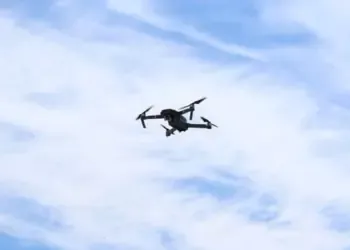
The basic airframe of a drone is relatively simple. Adrien Kanter, co-founder and chief executive of Alta Ares, a French startup established in Ukraine, notes that a basic model can be assembled with a 3D printer, access to open-source design files, and approximately 24 hours of work.
The decisive factor is the payload. It is the payload that determines whether a drone functions as a reconnaissance asset, a strike platform, or a component of electronic warfare. Optical, radar, and navigation sensors enable surveillance and data collection. Explosive modules are used for deep-strike missions or for neutralizing other drones, in some cases through direct collision. Electronic warfare equipment allows the disruption of GPS signals and enemy communication channels.
According to available estimates, Russia produces approximately 1,000 Shahed drones per day and deploys them in large numbers, often in combination with ballistic missiles, placing sustained strain on Ukraine’s air defense system. Intercepting these drones with costly missiles can require expenditures in the millions, which has led Ukraine to increasingly rely on lower-cost interceptor drones.
Adrien Kanter notes that Ukraine requires around 20,000 drones per month, a level of demand that is unprecedented in scale. To support the expansion of production capacity to this level, the first Franco-Ukrainian joint drone production forum was held in November 2025, with the support of Presidents Emmanuel Macron and Volodymyr Zelensky. The stated objective of the forum was to accelerate the transition of Ukraine’s drone industry to industrial-scale output.
Alta Ares, which operates directly in Ukraine, integrates software into its drones that increases interception rates from roughly 30% to 65%, with a stated longer-term objective of reaching 85%, a level comparable to the performance of the U.S. Patriot system. Another area of drone employment involves strikes against strategic targets deep within Russian territory, including air bases, elements of defense infrastructure, oil refineries, and fuel storage facilities.
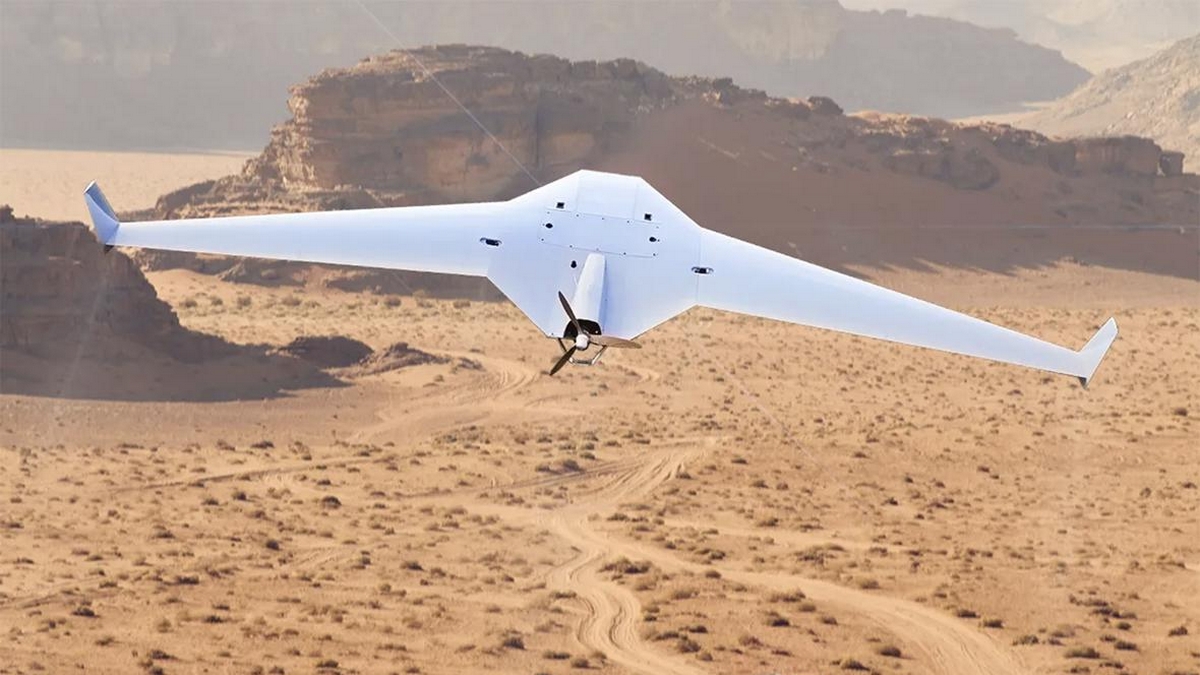
For the French defense industry, this cooperation creates new areas of technical and industrial alignment. At EOS Technologie, the Rodeur drone – several units of which have already been supplied to Ukraine – has a range of up to 500 kilometers and an endurance of up to five hours. The platform can be used for reconnaissance missions as well as for strike operations in a loitering munition configuration.
Jean-Marc Zuliani, President of EOS Technologie, observes that in a European context such systems are typically framed as defensive assets, whereas in Ukraine they are effectively employed as offensive tools. He emphasizes that Ukrainian engineers and military personnel have acquired a level of hands-on operational experience in a short period that currently has no close equivalent elsewhere. According to Zuliani, Ukraine’s immediate need lies more in technological solutions than in the platforms themselves. For Western manufacturers, this environment also provides an opportunity to test systems under real combat conditions and to adapt designs rapidly to contemporary operational requirements.
The Portuguese company Tekever, which later expanded into a pan-European player and opened an office in Toulouse in 2024, has been supplying Ukraine with reconnaissance and intelligence drones since the start of the full-scale conflict. Nadia Maaref, Chief Executive of Tekever France, states that the company is transferring the experience gained to the European market, with the aim of positioning itself as a significant regional actor.
The automotive sector is also becoming increasingly involved in the development of the drone industry. An initiative launched several months ago by the General Directorate for Armaments moved into a practical phase this week, when Renault announced a partnership with Turgis Gaillard aimed at building a national ecosystem for military drones.
According to Jean-Marc Zuliani, the primary requirement at present is large-scale production, an area in which automotive manufacturers already possess relevant expertise, particularly in delivering high volumes within short timeframes. He also disclosed that an agreement has been concluded with a major automotive industry player, whose name was not specified. This partner is expected to be capable of producing between 10,000 and 1 million units by 2030 to meet the needs of the French armed forces.
Read also:
- World’s First Hydrogen-Powered Drone Begins Combat Missions in Ukraine
- MQM-172 Arrowhead: Overview of a Versatile Loitering Munition Drone
Source: france24