During a demonstration performance at an aviation festival held at Mountain Home Air Force Base in western Idaho, two McDonnell Douglas F/A-18 Hornet fighter jets operated by the United States Navy collided mid-air. All four crew members successfully ejected, according to official statements released by authorities. The incident occurred on Sunday, May 17, 2026. Videos recorded by eyewitnesses showed thick plumes of smoke rising above the flat terrain near the military installation where the aircraft crashed.
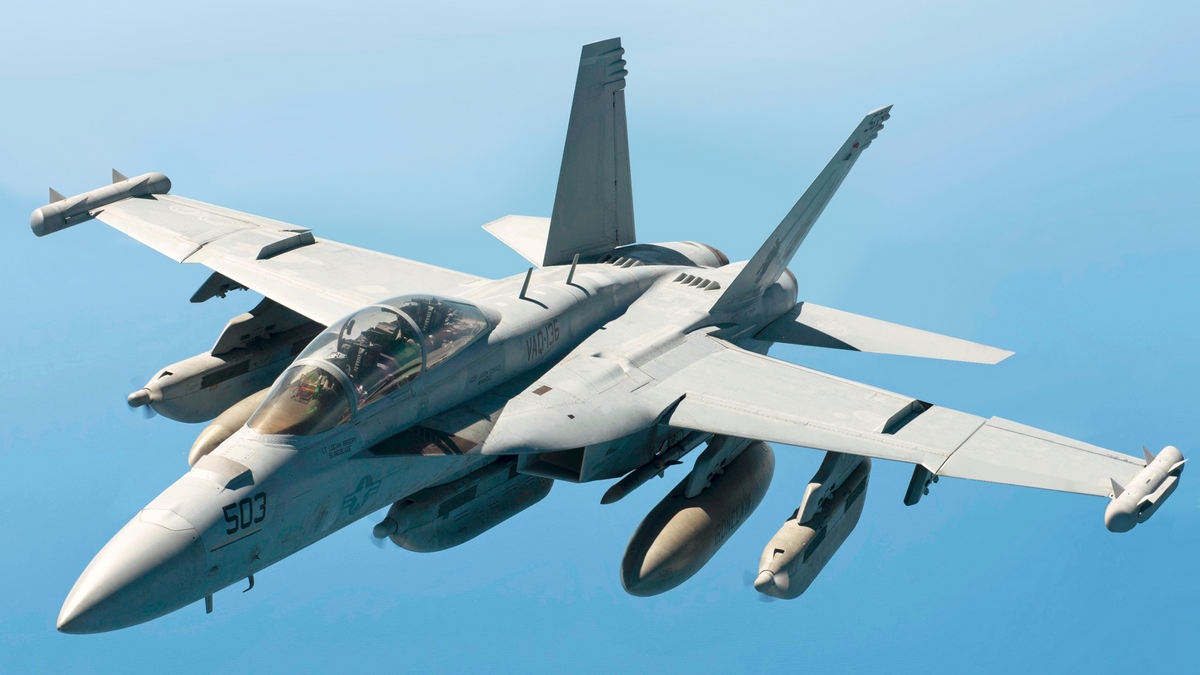
According to United States Pacific Fleet aviation spokesperson Lieutenant Commander Amelia Umayam, the incident involved two Boeing EA-18G Growler carrier-based electronic warfare aircraft assigned to Electronic Attack Squadron 129, which is stationed at Naval Air Station Whidbey Island. She stated that the aircraft were performing scheduled maneuvers as part of the demonstration program when the collision occurred.
She also confirmed that all four service members aboard the two aircraft successfully used their emergency ejection systems, while an official investigation into the crash has already been launched. Officials at Mountain Home Air Force Base reported that the condition of all four evacuated aviators is currently stable. No injuries were reported among personnel or spectators on the base itself.
Immediately following the incident, the base administration declared a state of emergency and restricted access to the area, as announced on social media. All remaining events scheduled as part of the air show were canceled. Videos shared online by eyewitnesses show four parachutes deploying in the air while the aircraft rapidly descended near the base, located roughly 80 km south of Boise. The Boeing EA-18G Growler is a specialized variant of the Boeing F/A-18E/F Super Hornet equipped with advanced electronic warfare systems.

Eyewitness Shane Ogden said he was filming both aircraft at the exact moment they closed to a critical distance. Footage recorded by him shows the aircraft making contact before entering a shared spinning descent. At the same time, the crew members ejected, and their parachutes deployed above them. The aircraft continued falling together and exploded upon impact with the ground, creating a large fireball, while the aviators descended by parachute near the crash site.
According to the event organizers, the popular aviation festival – featuring demonstration flights and parachute jumps – was intended to honor historic aviation achievements and showcase the capabilities of modern armed forces. The main participants in the two-day program were pilots from the United States Air Force Thunderbirds aerobatic team. Data from the National Weather Service indicated that visibility conditions during the incident were good, although wind gusts reached speeds of up to 47 km/h.
Aviation safety specialist Jeff Guzzetti described the incident as extraordinary, noting that the successful ejection of both crews may have been possible because the aircraft remained entangled after the collision and descended as a single unit. He pointed out that, in most mid-air collisions, pilots typically have almost no time to escape. According to Guzzetti, the crash was most likely caused by human error rather than a technical malfunction, since formation flying and close-range maneuvers require extremely precise coordination to avoid incidents of this kind.
John Cox, head of Safety Operating Systems, stated that only highly skilled pilots participate in such events. However, he emphasized that demonstration flights leave very little margin for error because of the strict performance requirements and minimal operational tolerances. He also expressed relief that all crew members survived the accident.
This year’s event marked the first air show at Mountain Home Air Force Base since 2018, when a hang glider pilot was killed during a performance. In addition, a United States Air Force Thunderbirds aircraft crashed at the same location in 2003 while performing a complex maneuver. In that case, the pilot managed to steer the aircraft away from the spectator area and eject less than a second before impact, surviving without injuries.
The investigation into Sunday’s crash may progress relatively quickly, as the survival of all those involved will allow investigators to obtain direct testimony about the sequence of events and the pilots’ observations prior to the collision. However, because the investigation will be conducted by the United States Navy, the amount of information released publicly is expected to be more limited than in civilian aviation accident investigations. It was also noted that, due to the ongoing military conflict involving Iran, several other air events planned at U.S. military bases this year were canceled because the units stationed there are currently engaged in operational missions.
Read also:
- Why Modern Aircraft Still Crash and How Each Tragedy Shapes Aviation Safety
- Weapons of Ukraine’s Victory: The Hornet UAV, Also Known as “Martian-2”
Source: apnews