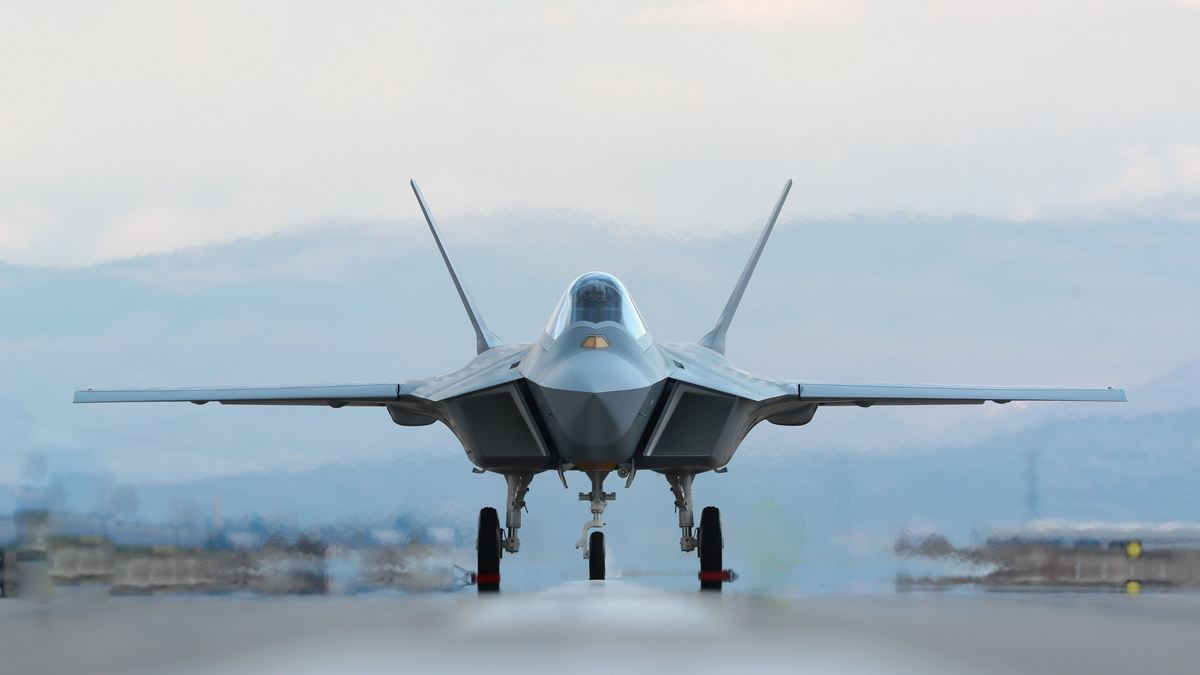
The administration of White House is preparing to approve a deal for the sale of General Electric jet engines for Turkey’s domestically developed fighter aircraft, TAI TF KAAN, despite objections from some members of the U.S. Congress. According to published information, the proposed package is valued at more than $700 million. The engines are intended to power Turkey’s next-generation fighter platform. The KAAN program is a central element of Ankara’s efforts to develop an indigenous aerospace industry and reduce dependence on foreign combat aviation systems.
The agreement is being prepared ahead of a NATO summit scheduled to take place in Turkey next month. It is expected to be interpreted as a significant signal of support toward Ankara in the context of broader efforts to stabilize bilateral relations.
Turkey launched the TAI TF KAAN program in 2016 as part of a broader effort to develop domestic defense technologies. The stealth fighter is intended to eventually replace the country’s aging fleet of F-16 Fighting Falcon aircraft in service. The project has evolved into one of Turkey’s most ambitious aerospace initiatives, aimed at building modern combat aviation capabilities while expanding its domestic defense industrial base.

According to open-source information, the engines will be supplied by General Electric and are expected to be installed on the initial production version of the TAI TF KAAN. Securing a reliable propulsion source is considered critical for the program’s early phases, while Turkey continues parallel development of its own indigenous engine.
The proposed agreement is also widely interpreted as a sign of improving relations between Washington and Ankara under President Donald Trump, who has maintained comparatively close ties with Turkish President Recep Tayyip Erdoğan. When asked about engines, Turkey’s participation in the F-35 program, and the upcoming NATO summit, Trump told reporters: “I will probably do something to make them very happy.”
However, the engine package does not resolve the broader issue of Turkey’s exclusion from the F-35 Lightning II program, following its purchase of the Russian S-400 Triumf air-defense system. The dispute over the S-400 continues to complicate defense cooperation between the two NATO allies.
Under current U.S. legislation, Turkey is prohibited from operating the S-400 system while simultaneously participating in the F-35 program. Concerns within the U.S. Congress regarding Turkey’s defense posture remain significant. According to available reports, Representative Gregory Meeks, the ranking Democrat on the House Foreign Affairs Committee, raised objections to the proposed engine sale during informal review procedures.
Despite these objections, the administration intends to move the agreement forward and notify Congress officially in the coming days. While lawmakers can influence major arms sales, they do not necessarily have the authority to block them if the executive branch chooses to proceed.
Vice President J.D. Vance stated that officials are reviewing whether Turkey has met the legal conditions required for a potential return to the F-35 Lightning II program. “Pete and the team are looking at it right now, because there are certain things we have to certify as having happened… in order to comply with U.S. law,” he said.
For Turkey, the agreement could provide a significant boost to the TAI TF KAAN as it moves toward operational deployment of a domestically developed fighter, even though broader issues related to the F-35 and the S-400 Triumf system remain unresolved.
Read also:
- Hunting Shahed: Ukrainian drones receive a unique autonomous interception system
- “Free Bird” from Türkiye: Everything About the TAI Hürkuş Trainer and Light Attack Aircraft
Source: interestingengineering