The Pentagon has announced a large-scale program that will allocate $1 billion over the next two years to procure hundreds of thousands of loitering munitions. The initiative, called the Drone Dominance Program (DDP), implements a directive issued in July by U.S. Defense Secretary Pete Hegseth that called for a fundamental shift in how such systems are acquired and employed. The department’s view is that low-cost drones should become standard tools even at the lowest levels of the Army’s structure.
Despite lessons from Ukraine and other conflicts – where small drones have played a decisive role – the U.S. Army has been slow to adopt these systems at scale. The new program is intended to accelerate that transition, though its targets remain far more modest than the level of drone use seen in the Russia-Ukraine war.

The department reports that it plans to order 30,000 drones with deliveries expected by July 2026. By 2027, the Drone Dominance Program aims to acquire more than 200,000 drones. The projected total by early 2028 exceeds 300,000 units. According to the Pentagon, “Under the Drone Dominance Program, $1 billion from the Big Beautiful Bill will fund the production of roughly 340,000 small unmanned aerial systems for combat units over the next two years.”
The program is designed to encourage manufacturers to rapidly establish large-scale, low-cost, and supply-chain-secure production of small drones. DDP intends to issue $1 billion in fixed-price contracts, divided into four phases over a two-year period.
Each phase will begin with a Gauntlet technical evaluation and conclude with the delivery of a batch of ready-to-use drones. Military operators will test the systems, assessing their ability to perform a range of missions. The number of drones procured is expected to increase with each phase, while unit costs are projected to fall from roughly $5,000 to about $2,300. After the second phase, the pool of manufacturers will be reduced, with only five companies remaining by the fourth phase. The final phase is scheduled to take place between August 2027 and January 2028.
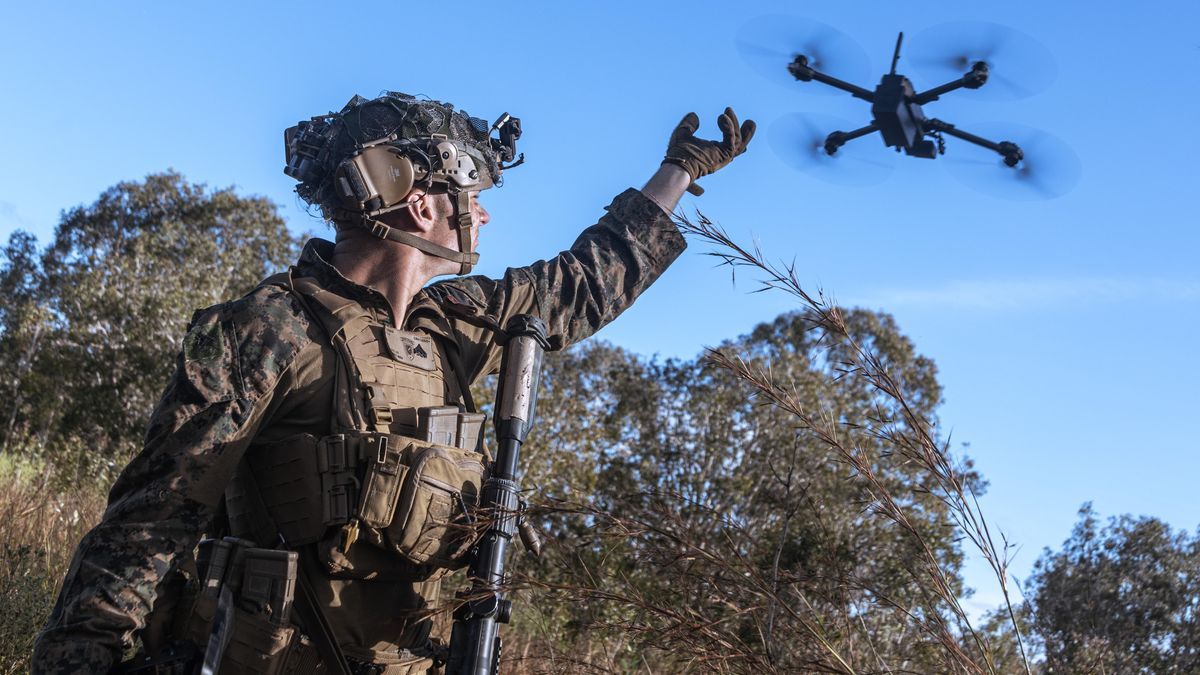
The documents do not specify the exact types of drones the Pentagon intends to purchase. However, the projected unit cost strongly suggests the focus will be on FPV systems and small quadcopters – the same classes of drones now widely used on the battlefield in Ukraine.
Defense Secretary Pete Hegseth’s directive offers further clues about the expected capabilities: “Most notably, certain categories of small unmanned aircraft systems (UAS) will now be treated as ‘expendable,’ more akin to hand grenades or other types of munitions than to aircraft, which has broad implications. Lower-level commanders will also be able to procure small UAS directly and authorize subordinates to operate them.”
The first competition under the program is scheduled to begin on 16 February 2026, with 25 manufacturers taking part. Participants will be selected based on proposals submitted in response to the solicitation issued on 17 December, with the final list expected by the end of January.
Evaluators will assess each system’s performance in “two missions that will likely include a 10-kilometer strike in open terrain and a 1-kilometer strike in a simulated urban environment.” Both tasks will be carried out using a minimal 2-kilogram mock warhead. In later phases, the difficulty is expected to increase significantly, likely incorporating scenarios involving counter-drone defenses.
A notable feature of the program is that the results of each competition will be published in an open, tabular format. After the first phase, up to 12 manufacturers may receive orders for at least 1,000 drones each. Payments will be made only after the systems are accepted; there are no advance or compensatory payments. All development and production risks remain with the companies. Another unusual aspect is the absence of a traditional elimination process between phases. Manufacturers that fall short in an earlier round can still re-enter later phases with improved designs.
Although the contract volumes are smaller than those seen in major defense procurement programs, participation in the DDP may offer a strategic opportunity for companies aiming to establish themselves in the emerging market for mass-produced combat drones.
Read also:
- Ukrainian Interceptor Drone Downs a Russian Jet‑Powered Shahed for the First Time
- Warning to Iran: US Deploys Shahed-136 Drone Clones in the Middle East
Source: twz