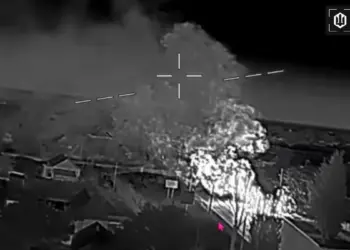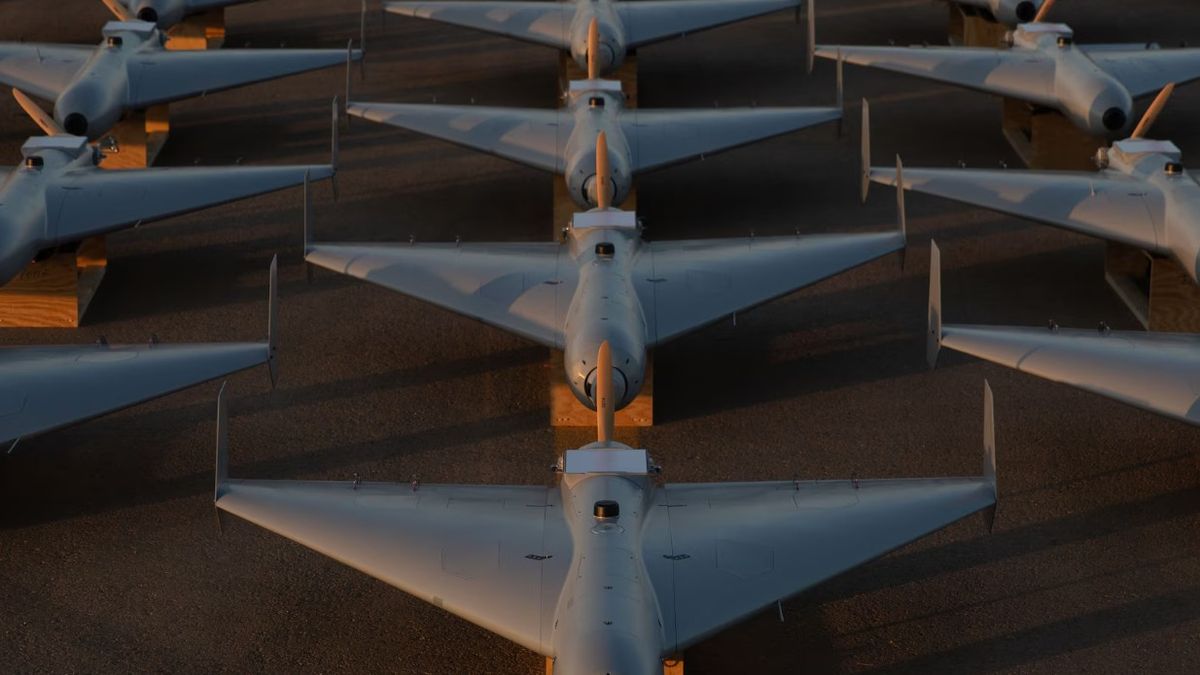
For the first time, the U.S. military has established a combat unit equipped with the new LUCAS (Low‑Cost Uncrewed Combat Attack System) loitering munitions. The system’s design is based on the Iranian Shahed‑136. The creation of Task Force Scorpion Strike (TFSS) marks a notable development, described by one U.S. official as an opportunity to “reverse the script with Iran.”
U.S. Central Command (CENTCOM) formally announced the establishment of TFSS. The unit reports to the Special Operations Command Central (SOCCENT), which oversees special operations forces in the region. TFSS consists of roughly two dozen service members responsible for overseeing training and operational use of the drones.

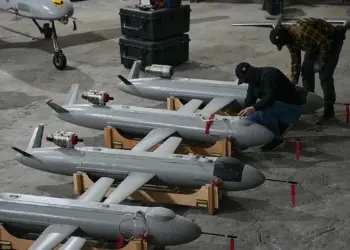
According to officials, the LUCAS drones use a delta‑wing configuration, measure roughly 3 meters in length, and have a wingspan of more than 2.4 meters. The system was developed by SpektreWorks. The exact number of units in service has not been disclosed, but officials describe the quantity as sufficient to provide a “significant level of capability.”
The drone supports autonomous coordination between individual units, enabling swarm‑style operations. U.S. Navy Captain Tim Hawkins, a CENTCOM spokesperson, noted that a single LUCAS is priced at about $35,000, making it less expensive than conventional long‑range systems with comparable effects. The platform has a substantial operating range and can function beyond line of sight.
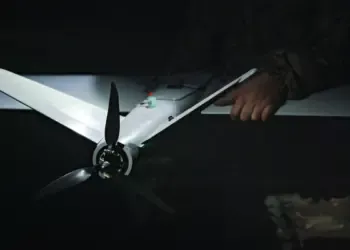
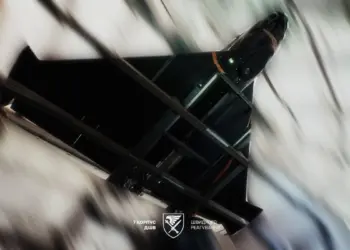
CENTCOM’s statement adds that the drones can be launched from multiple types of platforms, including catapults, rocket‑assisted systems, mobile ground launchers, and vehicles. According to an official, the design allows for several launch configurations, including options that do not require a ground‑based start. The Pentagon recently released a set of photographs showing the drones.
The basic design of the LUCAS drone is directly based on the Shahed‑136. Officials stated that the U.S. military obtained an Iranian Shahed, examined it, and conducted reverse engineering. “We are working with a number of U.S. innovation companies. LUCAS is the result of these efforts. Its design closely mirrors that of the Shahed,” they said.
SpektreWorks lists specifications for a similar model, the FLM 136, including a range of up to 714 km, a flight duration of up to six hours, an 18‑kg payload, and a cruising speed of around 74 knots. It is unclear how closely these figures correspond to the operational LUCAS. The Iranian Shahed‑136 has a maximum speed of about 185 km/h and a range of up to 2,000 km with a 40‑kg warhead. It is designed for strikes against stationary targets using preprogrammed coordinates. Iran later introduced a jet‑powered variant, and Russia also produces a series of derivative models known as “Geran.”
Iranian forces have been using the Shahed‑136 extensively against Israel, while Russia employs the same type of drones in its attacks on Ukraine. The experience gained from Israel’s air‑defense efforts, along with observations of Russian strike patterns, has been a major factor driving U.S. development of both strike‑capable and counter‑drone systems. The establishment of a U.S. combat unit in the Middle East equipped with these drones marks a notable shift. Until now, systems of this class had appeared in public sources mainly in the context of training or testing, not as operational assets.
A U.S. official noted that Tehran and Moscow have gained an advantage by deploying large numbers of inexpensive attack drones that are difficult to intercept at scale. The United States is now prepared to adopt a similar strategy. TFSS has not yet used its drones in combat, but test launches against simulated targets in the region have already taken place.
SpektreWorks is not the only company working in this segment. At least one other U.S. firm, Griffon Aerospace, offers a Shahed‑type drone to the American armed forces – the MQM‑172 Arrowhead.
The United States may also apply the advantages of these drones in other regions. A U.S. official said the platforms will continue to evolve, noting that one of their strengths is not only scalability but also the potential for ongoing improvement. Because of their modular design and open architecture, these drones can be upgraded relatively quickly. Enhancements to navigation systems, the introduction of autonomous AI‑based targeting without GPS, and the ability to strike moving targets are viewed as developments that will likely emerge over time.
Read also:
- All About the Turkish UAV Bayraktar Kizilelma: Development History and Prospects
- Everything About the P1-Sun – SkyFall’s Ukrainian Interceptor Drone
Source: twz