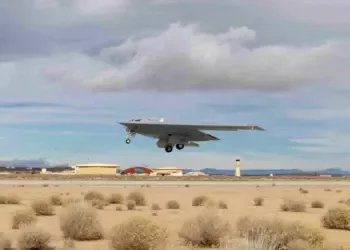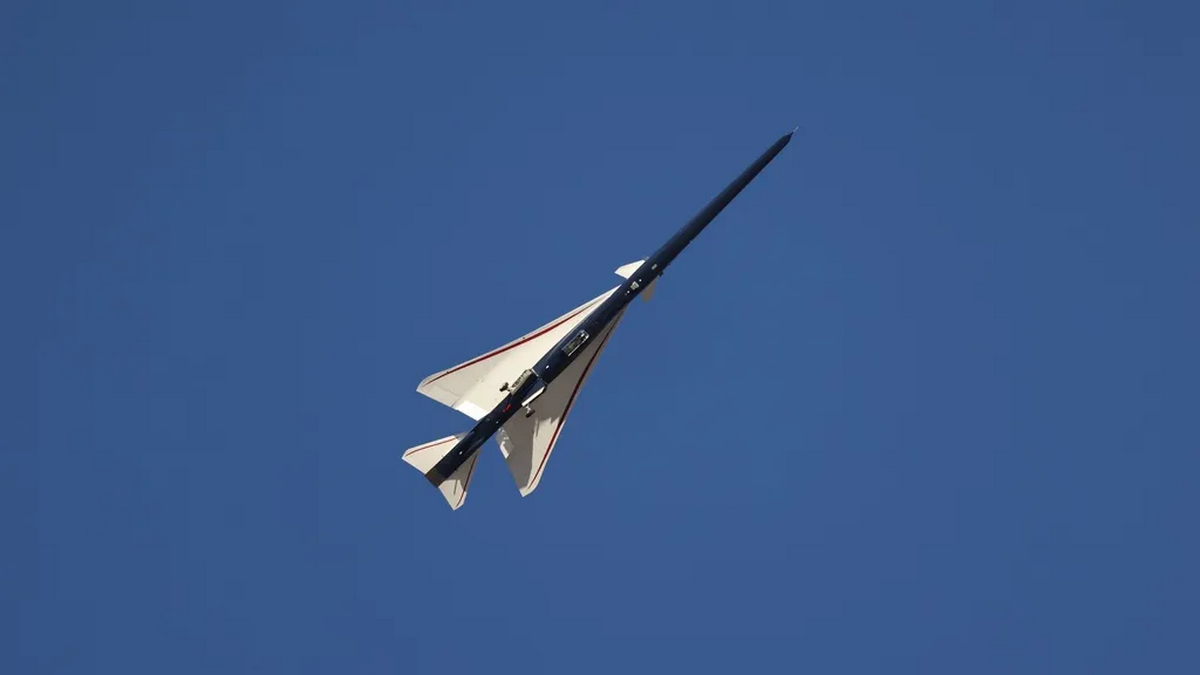
The experimental NASA X-59 aircraft, designed to break the sound barrier without producing a strong sonic boom, has taken to the skies for the first time. The flight occurred on October 28 at 17:13 Kyiv time (10:13 ET). The aircraft took off from Palmdale Regional Airport in California, home to the legendary Lockheed Martin Skunk Works facility, where the X-59 was built under contract with NASA.

Although NASA did not officially announce the first flight or release a statement afterward – likely due to a temporary U.S. government shutdown – the launch was confirmed by numerous aviation spotters and photographers. Videos and photos of the takeoff have surfaced online, showing the X-59’s elongated fuselage ascending over the Mojave Desert.
According to Flightradar24 data, the aircraft completed several oval circuits over Edwards Air Force Base and remained airborne for just over an hour before landing back at the same location. Edwards is home to the Armstrong Flight Research Center, where the X-59 will now undergo the next phases of its testing program.
During upcoming tests, NASA engineers will evaluate how effectively the aircraft reduces the intensity of sonic booms. To do this, the X-59 will fly over specially placed microphones in the desert, as well as alongside other aircraft equipped with sensors to capture airwave data.
The X-59 QueSST (Quiet Supersonic Technology) project is a joint effort between NASA and Lockheed Martin. Its primary goal is to develop an aircraft capable of flying faster than the speed of sound without producing the loud booms that disturb people on the ground. This effect is the reason the United States has prohibited supersonic flights over land since 1973.
NASA hopes that successful testing of the X-59 will help revise these restrictions. In the future, this could pave the way for commercial supersonic flights over populated areas, reducing travel times and potentially having significant benefits for medical aviation, rescue operations, and rapid cargo transport.
Source: Space