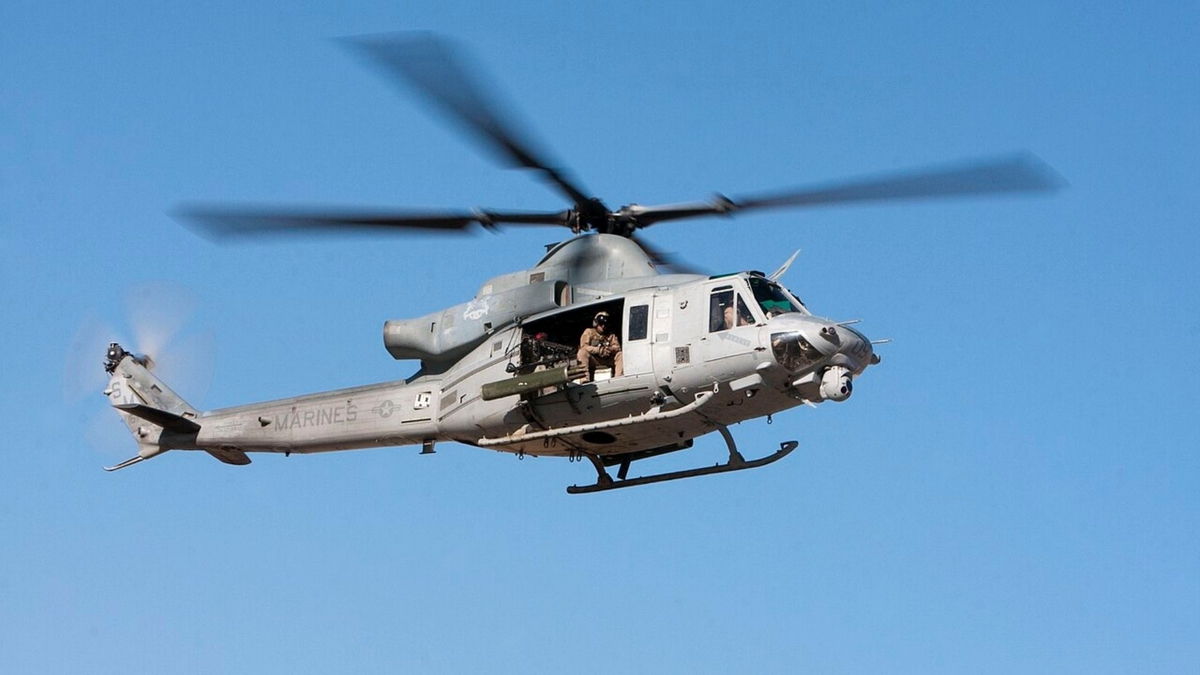
U.S. Marines tested low-cost FPV kamikaze drones, with coordination conducted from aboard Venom helicopters.

The U.S. Marine Corps is testing a new combat concept that combines conventional helicopter aviation with low-cost first-person-view (FPV) unmanned aerial systems. The development reflects the rapid evolution of modern warfare concepts, influenced in part by operational experience from conflicts in Ukraine and the Middle East.
During recent exercises in southern California, U.S. forces conducted a successful ground launch of a Neros Archer FPV drone. Control of the aircraft was subsequently transferred to operators located aboard a UH-1Y Venom helicopter flying several kilometers away. The objective of the experiment was to evaluate the capability of Marine aviation units to extend the operational range and increase the flexibility of employing low-cost strike drones.
These trials represent a further step in a broader U.S. Marine Corps initiative aimed at integrating commercially available drone technologies into forward combat operations while maintaining low cost and high adaptability. According to Marine Corps representatives, the tests focused on integrating FPV systems with aviation platforms such as the UH-1Y Venom utility helicopter and the AH-1Z Viper attack helicopter.
The primary objective was to assess the feasibility of non-kinetic launch and deployment of a first-person-view (FPV) drone directly from a moving helicopter. According to Captain Quinton Thornberry, a pilot of the UH-1Y Venom assigned to Marine Light Attack Helicopter Squadron 169 (HMLA-169), Marine Aircraft Group 39, 3rd Marine Aircraft Wing, the team successfully achieved this capability during the exercise.
The next phase focused on validating the ability to maneuver and maintain full control of the drone while operating from the rear cabin of the aircraft. FPV drones allow operators to receive a direct video feed from the drone’s onboard camera via specialized goggles or monitors, enabling highly precise piloting and target acquisition. Such systems have gained significant importance in contemporary armed conflicts due to their low cost, reduced detectability, and versatility in performing reconnaissance and strike missions.
The system of choice for the military was the Neros Archer drone platform, largely because infantry units had already extensively tested and operationally familiarized themselves with it. This prior experience significantly streamlined and accelerated its adaptation for use by Army aviation elements.
By integrating helicopters with FPV-capable unmanned aerial systems, commanders aim to enable future helicopter crews to deploy or coordinate swarms of low-cost drones while remaining at stand-off distances outside the effective range of hostile air defense systems.
Low-cost FPV drones have become one of the key weapon types in contemporary conflicts, particularly evident in the case of Ukraine. In this theater, both sides employ modified commercial quadcopters for reconnaissance and for conducting strikes against armored vehicles, defensive fortifications, and personnel positions. The continuous improvement in the effectiveness of such systems is prompting defense establishments worldwide to reassess traditional tactical doctrines and procurement priorities.
Rather than relying exclusively on expensive missile systems and manned aircraft, armed forces are increasingly exploring ways to deploy large numbers of affordable unmanned platforms capable of overwhelming an adversary’s defensive networks.
Read also:
- Speed up to 500 km/h: Ukrainian intelligence reveals specifications of the new Russian “Geran-4” drone
- New life for a legend: US Warthogs receive a unique refueling system
Source: interestingengineering