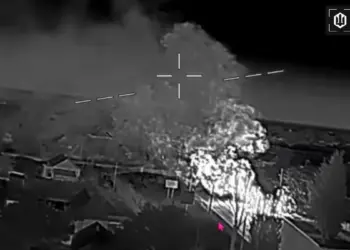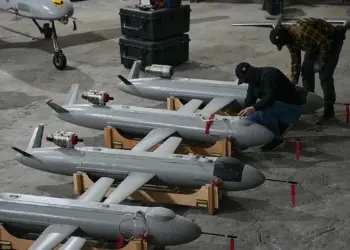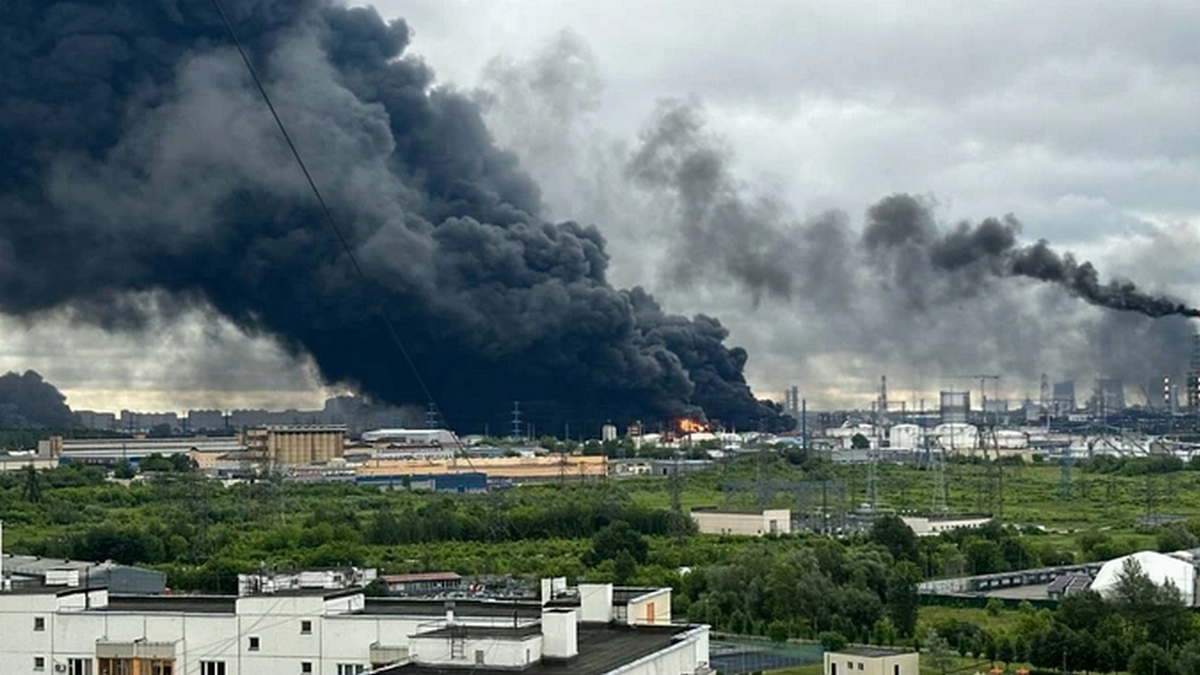
On the night of Thursday, 18 June, reports emerged from the Russian Federation of a large-scale interception of Ukrainian UAVs. According to available information, several drones are said to have reached targets, including oil depots and military storage facilities in Moscow and several other regions. Sergey Sobyanin reported that air defense systems were engaged in intercepting multiple UAVs. He also stated that a number of drones reached the Moscow Oil Refinery in the Kapotnya district, and that emergency response teams are currently working to address and mitigate the aftermath of the incident.

According to overnight statements attributed to the Moscow city authorities, Russian air defense systems reportedly intercepted 42 aerial targets approaching Moscow. However, it was also reported that debris from the allegedly downed UAVs fell onto the roof of the Sadovod Market shopping complex, causing minor damage to one of the buildings. To ensure operational safety, temporary restrictions under the so-called “Kovyor” (Carpet) plan were introduced at Moscow-area airports, including Domodedovo Airport, Vnukovo Airport, Sheremetyevo International Airport, and Zhukovsky Airport, leading to temporary disruptions in passenger flight operations. By the morning, as of approximately 08:12, official Russian figures had been revised upward, reporting that around 180 UAVs had been “intercepted” in the approach to Moscow.
Meanwhile, OSINT analysts have reported observed impacts at the Moscow Oil Refinery in Kapotnya, based on publicly available visual material and geolocation data. Eyewitnesses and social media users have shared footage suggesting a significant fire at the facility, with at least two large storage tanks reportedly engulfed in flames. According to these reports, the incident follows a similar event on 16 June, when the same refinery sustained damage to one of its technological units after a UAV strike, followed by an extended firefighting operation.
In addition to industrial infrastructure, reports also indicate damage in residential areas of Zhukovsky in the Moscow region, where debris or interception activity is said to have affected buildings. The Ministry of Defence of the Russian Federation has previously provided its own accounts of intercepted aerial targets, though independent verification of figures and impact assessments varies across sources.
This series of refinery fires in Moscow is described as part of a planned operation rather than a random occurrence, attributed to Ukraine’s Unmanned Systems Forces. Within the framework of the “#Deep Strike” program, operators from the 1st Separate Center of Unmanned Systems Forces of Ukraine reportedly acted in coordination with the 412th Separate Brigade ‘Nemesis’, the 413th Separate Regiment ‘Raid’, and the 414th Separate Brigade ‘Birds of Magyar’, with additional support attributed to the Special Operations Forces of Ukraine, the Main Directorate of Intelligence of the Ministry of Defence of Ukraine, and the Security Service of Ukraine.
Ukrainian military sources frame these actions as targeted strikes against fuel infrastructure, emphasizing its relevance to military logistics. According to this framing, repeated damage to refining capacity is presented as a factor affecting the operational supply chains of Russian forces and their overall sustainment capability.
The Moscow Oil Refinery in Kapotnya is considered one of the larger refining facilities in the Russian Federation, with an annual processing capacity of up to approximately 11 million tons of crude oil. It is part of the broader fuel supply chain that contributes to domestic fuel production, including petroleum products used in transportation and industry. According to the described context, the facility plays a role in producing fuel that is later used within Russia’s logistics and transport networks, including military supply chains. Following the reported incidents, assessments of the financial and operational impact are ongoing, with Ukrainian sources stating that the final evaluation of the damage and its consequences is still being clarified.
The events were also reported in several Russian regions during the same night. In the Rostov Oblast and Belgorod Oblast, local fuel storage facilities and warehouses were reportedly affected. In the city of Gukovo, a local oil depot is said to have been struck, resulting in a fire. According to available reports, the incident led to one fatality and two injuries. In the Shebekino area, reports indicate that an industrial site between the villages of Rzhevka and Voznesenka was affected following UAV activity. The facility, described as a storage site for flammable materials, subsequently caught fire and was extensively damaged.
Finally, reports indicate UAV activity in Crimea, where an incident allegedly occurred near the railway bridge over the North Crimean Canal in the area of Rozdolne, within the former Ichkinsky district. According to these accounts, the railway bridge sustained multiple impacts (approximately 20 detonations were reported in some sources). The adjacent road bridge in the same area was also reportedly affected. The infrastructure in question is described as part of a transport corridor used for logistics movement, including the transfer of heavy equipment and fuel supplies toward southern operational areas. Following the reported damage, logistical routes in the region are said to have been disrupted, though the full extent of the impact has not been independently verified.
Read also:
- Warehouses, Command Posts, and Logistics Hubs: Ukraine’s 147th Separate Artillery Brigade Conducts Its First Middle Strikes on Russian Rear-Area Targets
- No One Suspected It: Pokémon Go Data Helped Train a Navigation System for Military Drones
Source: Telegram