Ukrainian satellite communications are moving beyond the stage of ambition. The domestic low-Earth orbit (LEO) satellite constellation project, UASAT LEO, has officially entered the implementation phase. According to the plan, the first satellite is scheduled for launch in October 2026.

Today, it is rare to find anyone who hasn’t heard of Starlink and its role in supporting Ukraine’s defense during the full-scale invasion. High-speed satellite communications have significantly altered the conduct of operations, becoming a backbone for drone-based warfare. Experience with networks such as OneWeb and other satellite systems has also clearly demonstrated the critical importance of stable satellite connectivity in large-scale armed conflicts.
At the same time, the war has highlighted another issue: Ukraine’s dependence on foreign companies that operate these satellite services. Although the country has historically been involved in the development of advanced space technologies, until recently few believed it was realistic to establish a fully sovereign Ukrainian satellite communications system. However, a group of Ukrainian innovators has shown that even the most complex challenges can be made achievable.
The Ukrainian company STETMAN, operator of the UASAT satellite communications network, has developed its own low-Earth orbit (LEO) satellite constellation project, UASAT LEO. Against the backdrop of growing global access to space technologies and a worldwide surge in satellite development, the company has transformed an ambitious concept into a viable project.
A key feature of UASAT LEO is the comprehensive integration of capabilities, technologies, and requirements of all participants in the initiative. By nature, low-Earth orbit satellites cover the territories of multiple countries, many of which have a similar demand for sovereign communications. Current technological advancements make it possible not only to implement such a project quickly but also to design it from the outset with economic feasibility and mutual benefits for all partners in mind.
The UASAT LEO project has received support from the Ukrainian government as well as from partner-country companies. Recently, relevant European Union institutions have also joined the initiative. Leading international companies are involved in the development and production of key technological components. Through coordinated efforts among developers, manufacturers, and partners, the UASAT LEO project has reached a clearly defined launch trajectory. STETMAN recently registered the first satellite of the UASAT constellation with the International Telecommunication Union (ITU), marking the first registration of a Ukrainian satellite in many years.
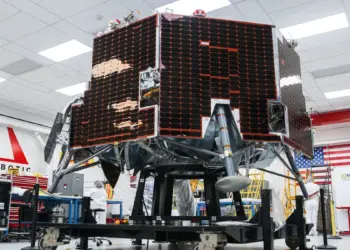
The launch of the first Ukrainian communications satellite, which will play a central role in testing and validating the technologies, is scheduled for October 2026. A launch slot on a carrier rocket has already been secured, and the satellite has been designated UASAT-NANO.
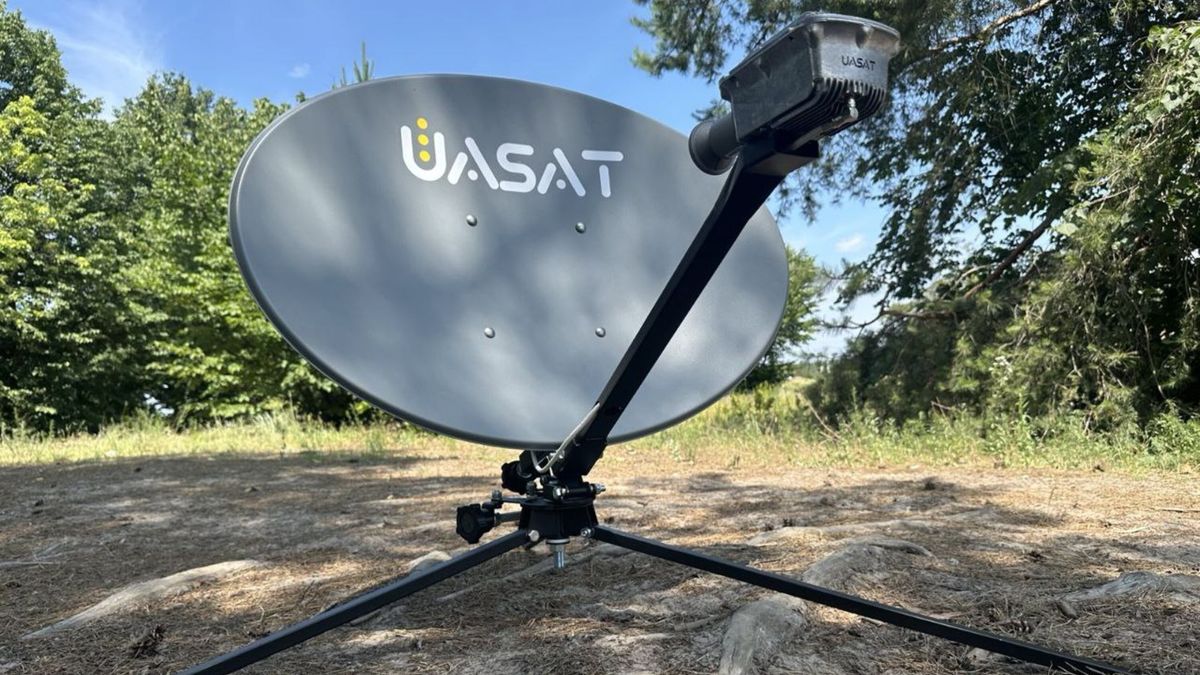
The UASAT LEO project aims to establish Ukraine’s own satellite network to provide sovereign communications for the country and its partner states. An important component of the initiative is the development and production of modern satellite communication terminals. In this way, UASAT LEO is intended to serve as a comprehensive solution for stable, independent connectivity aligned with the strategic needs of the state. The project is not intended as a commercial competition with global operators such as Starlink, OneWeb, or Amazon LEO. Rather, Ukraine and its partners require a reliable communications infrastructure for mission-critical applications, which UASAT LEO is being designed to deliver.
The project also carries symbolic significance, marking Ukraine’s return to space. Indigenous satellites, networks, terminals, and infrastructure provide a strong impetus for the development of national space technologies. Ultimately, however, the primary outcome will be reliable, sovereign, and high-quality communications.
Read also:
- Northrop Grumman Unveils New Talon Combat Drone
- DJI Unveils Its Most Capable Cargo Drone, the FlyCart 100
Source: skylinker