SpaceX has released the clearest image yet of its next major Starlink upgrade, confirming that the upcoming V3 satellite will be significantly larger and longer than previous models.

The image was shared during a live broadcast of Starship’s 11th test flight. It shows the V3 satellite alongside the previous Starlink 1.5 version, V2 models, and even a human astronaut, providing a clear sense of scale for the upcoming satellite.
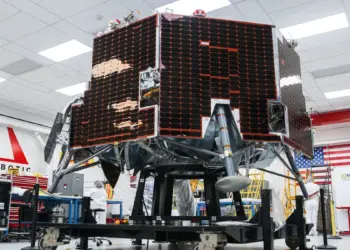
The V3 features longer solar panels and a larger central unit, which likely houses upgraded phased-array antennas capable of delivering gigabit internet speeds for the first time.
The satellite’s increased size explains the need to launch it with the more powerful Starship rocket, as the standard Falcon 9 cannot carry such massive payloads. According to regulatory filings, each V3 may weigh up to 2,000 kg, compared with approximately 575 kg for the current V2 Mini Optimized satellites.
The new satellites promise not only gigabit speeds but also increased network capacity, allowing more users to be served. Currently, some subscribers in the U.S. have to pay an additional $500–$1,000 as part of a so-called “demand surcharge” due to congestion in local areas.
Each V3 satellite will have a throughput of 1 Tbps, ten times higher than the V2 models. SpaceX plans to launch 60 V3 satellites per Starship flight, providing 20 times the additional capacity compared with a V2 Mini launch on Falcon 9.
During Starship’s 11th test flight, SpaceX successfully deployed eight prototype V3 Starlink simulator satellites. The exact launch date for the operational V3 satellites is still unknown, but CEO Elon Musk has previously indicated it could take place in late 2025 or early 2026.
&pp=ygUTc3BhY2V4IHYzIC1zdGFybGlua9IHCQn8CQGHKiGM7w%3D%3D
To operate the new generation of satellites and expand the constellation, which is expected to include nearly 30,000 units, SpaceX must obtain approvals from the Federal Communications Commission (FCC). The company also noted that Starlink users will need to upgrade their equipment to take full advantage of the gigabit speeds.
Source: pcmag