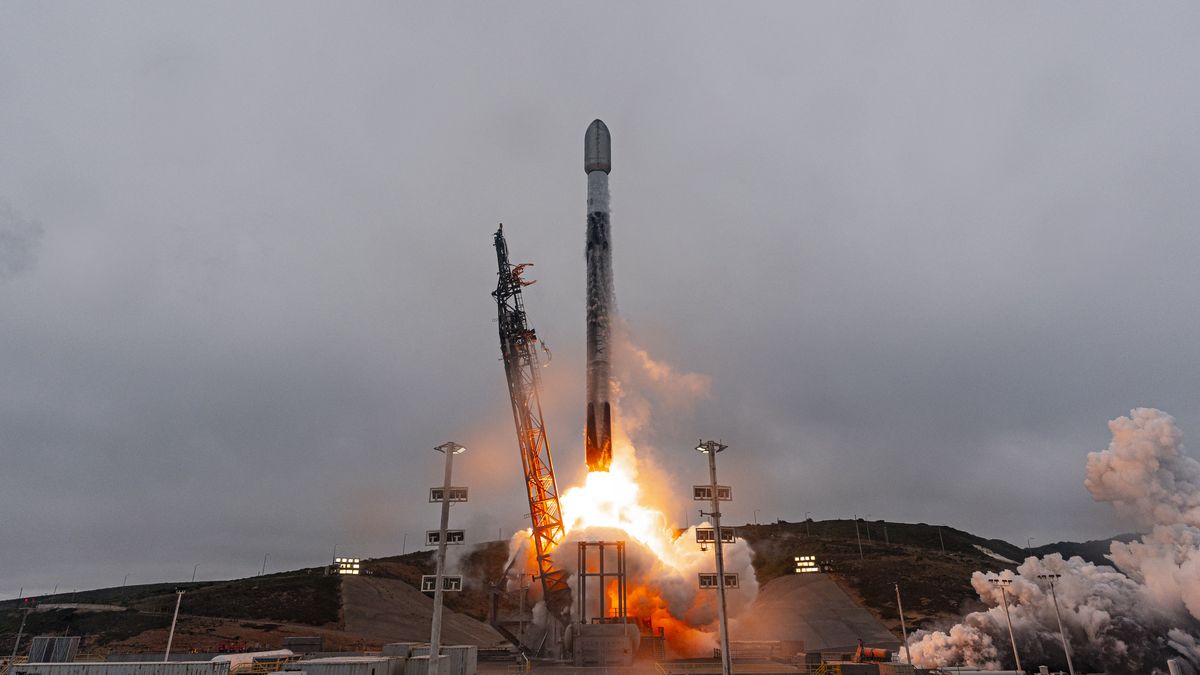
SpaceX has reached another notable milestone that highlights its dominant position in the launch industry. Elon Musk’s company has now placed more spacecraft into orbit than the rest of the world combined. Moreover, its lead is likely to continue expanding over the coming months and years.
Investor and former space industry executive Christian Keil drew attention to the achievement. According to his data, by mid-June SpaceX had launched 15,262 satellites. By comparison, the combined number of satellites launched by all other companies and organizations since the beginning of the Space Age in 1957 stood at 15,138.

Elon Musk founded SpaceX in 2002, but the company did not achieve success immediately. The first three launches of the Falcon 1 rocket, which SpaceX had developed in-house, ended in failure. It was only in 2008 that the company achieved a successful Falcon 1 mission. At the time, Musk said that a fourth consecutive launch failure could have effectively ended the company’s future.
Read also: Ariane 6 and Amazon Leo: How a Record-Breaking Launch Is Reshaping the Space Race Balance
Shortly thereafter, SpaceX transitioned to the Falcon 9 rocket, which made its debut in 2010 and remains the company’s primary workhorse. In 2025 alone, the vehicle completed a record 165 missions. Nearly 75% of those launches were dedicated to deploying components of the Starlink broadband satellite constellation, which SpaceX is building in low Earth orbit.
It is therefore unsurprising that the vast majority of objects launched by SpaceX to date have been Starlink satellites. According to astrophysicist and satellite tracker Jonathan McDowell, the company had placed 12,318 such spacecraft into low Earth orbit as of June 18. That number is expected to continue growing for many years, as the Starlink constellation could eventually consist of around 40,000 satellites or even more.
However, SpaceX’s ambitions extend far beyond its current satellite network. Elon Musk recently outlined plans to deploy one million data centers in space as part of a broader transformation of SpaceX from a company focused primarily on launch services into one with a much stronger emphasis on artificial intelligence. These systems are intended to be launched aboard Starship, the super heavy-lift vehicle that is still undergoing flight testing. Starship is the largest and most powerful rocket ever built, and its design is based on full reusability.
SpaceX has already outlined a vision of the future in which Starship carries out thousands of flights per year, supporting humanity’s efforts to establish a presence on the Moon and Mars while enabling other ambitious projects. As a result, it is safe to say that the company has no intention of relinquishing its leadership in the launch sector.
Read also:
- Tehran threatens Elon Musk: Ukraine could save SpaceX
- A New Step Toward Lunar Exploration: Astrobotic Presents the Griffin-1 Lander
Source: space