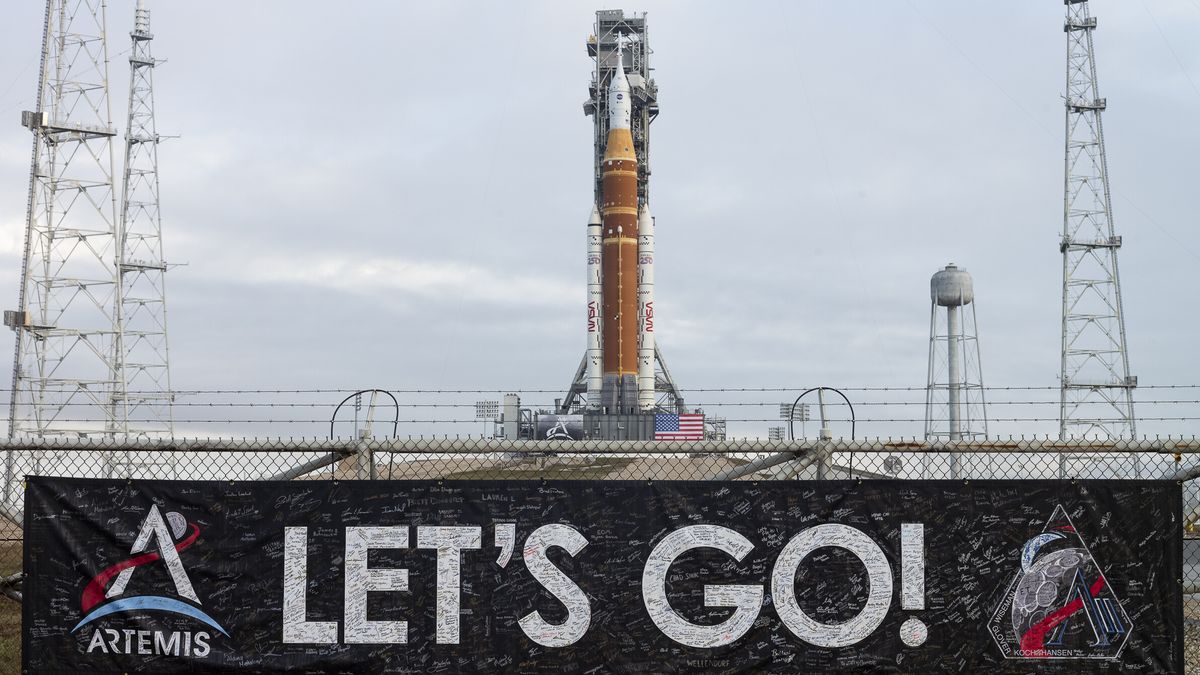
The NASA Artemis II mission rocket, along with the Orion spacecraft, has been successfully transported to Launch Pad 39B at the Kennedy Space Center in Florida. From this site, humanity is preparing for its first crewed flight to the Moon in 54 years.
Although the distance between the Vehicle Assembly Building and the launch pad is only about 6.4 km, the transport took nearly 12 hours due to the rocket’s enormous size. The Space Launch System was moved on a specialized crawler transporter traveling at less than 1.6 km/h.

NASA teams are now preparing for one of the most critical pre-launch milestones, known as the wet dress rehearsal, scheduled for February 2. During this test, the rocket will be fully loaded with supercooled propellant for the first time, and a complete countdown sequence to launch will be executed.
The Artemis II mission will mark the first crewed flight to the Moon since the conclusion of the Apollo program over half a century ago. The 98-meter Space Launch System is NASA’s flagship heavy-lift rocket and the cornerstone of the Artemis program. It is the most powerful rocket ever built, specifically designed to carry the Orion spacecraft – including a crew of four astronauts and necessary cargo – to the Moon in a single mission.
NASA teams are now preparing for one of the most critical pre-launch milestones, known as the wet dress rehearsal, scheduled for February 2. During this test, the rocket will be fully loaded with supercooled propellant for the first time, and a complete countdown sequence to launch will be executed.
The Artemis II mission will mark the first crewed flight to the Moon since the conclusion of the Apollo program over half a century ago. The 98-meter Space Launch System is NASA’s flagship heavy-lift rocket and the cornerstone of the Artemis program. It is the most powerful rocket ever built, specifically designed to carry the Orion spacecraft – including a crew of four astronauts and necessary cargo – to the Moon in a single mission.
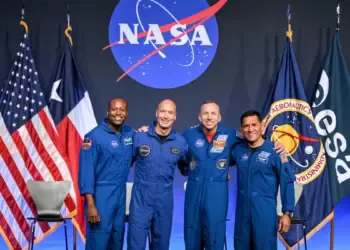
The first crewed test mission of Artemis will include four astronauts: Reid Wiseman, Victor Glover, Christina Koch, and Jeremy Hansen. They will orbit the Moon without landing and return to Earth. Unlike the upcoming Artemis III mission, which is planned to include a lunar surface landing, Artemis II serves as a critical test flight – a rehearsal for humanity’s return to the Moon and, eventually, for future missions to Mars. NASA currently lists 2027 as the earliest possible launch date for Artemis III, though analysts suggest that a more realistic timeline could push the mission to 2028.
Following the uncrewed Orion flight in 2022, NASA addressed issues with the heat shield and capsule that had caused delays for the next mission. Despite years of postponements and increasing pressure, NASA emphasizes that crew safety remains the top priority.
Artemis II will mark the first human return to the Moon since 1972, when the Apollo program concluded. Between 1969 and 1972, twelve astronauts walked on the lunar surface, and only four of them are still living today, including Buzz Aldrin, who is now 96 years old.
Read also:
- NASA Continues Efforts to Restore Communication with the MAVEN Spacecraft
- Second Consecutive Failure of India’s PSLV Launch Results in the Loss of 16 Satellites
Source: interestingengineering