• • CONTACTS
  • • PRIVACY POLICY
  • • GADGETS & TECHNOLOGIES
AERONAUT.media
  • NEWS:
  • • Aviation
  • • UAVs & drones
  • • Flying weapon
  • • Space
  • ARTICLES
  • Language:
  • EN
  • UA
No Result
View All Result
  • NEWS:
  • • Aviation
  • • UAVs & drones
  • • Flying weapon
  • • Space
  • ARTICLES
  • Language:
  • EN
  • UA
No Result
View All Result
AERONAUT.media
No Result
View All Result
Home News Space news

Blue Ghost Module Completes Two-Week Lunar Mission

Svitlana Anisimova by Svitlana Anisimova
18/03/2025
in Space news
0
Blue Ghost
32
SHARES
623
VIEWS

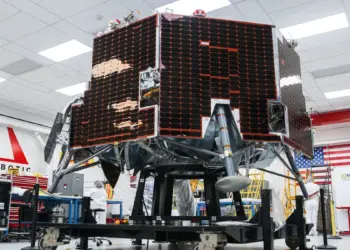
The Blue Ghost spacecraft, developed by Firefly Aerospace, has completed its two-week mission on the Moon. The lander shut down as lunar night began, cutting off sunlight to its solar panels.

According to Firefly CEO Jason Kim, the mission is officially concluded, but Blue Ghost’s contributions to science will remain significant. The lander operated for two highly productive weeks and even continued functioning for an additional five hours after lunar night set in.

Blue Ghost

“We tested every system of the lander and modeled every mission scenario we could think of to get to this point,” said Will Kugan, chief engineer of Blue Ghost. “Our team may appear younger and less experienced than many countries and companies that have attempted lunar landings before us, but the support we feel for one another is what fuels the relentless work and dedication to finding every solution that made this mission successful.”

Blue Ghost was launched from Cape Canaveral in January as part of NASA’s Commercial Lunar Payload Services (CLPS) program. The program aims to deploy scientific equipment on robotic landers to gather large amounts of cost-effective data before astronauts arrive on the Moon as part of the Artemis mission. The module successfully landed on the Moon on March 2.

Blue Ghost

Blue Ghost successfully delivered 10 payloads for NASA to the basalt plain on the Moon’s near side, known as Mare Crisium. This marks the second successful landing of a private lunar lander in history. The first was the Odysseus spacecraft by Intuitive Machines, which landed in February 2024 and operated on the lunar surface for seven Earth days. However, Firefly’s module was the first to land without any technical issues.

The mission plan aimed for Blue Ghost and its scientific instruments to operate for one lunar day, or approximately two Earth weeks, and this was successfully achieved. The lander transmitted back 119 GB of data, including 51 GB of scientific information.

Blue Ghost

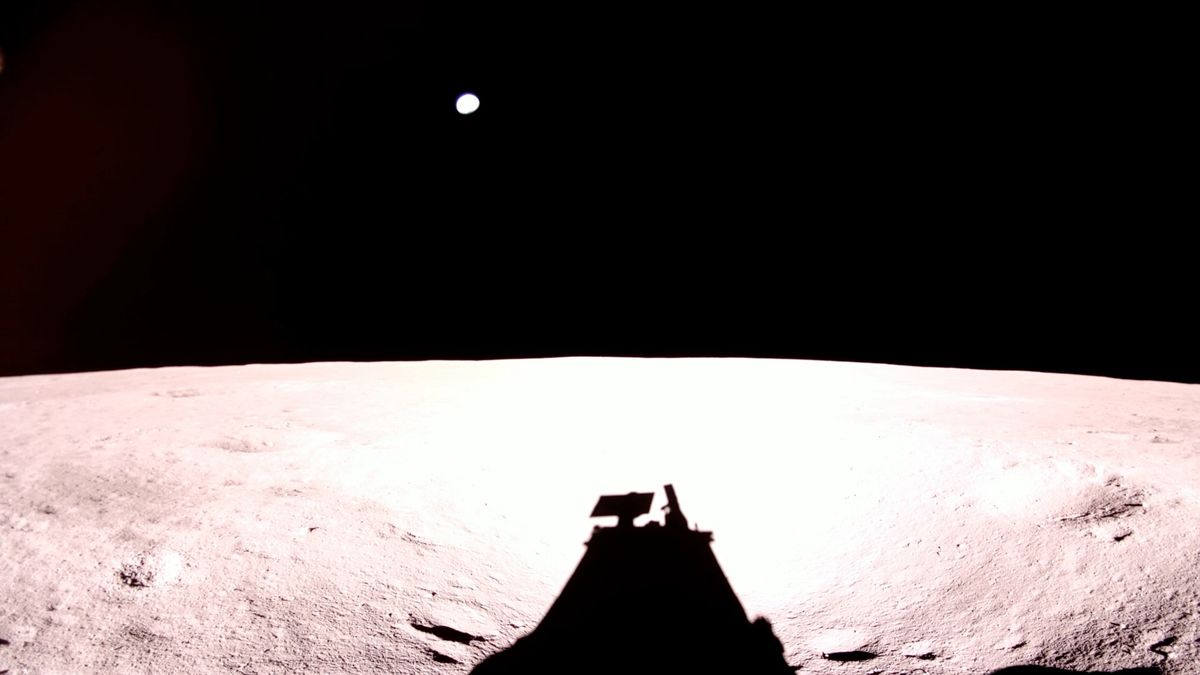
Even in its final hours of operation, the spacecraft remained productive. It captured images of the Moon’s sunset on March 16, providing NASA with data on whether lunar dust levitates under sunlight and whether it creates a glow along the lunar horizon, a phenomenon first suggested and observed by Eugene Cernan during Apollo 17, as reported by Firefly.

The Japanese spacecraft from ispace, which traveled alongside Blue Ghost, is scheduled to land on the Moon on June 5. Meanwhile, Firefly is already working on a new lunar lander and plans to conduct one landing per year.

Source: space
Tags: NASANewsSpace probes
Share12Tweet8ShareShareShareShare2Pin4
Previous Post

Vyriy Drone Releases First Batch of Fully Ukrainian-Made FPV Drones

Next Post

Astronauts of the Boeing Starliner Mission Are Finally Returning to Earth

Svitlana Anisimova

Svitlana Anisimova

I'm addicted to books and stationery, and love everything with flour, sugar, and the hate-to-love trope. Have a lot of guilty pleasures for one girl, and don’t feel guilty about it.

RelatedPosts

Blue Origin rocket
Space news

Fiery Apocalypse: Giant Blue Origin Rocket Explodes on Launch Pad

29/05/2026
208
NASA Skyfall
Space news

Project Skyfall: NASA’s New Martian Drones Surpass Mach 1

12/05/2026
308
Sweden military spy satellite
Space news

Falcon 9 placed Sweden’s first reconnaissance satellite into orbit ahead of schedule

04/05/2026
229
Space Reactor-1 (SR-1) Freedom
Space news

60 Years of Setbacks and $20 Billion: NASA Is Developing a Nuclear Propulsion System for a Mission to Mars

24/04/2026
286
Voyager 1
Space news

NASA Shuts Down Scientific Instruments on Voyager 1 to Preserve the Mission: What Will Happen to the Spacecraft?

21/04/2026
383
Blue Origin
Space news

New Glenn demonstrated reusability but did not accomplish its primary objective

21/04/2026
117
Next Post
SpaceX

Astronauts of the Boeing Starliner Mission Are Finally Returning to Earth

Leave a Reply Cancel reply

Your email address will not be published. Required fields are marked *

Subscribe

  • Bluesky
  • Facebook
  • Mastodon
  • RSS
  • Twitter

Recent Comments

  • Haley Knudsen on Month of Silence and Uncertainty: European Space Agency Reestablishes Contact with Proba-3 Spacecraft
  • JoeRonamo on Tomahawk Cruise Missiles – What You Need to Know
  • Richard on Light Fighters: Useful Option or an Unnecessary Substitute?
  • asansör perdesi on Everything About the Bell AH-1Z Viper and UH-1Y Venom Helicopters: History, Specifications, and Prospects in Ukraine
  • Vladyslav Surkov on A-10 Thunderbolt II Attack Aircraft Escort Nuclear Submarine Wyoming During Drills

Recent Posts

  • Weapons of Ukraine’s Victory: Meteor Air-to-air Missile
  • Hellish Ashes in Taganrog: Ukrainian Unmanned Systems Forces Turn Pride of Russian Aviation and Iskander missile system into Scrap
  • Middle Strike: How Ukraine Is Building a New Class of Medium-Range Strike Systems
  • Return of Cold War Legend: The U.S. B-1B Bomber to Be Armed with Hypersonic Missiles
  • Fiery Apocalypse: Giant Blue Origin Rocket Explodes on Launch Pad

Help this site

SWITCH LANGUAGE:

  • EN
  • UA
  • • CONTACTS
  • • PRIVACY POLICY
  • • GADGETS & TECHNOLOGIES

© 2024-2025 AERONAUT.media

No Result
View All Result
  • NEWS:
  • • Aviation
  • • UAVs & drones
  • • Flying weapon
  • • Space
  • ARTICLES
  • Language:
  • EN
  • UA

© 2024-2025 AERONAUT.media