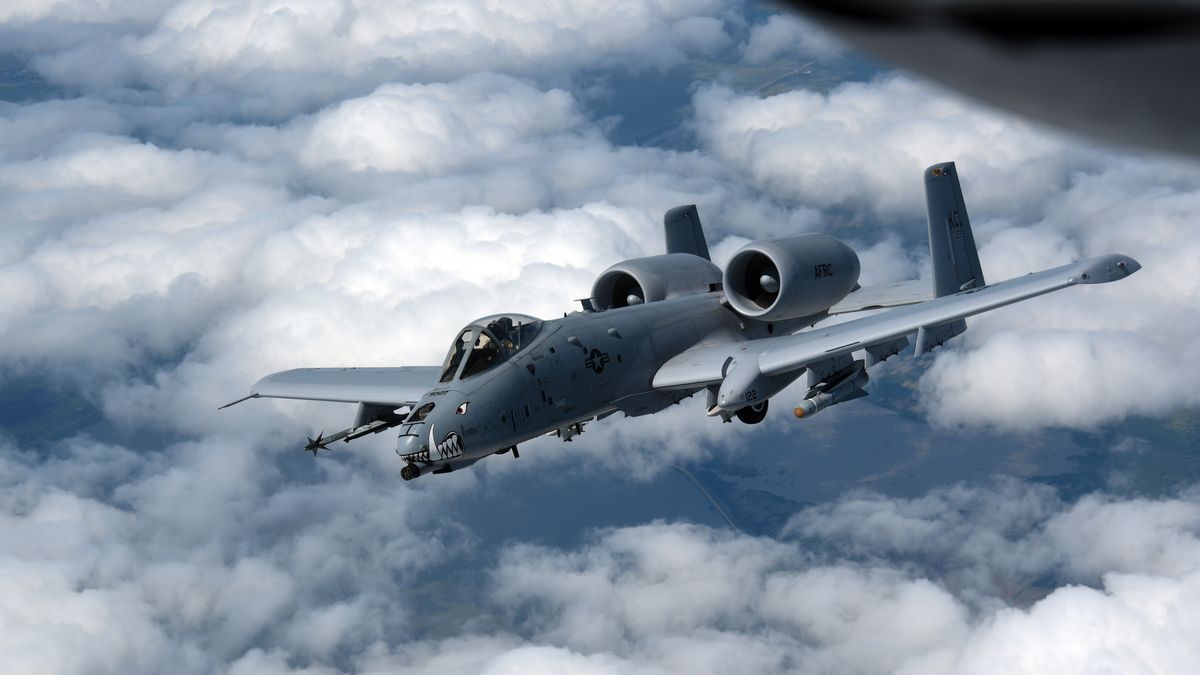
The Ogden Air Logistics Complex is preparing to perform the final maintenance on an A-10 Thunderbolt II before its departure from Hill Air Force Base at the end of February, marking the close of a long-standing era supporting one of the U.S. Air Force’s most recognizable aircraft.
According to Kendall Johnson from the 75th Air Base Public Affairs office, completing the A-10 maintenance mission signifies the end of an era for the 571st Aircraft Maintenance Squadron, which will be inactivated following the departure of the last A-10. This mission has shaped generations of technicians and mechanics at Hill Air Force Base over many years.

“This work has always been a source of pride for the entire complex,” said Brig. Gen. Hall Sebren, commander of the Ogden Air Logistics Complex. “The A-10 arrived at Hill Air Force Base because of the skill and dedication of our personnel, and it remained here as that expertise continued to grow over time. Our technicians kept this aircraft flying repeatedly, demonstrating the professionalism and pride that have become integral to the base’s identity.”
The Ogden Complex began A-10 maintenance in 1998, becoming the Air Force’s primary site for structural repairs, wing replacements, and overhauls. The 309th Aircraft Maintenance Squadron oversaw A-10 servicing, managing thousands of aircraft entries into maintenance over the years. At its operational peak, the Hill A-10 line involved hundreds of mechanics, metalworkers, engineers, and logisticians. The team performed complex structural repairs as well as major wing replacement projects, ensuring the long-term operability of the fleet.
“We’ve had technicians working on the A-10 for decades,” said Col. Ryan Nash, commander of the 309th Aircraft Maintenance Group (AMXG). “They know every inch of this aircraft, trained generations of new technicians, and devoted themselves to keeping the Warthog mission-ready. Seeing the last aircraft leave the complex is an emotional moment for all of us.”
The U.S. Air Force is conducting a phased retirement of the A-10 fleet as part of a broader modernization strategy focused on preparing for high-tech conflict. Investments are shifting toward aircraft such as the F-35A Lightning II and next-generation systems, offering stealth, advanced sensors, and greater survivability.
Following the completion of the final A-10 maintenance mission, the 571st Squadron is preparing for inactivation. Many technicians will transition to other missions within the Ogden Complex, including support for F-35, F-16, and C-130 aircraft.
As the last A-10 departs the Ogden Complex, it marks the closing chapter of a mission defined by persistence, ingenuity, and unwavering dedication. While the Warthog leaves Hill, the legacy of the personnel who supported it endures – in the aircraft they maintained, the pilots they trained, and the future missions they will help shape.
The Ogden Air Logistics Complex, located at Hill Air Force Base in Utah, provides expeditionary support through advanced logistics, maintenance, distribution, and engineering management for actively used and proven weapon systems. The complex is one of three that form the U.S. Air Force Sustainment Center.
The complex provides logistics and maintenance for the U.S. Air Force’s leading fighters, including the F-35 Lightning II, F-22 Raptor, F-16 Fighting Falcon, and A-10 Thunderbolt II. It also supports the C-130 Hercules, T-38 Talon, and other weapon systems, including the Minuteman III intercontinental ballistic missile. The facility serves as a primary provider of software, pneudraulic systems, secondary power systems, composite materials, and rocket engines for the Department of Defense. Additionally, it functions as the Air Force’s center of technical expertise for landing gear, servicing all Air Force aircraft and most other DoD systems. Personnel at remote locations perform maintenance on aircraft, missiles, and electronics, as well as equipment refurbishment and storage.
The A-10 Thunderbolt II, known to crews as the Warthog, was the first U.S. Air Force aircraft specifically designed for close air support. It is a straightforward, durable, and effective twin-engine jet capable of engaging light maritime targets as well as a full range of ground targets, including tanks and armored vehicles.
The aircraft can withstand direct hits from armor-piercing and high-explosive rounds up to 23 mm. Its fuel tanks are self-sealing and reinforced with internal and external foam for added protection. The hydraulic flight control systems include manual backup controls, allowing pilots to continue flying and land safely even in the event of hydraulic failure.
The A-10 Thunderbolt II is equipped with a 30-mm GAU-8/A Gatling cannon, capable of firing up to 3,900 rounds per minute, capable of engaging a wide range of ground targets, including tanks. Additional equipment includes electronic countermeasures, target designation support systems, self-protection systems, and a variety of air-to-ground munitions, such as laser- and GPS-guided bombs, AGM-65 Maverick missiles, and AIM-9 Sidewinder air-to-air missiles.
Read also:
- Ukrainian F-16 Captured on Video Using APKWS II Missiles Against Russian Drones
- L3Harris Outlines the Advantages of Integrating the Red Wolf Missile on the OA-1K Skyraider II Aircraft
Source: TheAviationgeekclub