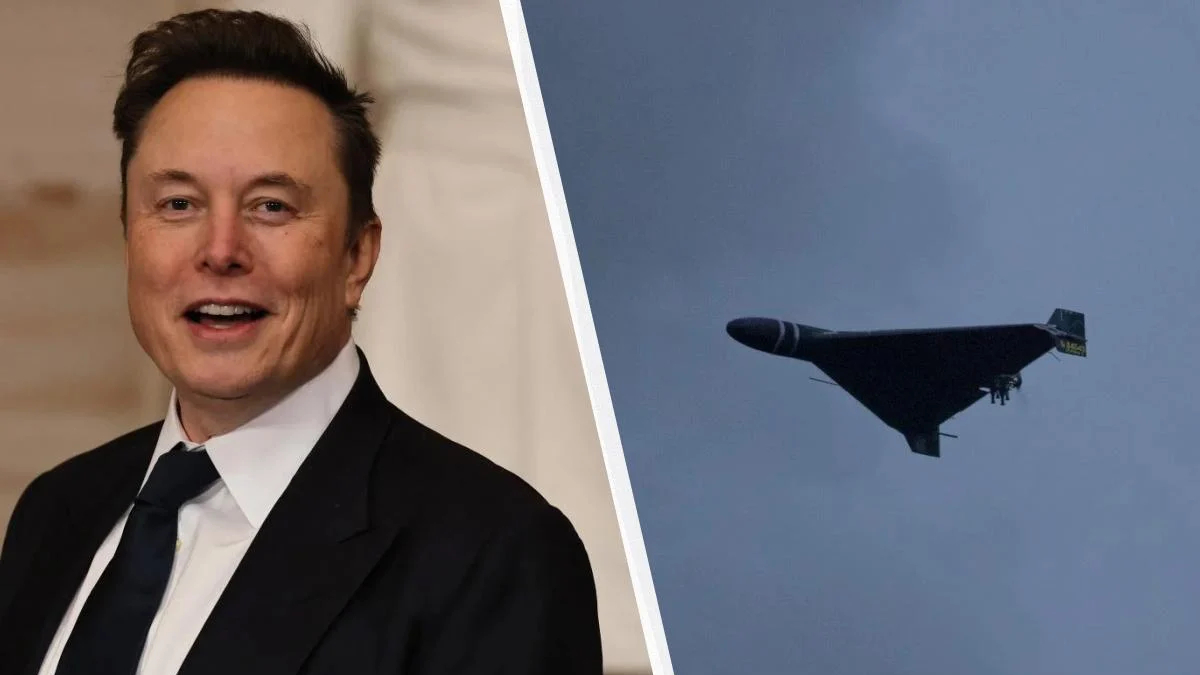
The Iranian regime has issued threats against Elon Musk’s business interests in the Middle East, stating its intention to target his space-related projects. At the same time, some analysts suggest that the founder of SpaceX could respond to the situation by cooperating with Ukrainian defense technology developers in efforts to counter Iranian drones.
Against the backdrop of SpaceX’s reported public listing – which, according to some claims, would make Musk the world’s first trillionaire – Iranian media affiliated with the Islamic Revolutionary Guard Corps have stated that his entire infrastructure has been designated as potential military targets. This reportedly includes not only thousands of Starlink terminals in the region, but also ground stations, as well as companies associated with his artificial intelligence venture xAI and the social platform X.

The Iranian Fars news agency stated that U.S. and Israeli military forces allegedly used Starlink technology and even “Twitter software” in operations against Iran, and warned of retaliation. The agency listed potential targets, including Starlink stations in Qatar, Jordan, the United Arab Emirates, and Oman. At the same time, analysts emphasize that there is no public evidence of direct involvement by SpaceX in military operations against Iran.
However, Moscow has previously provided Tehran with satellite coordinates of U.S. facilities in the region and may extend similar support to infrastructure associated with SpaceX. This is presented as indicating a deepening military alignment between Russia and Iran.
Ukrainian President Volodymyr Zelenskyy, in posts on the X platform, stated that cooperation between the Kremlin and Tehran in the development of strike drones and the provision of intelligence effectively turns Iranian attacks into a secondary front of Russia’s war against the West. He also suggested that Vladimir Putin could send Russian military personnel to assist Iran. Security experts consider such a step highly risky for Moscow, but confirm that Iran is preparing to scale up strikes against SpaceX-related equipment across the region.
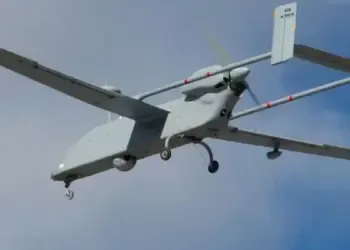
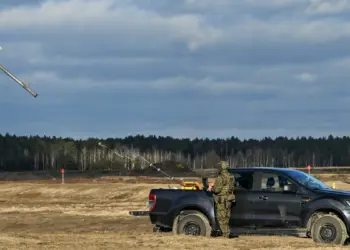
Ukraine, which has developed significant expertise in drone warfare, is producing low-cost unmanned systems and interceptors to counter Russian-Iranian platforms. Its experience is described as potentially useful for protecting infrastructure in the Middle East. Zelenskyy has reportedly sent Ukrainian specialists to assist regional partners and to train NATO forces in Europe. Analysts note that the use of Ukrainian technologies is cheaper and more effective than deploying high-cost U.S. systems such as Patriot or THAAD, which cost millions of dollars per unit.
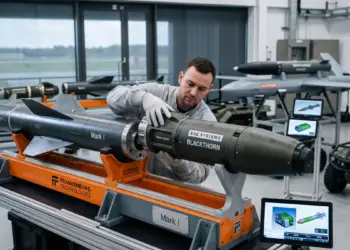
SpaceX, due to its expertise in aerospace engineering, artificial intelligence, and autonomous systems, has the technical capacity to develop next-generation drones and interceptor platforms. The company could potentially collaborate with Ukrainian defense technology developers. Some analysts suggest this combination could position SpaceX as a significant participant in the global defense technology market. Following a potential IPO, estimates cited in public discussions place its valuation at over $85 billion in available financial resources. In contrast, Iran’s economy is described as facing structural difficulties, with an estimated GDP of approximately $375 billion.
The threats attributed to Iran are compared by some observers to Russian operational approaches in Ukraine, where commercial satellite networks are treated as strategically important infrastructure. This reflects increasing security risks for SpaceX and is interpreted by analysts as part of a broader convergence between Moscow and Tehran. In Iran, reports indicate that unauthorized possession of Starlink terminals has been subject to strict enforcement measures.
Even a potential temporary ceasefire would not necessarily eliminate these risks. Security analysts therefore advise that SpaceX and regional governments prepare for possible continued threats against satellite communication infrastructure. Some experts argue that if SpaceX were to integrate Ukrainian operational experience in drone warfare with its own technological capabilities, it could strengthen its position in the field of autonomous counter-drone defense systems, though such outcomes remain speculative.
Read also:
- Threat to the ‘Shaheeds’: Ukraine has developed the unique Katran X1.2 maritime drone for drone swarms
- Swift Beat’s Shahed Interceptor Drone: What We Know
Source: forbes