• • CONTACTS
  • • PRIVACY POLICY
  • • GADGETS & TECHNOLOGIES
AERONAUT.media
  • NEWS:
  • • Aviation
  • • UAVs & drones
  • • Flying weapon
  • • Space
  • ARTICLES
  • Language:
  • EN
  • UA
No Result
View All Result
  • NEWS:
  • • Aviation
  • • UAVs & drones
  • • Flying weapon
  • • Space
  • ARTICLES
  • Language:
  • EN
  • UA
No Result
View All Result
AERONAUT.media
No Result
View All Result
Home News Space news

After months of silence: NASA has lost one of its most successful spacecraft in Mars orbit

Svitlana Anisimova by Svitlana Anisimova
04/06/2026
in Space news
0
NASA MAVEN
1
SHARES
20
VIEWS

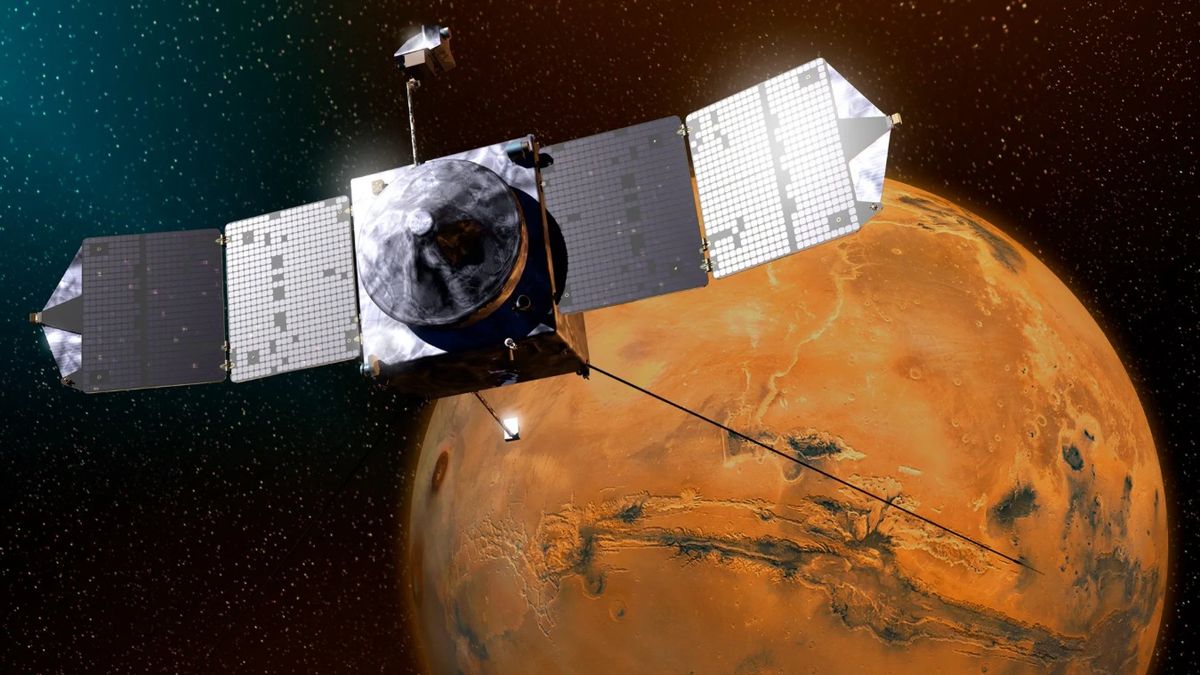
NASA has officially concluded operations of one of its most successful Mars orbital spacecraft. After several months of unsuccessful attempts to re-establish communication with the Mars Atmosphere and Volatile EvolutioN (MAVEN) spacecraft, the agency declared the probe lost. The last signal from MAVEN was received on 6 December via the Deep Space Network (DSN), after which its orbit carried it behind Mars. When the probe re-emerged on the opposite side of the planet, telemetry data indicated that it had entered safe mode and began tumbling uncontrollably, resulting in a loss of power. This was stated in a NASA special commission report published in February.

NASA MAVEN

All attempts to re-establish communication with MAVEN after this event were unsuccessful. NASA stated that the causes of the incident, which occurred after the spacecraft passed behind the far side of Mars, are still under investigation.

The end of the MAVEN mission marks more than a decade of scientific research. The spacecraft was launched in November 2013 on a Atlas V rocket by United Launch Alliance and reached Mars orbit ten months later.

Originally, the mission was planned to last only one Earth year, but due to its successful performance it was extended by another ten years. After the loss of MAVEN, only two NASA spacecraft remain operational in Mars orbit: Mars Odyssey, launched in 2001, and Mars Reconnaissance Orbiter (MRO), launched in 2005. Both spacecraft have also significantly exceeded their originally planned operational lifetimes.

MAVEN was one of five spacecraft NASA used as communication relays for rovers on the surface of the Red Planet. The remaining four active relay spacecraft include Odyssey and MRO, as well as the European Space Agency’s Mars Express and Trace Gas Orbiter.

NASA MAVEN

MAVEN was the first spacecraft equipped with scientific instruments specifically designed to study the evolution of Mars’ atmosphere and its interaction with the solar wind. The mission provided scientists with data that led to new discoveries even after the orbiter stopped transmitting signals.

“Data collected by the MAVEN spacecraft will continue to provide valuable information about Mars for decades to come,” said NASA’s Planetary Science Division Director Lindsey Prockter.

Read also:

  • Moon Base: What’s Behind NASA’s Ambitious Plan to Conquer the Moon
  • Project Skyfall: NASA’s New Martian Drones Surpass Mach 1

Source: space

Tags: NASANewsSpace probesUSA
ShareTweetShareShareShareSharePin
Previous Post

Ukrainian drones hit the Baltic Fleet: Russian corvette “Boyky” loses its lively

Svitlana Anisimova

Svitlana Anisimova

I'm addicted to books and stationery, and love everything with flour, sugar, and the hate-to-love trope. Have a lot of guilty pleasures for one girl, and don’t feel guilty about it.

RelatedPosts

Blue Origin rocket
Space news

Fiery Apocalypse: Giant Blue Origin Rocket Explodes on Launch Pad

29/05/2026
247
NASA Skyfall
Space news

Project Skyfall: NASA’s New Martian Drones Surpass Mach 1

12/05/2026
310
Sweden military spy satellite
Space news

Falcon 9 placed Sweden’s first reconnaissance satellite into orbit ahead of schedule

04/05/2026
231
Space Reactor-1 (SR-1) Freedom
Space news

60 Years of Setbacks and $20 Billion: NASA Is Developing a Nuclear Propulsion System for a Mission to Mars

24/04/2026
292
Voyager 1
Space news

NASA Shuts Down Scientific Instruments on Voyager 1 to Preserve the Mission: What Will Happen to the Spacecraft?

21/04/2026
383
Blue Origin
Space news

New Glenn demonstrated reusability but did not accomplish its primary objective

21/04/2026
118

Leave a Reply Cancel reply

Your email address will not be published. Required fields are marked *

Subscribe

  • Bluesky
  • Facebook
  • Mastodon
  • RSS
  • Twitter

Recent Comments

  • Haley Knudsen on Month of Silence and Uncertainty: European Space Agency Reestablishes Contact with Proba-3 Spacecraft
  • JoeRonamo on Tomahawk Cruise Missiles – What You Need to Know
  • Richard on Light Fighters: Useful Option or an Unnecessary Substitute?
  • asansör perdesi on Everything About the Bell AH-1Z Viper and UH-1Y Venom Helicopters: History, Specifications, and Prospects in Ukraine
  • Vladyslav Surkov on A-10 Thunderbolt II Attack Aircraft Escort Nuclear Submarine Wyoming During Drills

Recent Posts

  • After months of silence: NASA has lost one of its most successful spacecraft in Mars orbit
  • Ukrainian drones hit the Baltic Fleet: Russian corvette “Boyky” loses its lively
  • Last of Mohicans: A-4 Skyhawk Attack Aircraft in Argentina and Brazil
  • Interview with Bell Textron: Investing in the future in Ukraine
  • Weapons of Ukraine’s Victory: Meteor Air-to-air Missile

Help this site

SWITCH LANGUAGE:

  • EN
  • UA
  • • CONTACTS
  • • PRIVACY POLICY
  • • GADGETS & TECHNOLOGIES

© 2024-2025 AERONAUT.media

No Result
View All Result
  • NEWS:
  • • Aviation
  • • UAVs & drones
  • • Flying weapon
  • • Space
  • ARTICLES
  • Language:
  • EN
  • UA

© 2024-2025 AERONAUT.media