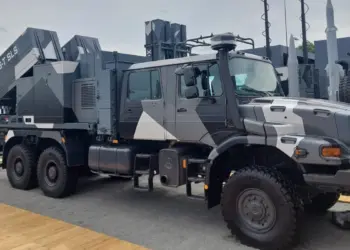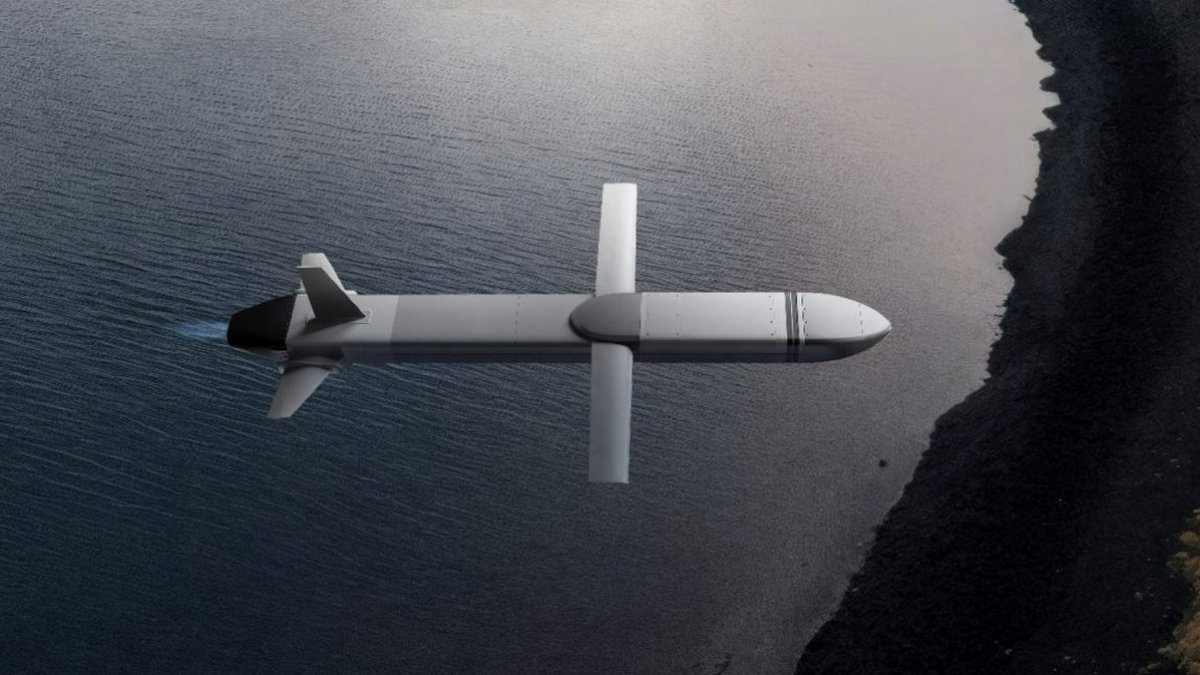
The Netherlands is officially funding large-scale production of new long-range systems for the Ukrainian armed forces. This refers to the manufacturing of approximately 700 units of the “Ruta” family of drone-missile systems, developed by the defense company Destinus. The systems are expected to be produced within a European country. The initiative is presented as part of a broader framework of technological support aimed at supplying the Armed Forces of Ukraine with precision strike capabilities of medium and long range directly from European production lines.
During an official visit to the Netherlands, Ukraine’s Minister for Digital Transformation, Mykhailo Fedorov, visited Destinus production facilities and reviewed the assembly process for these systems. He stated that such capabilities are a critical component of Ukraine’s strategy for conducting medium-range strikes, as they are intended to disrupt logistics chains and supply routes of Russian forces in the rear areas. He described the project as an example of the practical implementation of next-generation defense technologies.

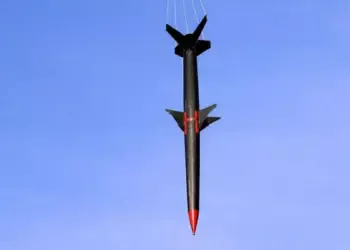
Three successive variants of this cruise-system family have been developed to date. The baseline configuration demonstrated to the Ukrainian delegation at the company’s production facilities is the Ruta Block 1. This version is capable of striking stationary enemy targets at ranges of up to 300 km while carrying a payload of up to 150 kg. The architectural design choices of Block 1 formed the foundation for the broader development of the system family, evolving the concept from a jet-powered UAV into a more structured cruise-missile-type system with modular characteristics.
The primary role of the Ruta Block 1 is the engagement of high-value stationary military targets with high precision. To penetrate air-defense environments, the system is designed to fly at low altitude with terrain-following capability. Its navigation suite is intended to remain functional under heavy electronic warfare conditions, including GNSS jamming or complete signal denial. In the terminal phase of flight, guidance is refined using a pre-programmed terminal homing system based on optical and sensor technologies, designed to reduce circular error probability and improve strike accuracy against fixed targets.
The core of each Ruta Block 1 is the T150 turbojet engine, developed by European engineers with an emphasis on compact and simplified design principles. The propulsion unit is reported to produce approximately 150 kgf of thrust at a rotor speed of around 57,800 rpm. According to the provided technical data, the engine’s specific fuel consumption is stated at 0.12 kg per hour per newton of thrust, positioning it within the more fuel-efficient range for propulsion systems in this class, based on manufacturer claims. In addition to providing thrust, the T150 engine generates up to 1.5 kW of electrical power. This output is used to supply onboard avionics and guidance systems, reducing or eliminating the need for separate heavy electrical generators and contributing to overall system integration efficiency.
Production plans for the delivery of 700 units are supported by reported industrial output, as Destinus has already stated that it has produced its 1,000th T150 turbojet engine. This is presented as evidence of sufficient manufacturing capacity to meet the Ukrainian order within defined timelines. At the same time, the project’s evolution does not stop at the initial variant.
Currently, in Ukraine, with support from the defense cluster Brave1, active flight testing is underway for the next version of the system – Ruta Block 2. This variant features more complex wing design, compatibility with sealed transport-and-launch containers, an increased flight range of up to 700 km, and a heavier 250 kg warhead equipped with an infrared homing system. In addition, in cooperation with the German defense company Rheinmetall, the company is reportedly accelerating development of a strategic configuration, Ruta Block 3, with a claimed engagement range of up to 2,000 km. Test launches are planned at Ukrainian proving grounds.
In parallel, integration testing is underway for combat AI developed by Shield AI, aimed at enabling autonomous swarm behavior. The stated objective is the coordination of group strike operations by semi- or fully autonomous systems capable of distributed targeting and mission execution.
Read also:
- Hunting submarines: Boeing upgrades P-8A Poseidon patrol aircraft for the U.S. Navy
- Voronezh under attack: Ukraine strikes a plant producing electronics for Iskander and Kh-101 missiles
Source: nrc