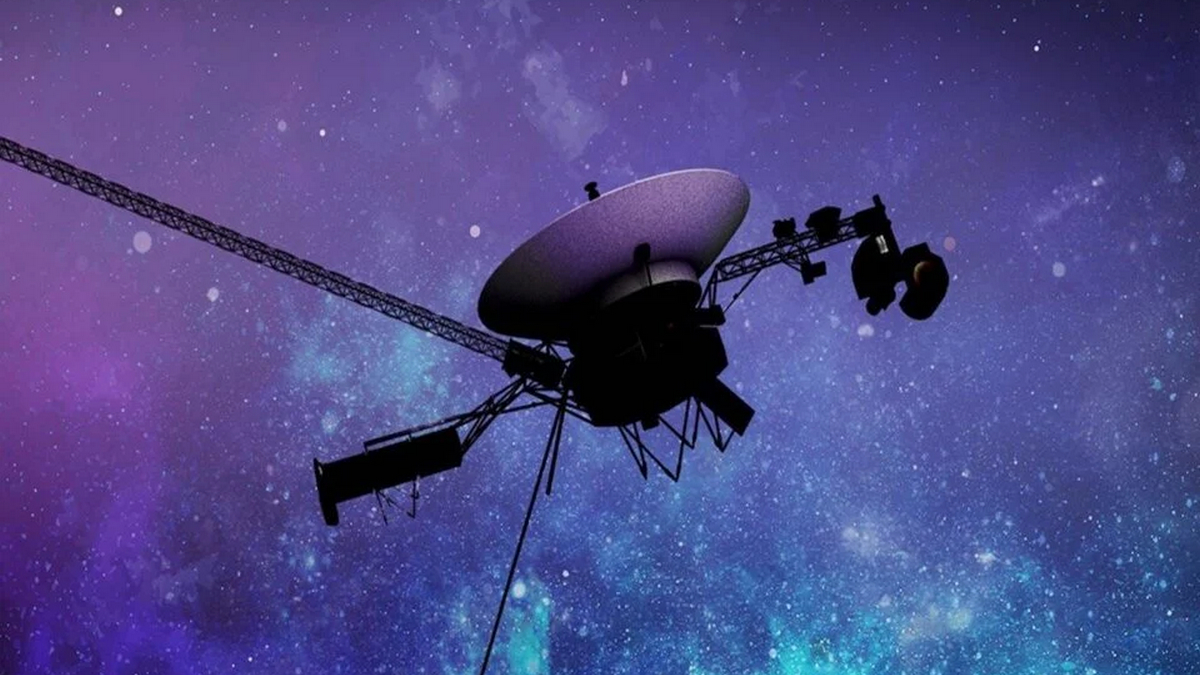
Engineers at NASA’s Jet Propulsion Laboratory (JPL) have been forced to switch off one of the scientific instruments aboard the legendary Voyager 1 spacecraft due to an unexpected decline in available electrical power. At present, only two of the original ten instruments remain operational, as the mission team works to extend the probe’s lifetime in interstellar space. Voyager 1 continues to operate in an extremely power-limited environment, where gradual shutdown of onboard systems is necessary to prioritize core functions such as communication and essential scientific measurements.

The mission’s head, Karim Badaruddin, stated that although deactivating equipment is an undesirable step, it is currently the only viable way to prevent the spacecraft from shutting down entirely. The critical situation arose in late February during a routine attitude maneuver by Voyager 1, when power consumption unexpectedly dropped. This created a risk of triggering an automatic protection system that could have begun indiscriminately shutting down essential subsystems.
The spacecraft’s power is supplied by heat from the radioactive decay of plutonium, but it loses roughly 4 watts of electrical power each year. To extend its operational lifetime, engineers gradually disable non-essential systems. In this case, the Low-Energy Charged Particle (LECP) instrument was turned off. This device had been operating for 49 years, analyzing low-energy ions, electrons, and cosmic rays beyond the Solar System.
The command to shut down the instrument was sent on 17 April: the signal took approximately 23 hours to reach Voyager 1, and the deactivation procedure itself lasted more than three hours. Although most of the LECP instrument was powered down, engineers left a small motor operating that rotates the sensor. This allows the possibility of reactivating the instrument in the future if additional power resources become available.
Voyager 1, launched in 1977, is currently the most distant human-made object, located about 25 billion kilometers from Earth. Although the original mission was planned to last only five years, the spacecraft has continued operating for nearly half a century. The shutdown of the LECP instrument is expected to extend the spacecraft’s operational lifetime by approximately one year, while the mission team finalizes a broader preservation strategy referred to as the “Big Bang” plan.
This strategy involves replacing energy-intensive onboard systems with more power-efficient alternatives in order to preserve enough thermal and electrical capacity for continued scientific operations. At present, Voyager 1 retains only a small set of active instruments, including those used to study plasma waves and magnetic fields. These systems continue to provide unique measurements from regions of deep space that are inaccessible to any other spacecraft.
Read also:
- Air launch systems and hypersonic missiles: Ukraine outlines new developments in space mission capabilities
- All About Project Suncatcher: Google’s Space Experiment
Source: gizmodo