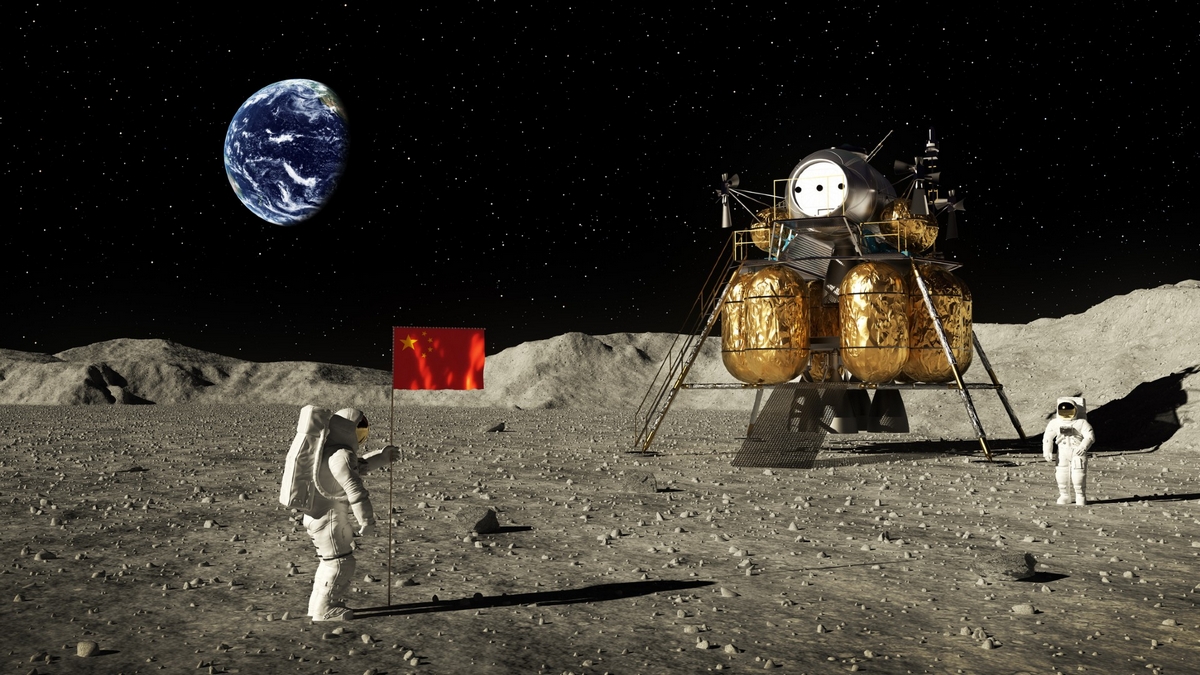
China has taken another step toward a crewed lunar landing by successfully testing next-generation systems. On Wednesday local time, the country conducted a low-altitude launch abort test of the Mengzhou (“Dream Vessel”) crew capsule, which is intended to support missions that could deliver astronauts to the Moon as early as 2030.

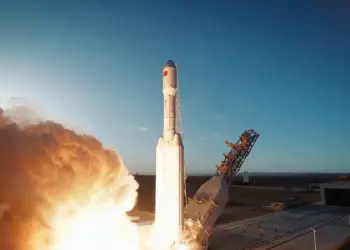
During the test at the Wenchang Space Launch Site on Hainan Island, the capsule performed as planned. It successfully separated from the Long March 10 rocket, executed an escape maneuver, and completed a controlled ocean splashdown using its parachute system. Such capabilities are essential for ensuring crew safety in the event of an anomaly during launch.
The Long March 10 rocket is also a central component of China’s lunar program. Designed as a new heavy-lift vehicle, it is intended to carry astronauts to the Moon. During the test, the rocket’s first stage demonstrated its own capabilities by performing a controlled vertical splashdown after capsule separation. The stage is designed with reusability in mind, reflecting an approach similar to SpaceX’s Falcon 9.
Although the Long March 10 remains in development and this flight did not include an orbital insertion, the successful splashdown marked an important milestone in validating return and reusability technologies.
China has also made progress in developing the Lanyue crewed lunar lander. As a result, many analysts believe the country has a credible opportunity to be the first to return humans to the lunar surface in the current phase of international competition.
At the same time, NASA is planning a crewed lunar landing as part of the Artemis 3 mission in 2028. The mission is expected to use a modified version of SpaceX’s Starship as the lunar landing vehicle. However, the timeline remains uncertain and depends significantly on the outcome of the preceding Artemis 2 mission, which will involve a crewed lunar flyby and could launch as early as next month. Artemis 2 will use the Space Launch System rocket and the Orion spacecraft, without incorporating Starship.
Read also:
- Chinese Researchers Model Potential Vulnerabilities of Modern U.S. Stealth Aircraft
- China Delays Return of Shenzhou-20 Crew Due to Space Debris
Sourse: space