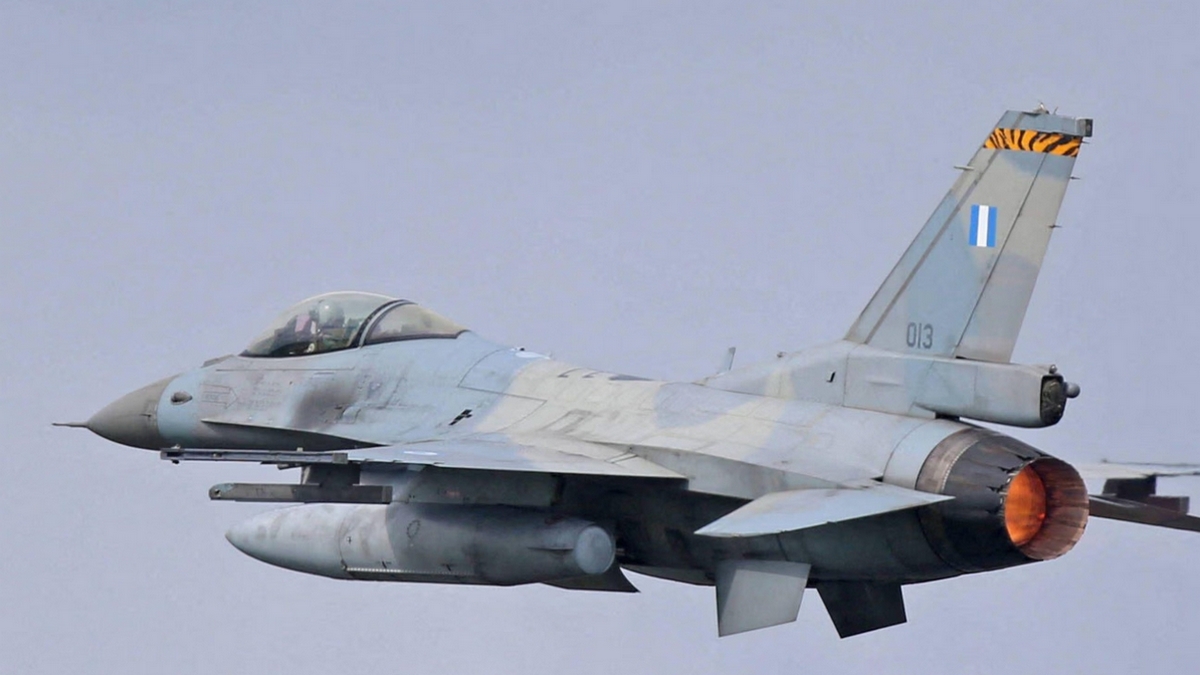
The arrest of a Greek Air Force officer on suspicion of spying for China has sent a strong signal to European defense establishments and raised concerns about potential infiltration of Western military systems by foreign intelligence networks. A military court has ordered the suspect to remain in custody pending trial. The case is being viewed as an example of Beijing’s intensified efforts to access defense information from European countries and NATO allies.
Under heavy security, Squadron Commander Colonel Christos Flessas left the courthouse late Tuesday evening after more than eight hours of questioning. The 54-year-old officer faces a potential life sentence if convicted on charges that include passing classified military data to a foreign state. According to investigators, he had access to sensitive information, including weapons technologies in development, and may have been recruited by Chinese intelligence in 2025.

Greek media report that the officer allegedly admitted to photographing and transmitting classified NATO documents using specialized encryption software provided by Chinese intelligence. It is also claimed that he received training in clandestine methods during an unofficial trip to China, which later helped investigators uncover his activities.
After the hearing, the suspect’s lawyer released a statement from his client, who said: “Unknowingly and without intent, I became involved in a situation that developed into something nightmarish, dangerous, and illegal. During my testimony, I did not attempt to justify or defend myself. I ask for a fair punishment.”
According to sources, Greek authorities were alerted by the U.S. Central Intelligence Agency, which provided information on the scale of the leak. In an unusually direct statement following the February 5 arrest, the Hellenic Armed Forces General Staff confirmed the existence of “clear evidence of criminal offenses under the military criminal code.”
It is believed that Chinese agents first made contact with the suspect online, with recruitment later occurring during a NATO conference in a European country. Flessas told the court that he was enticed with financial offers in foreign currency and digital payments ranging from €5,000 to €15,000 for each transmission of information. He also indicated that the initial communication with the network took place via LinkedIn.
Former U.S. intelligence official Nicholas Eftimiades, who specializes in Chinese espionage operations, described the incident as a warning signal for the Greek government and military. In his view, the case illustrates China’s efforts to gain access to NATO military communications and defense infrastructure. He noted that while states traditionally conduct espionage to secure strategic advantages, China – despite its public statements on partnership – is increasingly seen as a challenge to democratic systems.
Before his arrest, Flessas served as an evaluator of NATO information systems and commanded a battalion in the Athens suburb of Kifouri, focusing on telecommunications training. Eftimiades also highlighted that Chinese law obliges citizens to support state intelligence activities, which, in his opinion, increases Western countries’ vulnerability to such operations.
Similar cases have been reported elsewhere in Europe. Last week in France, four individuals – including two Chinese nationals – were arrested on suspicion of gathering military intelligence. In Germany, a former assistant to a member of the Alternative für Deutschland party was sentenced in September to nearly five years in prison for spying on behalf of China.
According to experts, Beijing employs a “whole-of-society” approach to global intelligence operations, which differs from the practices of Western states. The scale of these operations complicates countermeasures, particularly given the openness of democratic societies, which makes them more vulnerable to covert influence.
Sources report that the Greek officer is fully cooperating with investigators. Military sources have not ruled out the involvement of additional individuals, and the public nature of the investigation is seen as a warning to potential offenders.
Plamen Tonchev, an expert on China-Greece relations, described the case as unprecedented, noting that Greece has traditionally been relatively friendly toward China. He also suggested that the incident could damage Beijing’s image, particularly in light of its investments in the Port of Piraeus, which China gained control over about a decade ago. Estimates indicate that roughly 24% of Chinese imports to Europe pass through Piraeus container terminals, long a source of strategic pride for China.
Read also:
- Chinese Researchers Model Potential Vulnerabilities of Modern U.S. Stealth Aircraft
- Chinese Fighter Jet Performs Risky Maneuver Near Philippine Coast Guard Aircraft
Source: TheGuardian