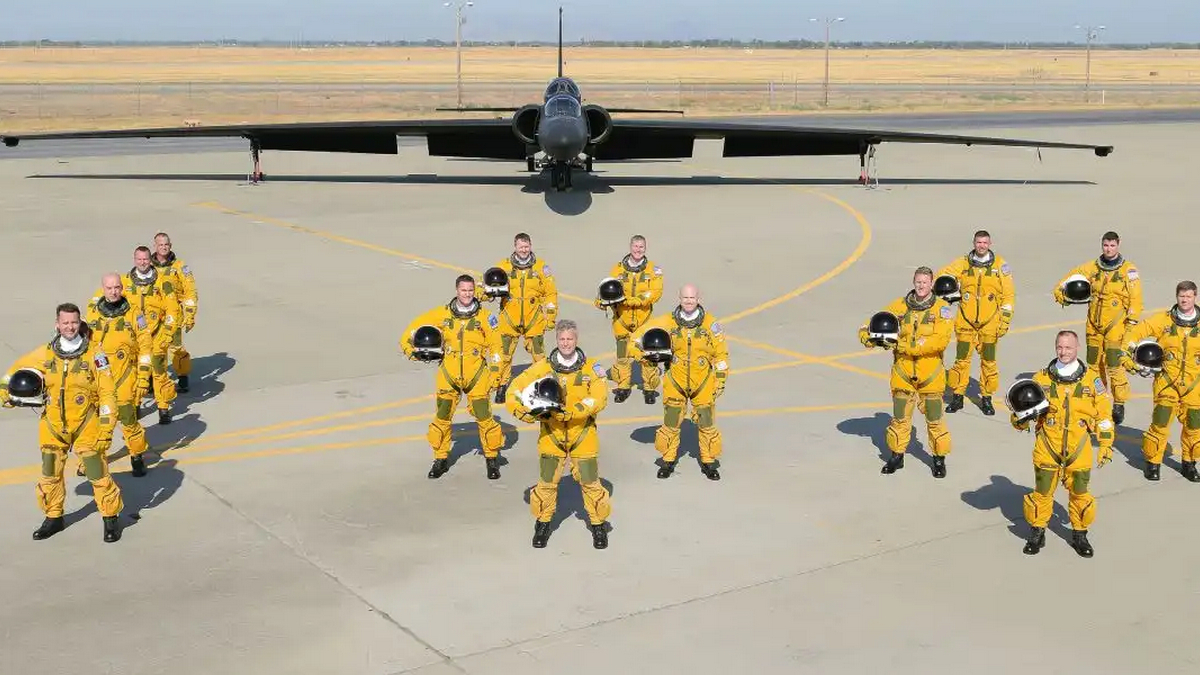
The Lockheed Martin advanced development division known as Skunk Works has announced an opening for a specialist to operate the U-2 Dragon Lady aircraft. According to the job description published on the company’s official platform, the pilot would be involved in testing and operating advanced aviation systems to validate their performance and support mission readiness.

The role includes conducting flight tests to verify that aircraft meet specified performance requirements and are suitable for operational use. The pilot will operate aircraft during engineering trials, acceptance of production units, and in support of test flight programs. The position also involves coordination of flight operations and close collaboration with engineering teams.
Additional responsibilities include approving cockpit configurations and ensuring compliance with safety standards. The role also предусматривает conducting demonstration flights for customers, government representatives, and other stakeholders to showcase flight characteristics, system capabilities, and overall performance. The position is based in Palmdale, California, USA. U.S. citizenship is required due to the controlled-access nature of the facility. Candidates must hold an active Top Secret security clearance at the start of employment.
Among the basic requirements for applicants, the gap in flight experience on the U-2S Dragon Lady must not exceed two years. Candidates are required to hold a valid FAA Class I or II medical certificate, as well as an appropriate FAA commercial pilot license (multi-engine land, instrument rating) or an airline transport pilot certificate. The applicant must be willing to travel, possess a valid U.S. passport, and hold the previously mentioned Top Secret clearance.
Preferred qualifications include more than 1,000 hours of pilot-in-command flight time, completion of an accredited test pilot school, and experience across multiple test disciplines, including weapons systems, avionics, and aeronautical testing. Instructional or training experience is considered an advantage, as are strong communication skills, organizational ability, and experience in program management or leadership roles.
Applications will be accepted for 90 days, although the company recommends submitting within the first month of publication for stronger consideration.
The history of the “Dragon Lady” began in August 1955, when the first U-2A model took to the air. The aircraft, developed by Kelly Johnson under strict secrecy, became a key intelligence-gathering platform. In the late 1950s, flights over Soviet territory provided U.S. leadership with critical information on Soviet military capabilities. In October 1962, imagery from the U-2 identified the deployment of nuclear missiles in Cuba, which contributed to the escalation of the Cuban Missile Crisis. In later decades, the aircraft was used in operations related to Korea, the Balkans, Afghanistan, and Iraq. Beyond military missions, the U-2 has also been used in peacetime roles, including reconnaissance support during floods, earthquakes, and wildfires, as well as search and rescue operations.
In 1967, the U-2R variant was introduced, featuring a 40% increase in size compared to the original design. In 1981, the TR-1A version was flown for tactical reconnaissance, though it was structurally similar to the R model. The final deliveries of these variants occurred in 1989, and in 1992 they were all redesignated as U-2R.
Since 1994, approximately $1.7 billion has been invested in airframe and sensor upgrades, including the transition to the General Electric F118-101 engine. Following these modifications, all U.S. Air Force aircraft in the fleet were redesignated as U-2S.
The primary operating base for the aircraft is the 9th Reconnaissance Wing at Beale Air Force Base in California, from where they are deployed on rotational missions worldwide. Pilot training is conducted using five two-seat TU-2S trainer aircraft.
Skunk Works has been involved in the development of advanced aviation systems for 82 years, focusing on projects intended to push technical boundaries. The division is known for its ability to address complex national-level requirements with relatively rapid development timelines and controlled costs. Its origins trace back to June 1943, when the U.S. Army sought an urgent solution for a jet-powered fighter aircraft in response to emerging wartime threats.
Young engineer Clarence “Kelly” Johnson prepared a proposal for the XP-80 Shooting Star within a month. Work began immediately, even before the formal contracts were signed in October of the same year. This approach later became associated with Skunk Works practice – starting projects based on informal agreements or initial authorization. Johnson’s team assembled the XP-80 in 143 days, ahead of schedule. This non-standard organizational model reduced administrative overhead and allowed for a more streamlined development process, contributing to high efficiency in execution.
Read also:
- The story of Rosie the Rocketeer: Little airplane with ‘bazooka’
- Air launch systems and hypersonic missiles: Ukraine outlines new developments in space mission capabilities
Source: theaviationgeekclub