Mykhailo Fedorov, Ukraine’s first deputy prime minister for innovation, education, science and technology, told The Guardian that a gamified drone-strike system has become “viral” among military units. According to his account, the system – which assigns performance points for verified actions and can be applied beyond drone strikes to reconnaissance, artillery and logistics tasks – is now being adopted across multiple unit types.

According to Ukrainian officials, in September teams of drone operators competing for points under the “Drone Army Bonus System” killed or wounded 18,000 Russian servicemen. Currently, 400 drone units are participating in the contest, up from just 95 in August.
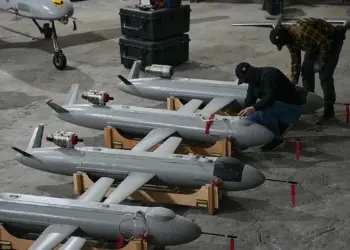
The system, which has been in operation for more than a year, rewards personnel who carry out successful strikes with points. Those points can then be exchanged for additional equipment in the online store Brave1 – a platform informally described as an “Amazon for war.” Brave1 lists over 100 different models of drones, autonomous vehicles and other drone-related military hardware. Units such as “Achilles” and “Phoenix” currently top the competition leaderboard.
“It has become very popular among units,” Fedorov said of the system, which illustrates the growing automation of warfare. “All defense forces are aware of it, and there is competition for points to obtain these drones, electronic warfare systems and other items that assist them in combat. The more infantry you eliminate, the more drones you receive to eliminate even more infantry. It becomes a kind of self-reinforcing cycle.”
Ukrainian losses inflicted on Russian forces in September doubled compared with October of last year. Part of this increase is attributed to Kyiv doubling the reward for eliminating Russian infantry from 6 to 12 points, reflecting a shift in battlefield priorities.
Ukrainian intelligence suspects Russia may be developing a competing gamified system, Fedorov added. Ukraine is extending the “points-for-destruction” principle to artillery units as well, awarding points for successful operations that can be used to acquire new weapons. Reconnaissance units earn points for identifying enemy targets, and logistics teams have begun earning points by using autonomous vehicles to resupply the front instead of committing personnel.
Fedorov also stated that Ukrainian forces actively encourage the use of drones that are partially guided by AI. The AI system provides target recommendations and manages the drone’s terminal trajectory to improve strike accuracy.
Reconnaissance units earn points through what they call “Uber targeting,” a reference to the globally known ride-hailing app. “You simply mark a location on the map, just like you would place yourself on Uber to call a taxi, but instead of a taxi, a drone from another unit strikes the target,” Fedorov explained.
However, the expansion of the points system comes with a caution: NATO countries should not blindly follow the trend toward increased drone use in warfare, as Russian defenses against such unmanned attacks have become highly effective. Recently, experts from the Royal United Services Institute urged a renewed focus on traditional artillery and aircraft.
The doubling of points for eliminating infantry – reflecting their frequent use by the Russian side – is accompanied by new valuations: neutralising an enemy drone operator now yields 25 points, while capturing a Russian soldier with a drone is worth 120 points. This latter figure reflects Ukraine’s need for prisoners for exchange. The point values are set by the Ukrainian government, but Fedorov said that they are “practically emotionless” when it comes to the price of human life.
“We have been at war for four years straight, and it is hard,” he said. “We are simply looking for ways to be more effective. We treat this as part of our daily work. There is almost no emotional reaction here. It is like technical work. Because if you do not stop the enemy, he will kill your servicemen, and after their deaths he will come to the city, capture it, destroy it and kill civilians.”
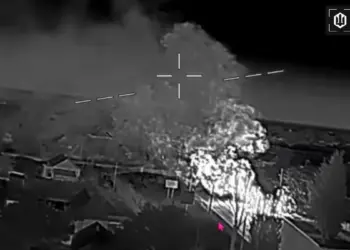
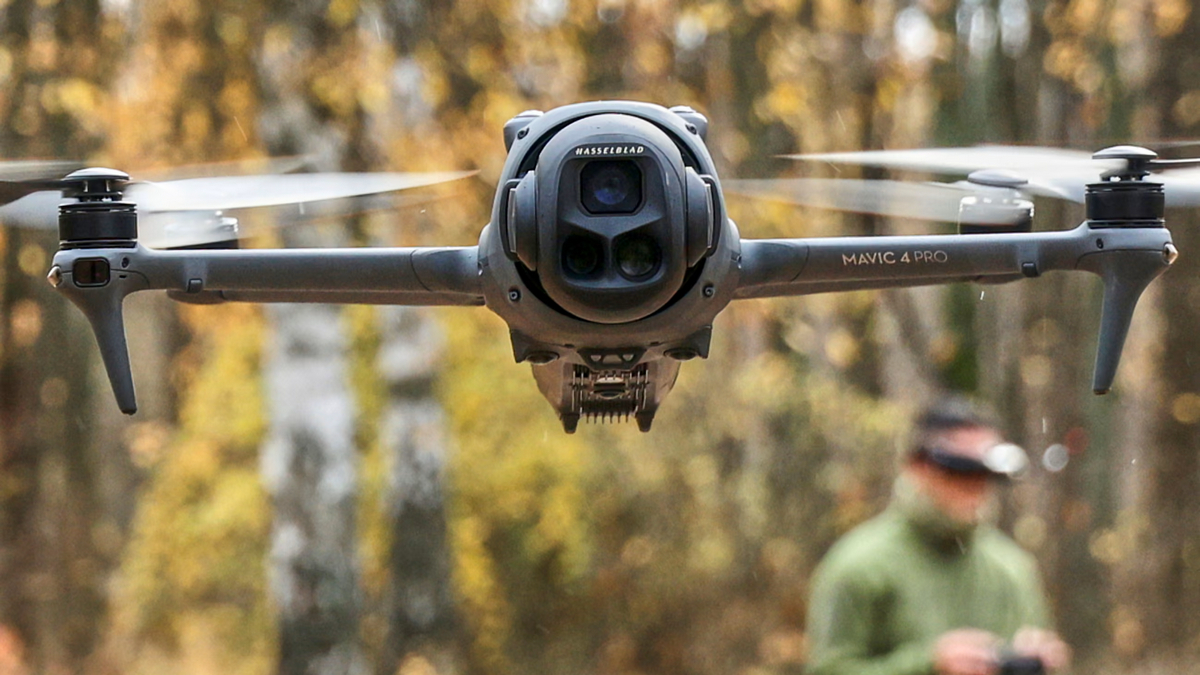
Ukrainian drone operators sometimes position themselves as close as 250 meters from the front line and at other times as far as 3 km away. They work from protected hides in front of computer screens, directing strikes and occasionally using video-game controllers to do so. The “Achilles” regiment is one of the ten most effective drone units and operates in the eastern parts of Kharkiv and Donetsk oblasts. Its commander, Yurii Fedorenko, noted that the best pilots are not necessarily those who excel at video games.
“The best pilots are disciplined people,” he said. “Of course, if you are younger you can stay awake longer and need less time to recover. But if a person is disciplined, they make a good drone operator.” He also downplayed the idea that this approach amounts to the “gamification” of war, pointing out that orders sometimes require units to engage low-scoring targets in order to support specific, short-term tactical objectives.
Another drone-unit commander, Andrii Poltoratskyi, said the entire unit takes part in the competitions. “Drone operators compete with one another. Operator groups compete against other groups. Even senior commanders compete among themselves,” he said.
Poltoratskyi described the rivalry as healthy competition rather than entertainment, noting that when the Russians launch an offensive “the competition stops and everyone… works together” on whatever best protects Ukrainian lives, regardless of the points that could be earned.
The “points-for-destruction” system has provided Ukraine with a substantial dataset which, Fedorov said, allows the authorities to “better understand the mathematics of war.” “Thanks to the points, we actually start to understand more clearly what is happening on the battlefield,” he explained. “To receive points, [drone units] must upload video confirmation. That way we know which targets are being struck, where they are struck relative to the contact line, and which drones and other means are being used.
“So we can see what is more effective and what is less effective. Everyone sees the leaderboard, so units begin to consult one another and learn from each other. Leaders start training and clearing the way for those still growing and developing… innovation comes from the bottom up.”
Source: TheGuardian