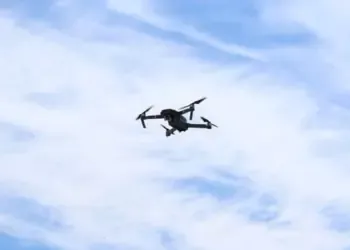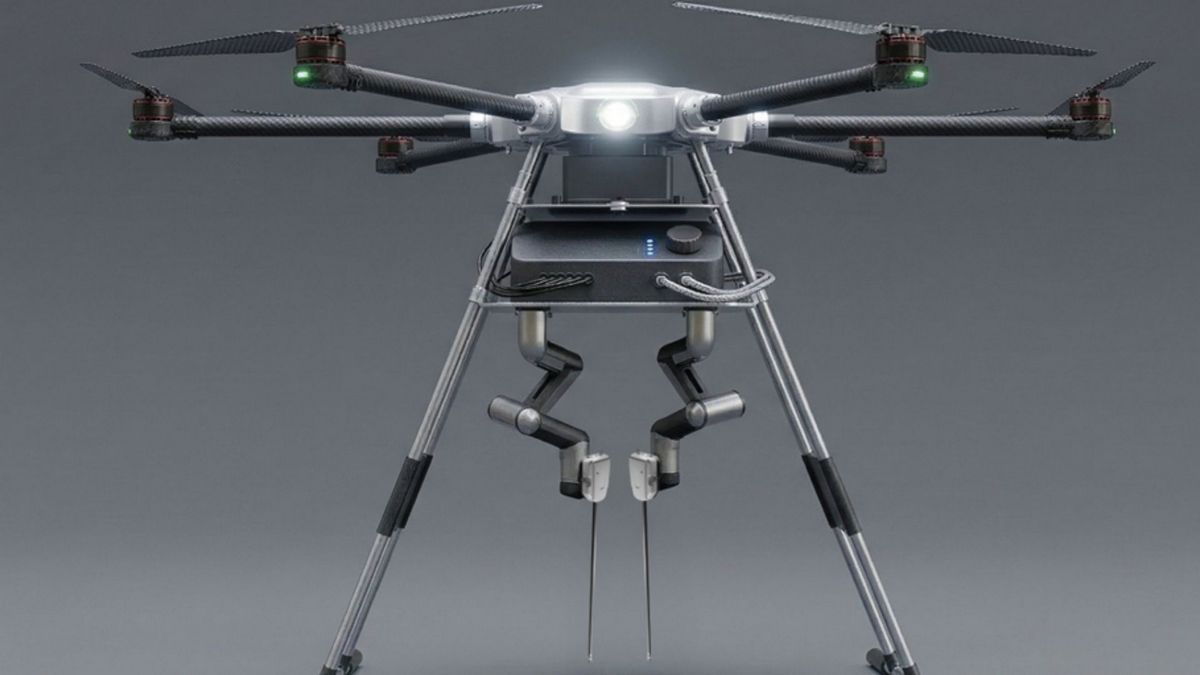
Today, unmanned aerial vehicles have become integrated into nearly all areas of human activity – from humanitarian operations to active combat zones, where drone swarms have repeatedly demonstrated their operational impact. However, one company aims to reshape the conventional perception of these systems by transforming them from offensive tools into instruments of life-saving intervention.

The Indian SS Innovations (SSI) plans to deploy a drone-based system in the near future that would enable surgical interventions for wounded personnel in hard-to-reach frontline locations directly on the battlefield. The primary objective of the developers is to provide emergency medical assistance to severely injured soldiers in remote areas where there is an immediate risk to life and where rapid evacuation by conventional means is not feasible.
The project, known as Vimana, is designed to bring capabilities of advanced robotic surgery directly to patients in forward zones, addressing the critical time gap between injury and the start of evacuation. According to company representatives, the system is intended to support procedures such as hemorrhage control, wound management, thoracic decompression, fragment removal, and suturing in field conditions, with the goal of stabilizing patients prior to transport.
Although the development is currently at the proof-of-concept stage, it has the potential to become a significant capability in combat casualty care. Officials note that initial life-saving missions using the system could begin as early as next year.
According to SS Innovations, the GPS-guided drone will have an estimated flight endurance of up to 30 minutes, with a comparable operational window for performing medical procedures. The system is expected to be equipped with two miniature robotic manipulators, using 5-mm surgical instruments such as forceps, coagulation tools, scissors, needle holders, and suction devices. Importantly, the platform is not intended to function as a simple medical supply delivery system. Instead, it is designed to enable full remote surgical intervention, allowing a surgeon to control procedures from a safe distance.
Although the primary objective is battlefield medical support, Chief Technology Officer Rama Krishna Reddy stated in comments to Interesting Engineering that the system could also be useful in civilian contexts, including road traffic accidents and disaster response operations. He added that, prior to final deployment, a key priority is implementing robust safeguards against potential cyber intrusions.
The technological foundation of Vimana is based on the capabilities of the MANTRA surgical system, which the company has adapted into a more compact configuration suitable for battlefield use. MANTRA is a modular robotic surgery platform with multiple manipulators, designed to make robotic-assisted surgery more accessible and cost-effective.
The drone, along with other developments, was presented at the third conference on robotic medical technologies, SMRSC 2026. The event also featured the concept of Project Operion, a rapidly deployable mobile surgical unit designed for forward deployment. Operion provides a 360-degree view of the operating area, secure low-latency communications, and capabilities for telesurgery. Sudhir Srivastava emphasized that projects such as Vimana and Operion fundamentally redefine the delivery of medical care, enabling surgical intervention in extreme environments – whether in combat zones, disaster areas, or the most remote regions of the world.
Read also:
- Everything About Ukrainian Interceptor Drone JEDI Shahed Hunter
- Anduril YFQ-44A Fury Drone Enters Mass Production: Key Features and Highlights
Read also: interestingengineering