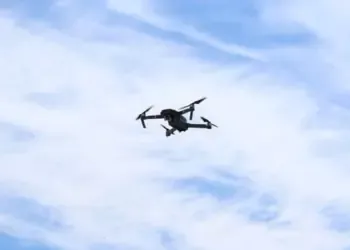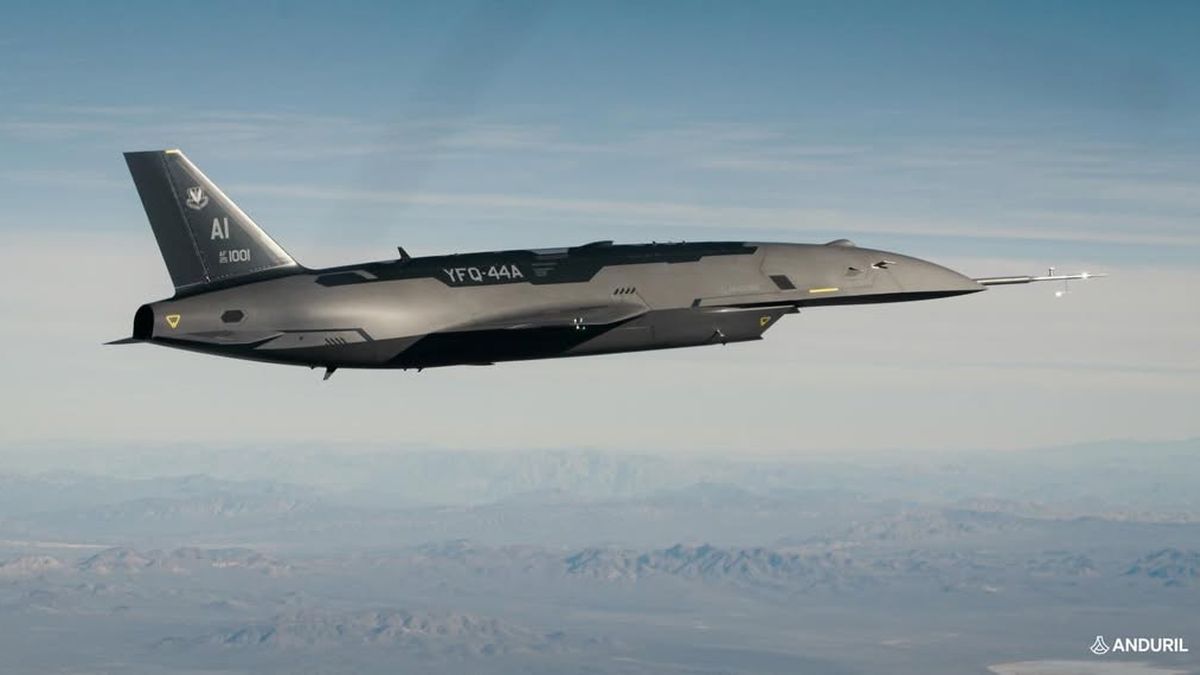
Anduril has announced the start of mass production for its YFQ-44A Fury unmanned aerial vehicle at the Arsenal-1 facility. New manufacturing approaches are intended to support the delivery of a substantial number of these drones to the U.S. Air Force. The launch of the Collaborative Combat Aircraft (CCA) YFQ-44A Fury was shared by Anduril founder Palmer Luckey on social media. The post was brief, featuring only an image of the drone in flight without additional technical details.

This announcement followed recent reports indicating that production would begin three months ahead of schedule. The continued development of the CCA program reflects a systematic implementation of U.S. Air Force plans to address a historically low aircraft inventory – the lowest since the Cold War – through a revised procurement strategy.
This milestone reflects shifts in the approach of the U.S. defense industry. Palmer Luckey has repeatedly criticized the reduction of domestic production capacity, insufficient investment in local manufacturing, and supply chain issues that negatively affect defense projects. He emphasized that Anduril aims to avoid these mistakes and has already demonstrated the ability to execute contracts on time and within budget.
Since the Fury’s first flight on October 31, 2025, the program has reached several key milestones, including tests with the AIM-120 AMRAAM missile and the integration of control systems using Shield AI’s Hivemind artificial intelligence platform alongside Anduril’s own Lattice autonomous flight platform.
While three prototypes of the GA-ASI YFQ-42A Dark Merlin have been documented, only two Fury units are currently known, with tail numbers “25-1001” and “25-1003.” It remains unclear whether additional drones have been produced but have not yet been publicly observed.
Following the Hivemind tests, Anduril’s Senior Vice President of Engineering, Jason Levin, noted that flights involving two AI agents were made possible by the early implementation of the Autonomous-Government Reference Architecture (A-GRA) in both the YFQ-44A platform and its autonomous control software. The emphasis on rapid development of A-GRA, combined with Modular Open Systems Architecture (MOSA) and the integration of third-party AI solutions, reflects the U.S. government’s intent to reduce technological reliance on a single supplier.
Anduril has repeatedly emphasized that the development of the YFQ-44A, from concept to first flight, took only 556 days. In a recent Shield AI video, the first production unit was shown with wings, power components, control surfaces, and panels already installed. A significant portion of the manufacturing process is expected to be automated.
The Arsenal-1 facility, located in Pikeway County, Ohio, represents an investment of nearly $1 billion by Anduril. The plant is also intended for the production of Roadrunner drones and Barracuda-series missiles. Anduril has repeatedly stated its intention to differentiate itself from traditional defense contractors. This approach includes simplifying component selection, design, engineering, and material processes, as well as implementing reconfigurable production lines that allow rapid, cost-effective scaling of manufacturing. These strategies align with the U.S. Air Force’s modern vision for the development of combat aviation and unmanned systems.
Read also:
- Ukrainian Border Guards Destroy Rare Russian “Skat-450M” Drone
- Ukrainian DefenceTech Startup Swarmer Soars on Nasdaq: Shares Increase Several-Fold
Source: theaviationist