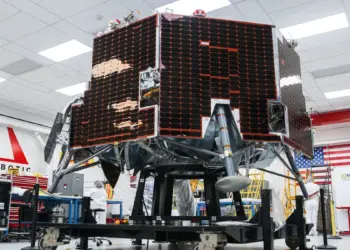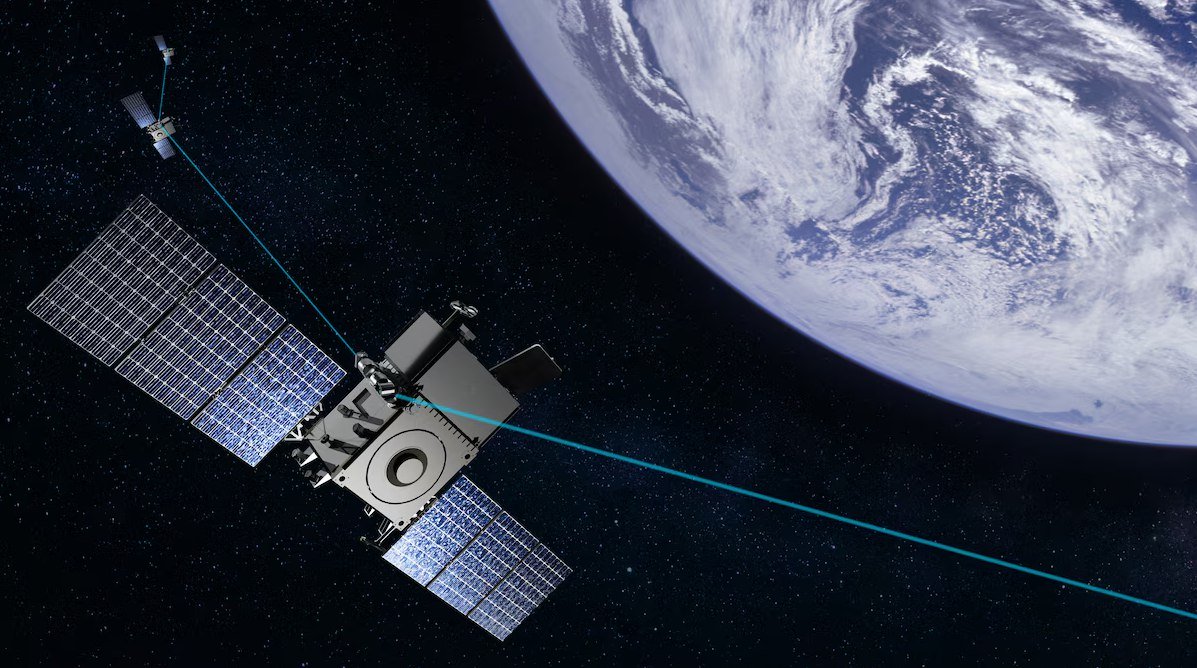
The first satellite in a new U.S. early-warning constellation, intended for deployment in medium Earth orbit (MEO), is now scheduled to launch later than originally planned. Instead of the end of 2026, the launch has been pushed to spring 2027. The delay is due to one of the system’s key components not yet completing required testing. Despite the setback, the U.S. Space Force is continuing to move forward with the program and is preparing subsequent batches of satellites for future launches.
In June, the Space Sensing Directorate under the U.S. Space Systems Command announced it had signed a contract with BAE Systems to deliver ten satellites as part of “Epoch 2” – the second phase of the Resilient Missile Warning/Missile Tracking MEO (Resilient MW/MT MEO) program. According to Brigadier General Robert W. Davis, the Space Force is also planning to sign an additional agreement in the fall, which would cover more satellites. This upcoming contract is expected to include two more “planes,” or groups of satellites, which – based on budget documents – could translate to another 10 to 12 spacecraft.

The Resilient MW/MT MEO program largely mirrors the architectural principles of the low Earth orbit (LEO) missile tracking system developed by the Space Development Agency (SDA). Like the SDA, General Davis’s team follows an incremental approach, awarding contracts for smaller batches of satellites rather than a single large-scale deal. This method is intended to accelerate the adoption of new technologies, improve system adaptability, and encourage competition among contractors. However, similar to the SDA’s efforts, the Space Systems Command (SSC) has encountered some challenges – including delays tied to logistics and technical complexities.
Davis pointed out that the program is facing issues with the supply of components, as well as challenges in meeting the required standards for ground-based testing. “We need to conduct the right tests with the right level of rigor on the ground to ensure we get a fully functional system once it’s in orbit,” he emphasized. As a result, the launch of the first satellite under Epoch 1 – originally scheduled for the end of fiscal year 2026 – has now been postponed to the first half of the 2027 calendar year.
Another challenge involves the use of optical laser links for data transmission between satellites. Unlike radio signals, laser links offer significantly higher speeds and enhanced security. The Space Development Agency (SDA) has already tested these connections on its “Tranche 0” demonstration satellites in low Earth orbit (LEO), but the technology remains in an early stage of development.
Earlier this year, the U.S. Government Accountability Office warned that the agency may be investing too heavily in optical links without full assurance of their reliability. “Laser links are the foundation of the new satellite constellation architecture,” Davis stated. At the same time, he acknowledged that the technology poses a potential risk for the medium Earth orbit program and that the service is closely monitoring its development. To mitigate these risks, Davis said the Space Systems Command (SSC) is studying lessons learned from SDA’s demonstration launches and increasing investment in ground infrastructure to conduct more extensive testing of laser technology before deployment.
There are also fundamental differences between the approaches of the SDA and the SSC. For instance, the SDA aims to integrate optical links between satellites produced by different manufacturers. In contrast, General Davis’s team currently limits inter-satellite connections to units from a single manufacturer. This means that Epoch 1 and Epoch 2 will provide communication only among satellites developed by the same contractor, without cross-system integration.
Additionally, the requirements for laser links on medium Earth orbit (MEO) satellites differ from those used in low Earth orbit (LEO) due to the greater distances between objects. Davis’s team is working with the SDA and industry partners to establish unified technical standards for future generations of satellites. Despite the technical challenges, Davis emphasizes the critical importance of these new early-warning satellites for the U.S. They are intended to complement existing systems in geosynchronous orbit, which have already proven effective in detecting real threats.
Source: Airandspaceforces