SpaceX has completed another critical milestone on the path to the debut launch of its upgraded Starship heavy-lift rocket. The mission is currently scheduled for the first half or mid-May. This flight will be the twelfth within the broader Starship test program, but it will mark the first orbital attempt for the Version 3 configuration. The new iteration differs from its predecessors with increased dimensions and significantly higher performance parameters.

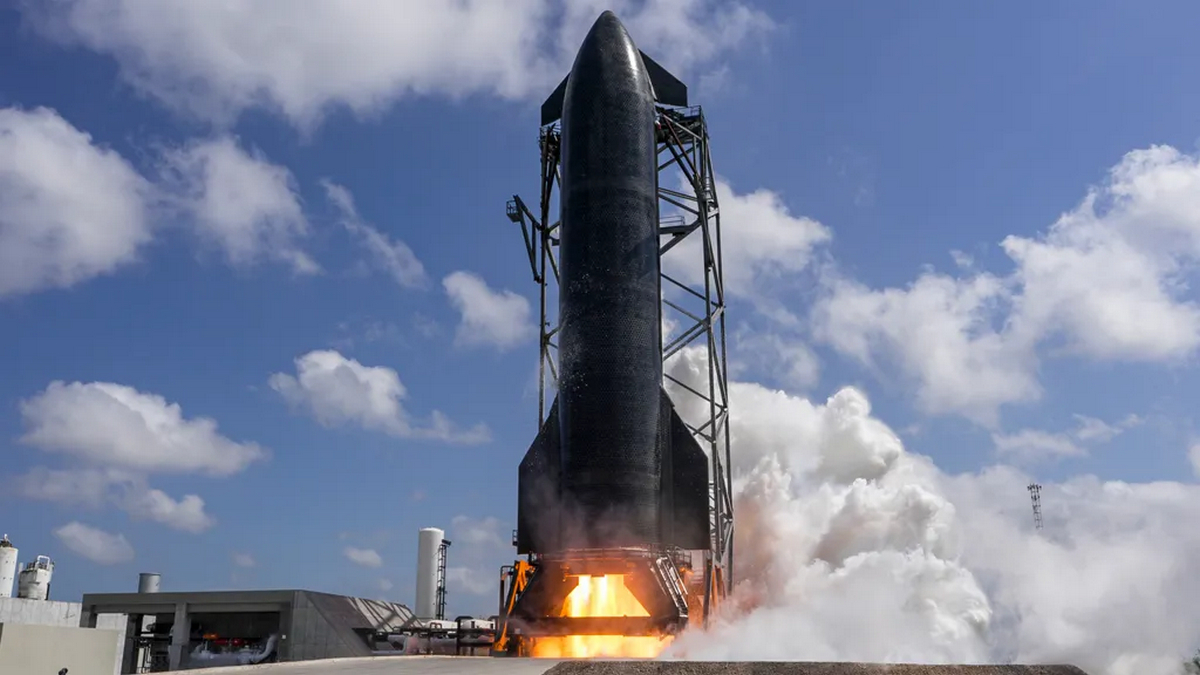
On the evening of Tuesday, April 14, SpaceX representatives reported the successful completion of a static fire test of the Starship V3 upper stage. During the test, the vehicle’s engines were ignited for the full planned duration while the rocket remained secured to the launch mount. In a post on the X platform, the company confirmed that this was the first full-duration static fire conducted for the third iteration of the system.
This milestone follows initial testing of the Starship V3 booster conducted approximately four weeks earlier. During that test, only 10 of the 33 Raptor engines were ignited due to issues with ground support equipment, which led to an early termination of the procedure. In its fully assembled configuration, Starship V3 reaches a height of 124.4 meters, which is approximately 1.2 meters taller than the previous V2 version.
The significant increase in performance of the new modification is driven by the upgraded Raptor V3 engines. According to SpaceX founder and CEO Elon Musk, this version of the rocket is capable of delivering over 100 metric tons to low Earth orbit, compared to approximately 35 metric tons for the V2 configuration. To date, a total of 11 suborbital Starship test flights have been conducted, with the most recent taking place in October 2025. The five latest missions were carried out using V2-based vehicles.
Read also: Can the U.S. Plant Its Flag on Mars?
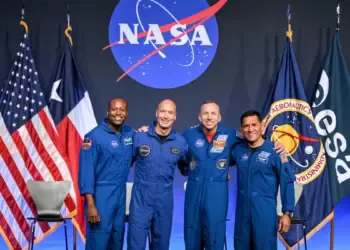
SpaceX is actively preparing its system for crewed lunar missions, as NASA has selected Starship as the initial human landing system for the Artemis program. The Artemis 2 mission was recently completed, during which four astronauts performed a lunar flyby and returned safely to Earth. NASA is now preparing for the Artemis 3 phase, which will include testing orbital docking operations between the Orion capsule and one or both contracted landers – SpaceX’s Starship and Blue Origin’s Blue Moon.
The Artemis 3 launch is currently expected in mid-2027. If the mission is completed successfully, the subsequent Artemis 4 mission, planned for the second half of 2028, is intended to support a crewed landing near the Moon’s south pole. Transportation for this phase will rely on either Starship or Blue Moon.
Read also:
- All About the NEO Hunter Mission: How an Ion Beam System Could Protect Earth
- Boeing CST-100 Starliner: Mission That Nearly Ended in Disaster
Source: space